
- Click this link to go to the Scotland homepage for the most recent updates and sports information.
A few weeks back, my television informed me that I needed to retune it, and, worried about what might happen if I didn’t, I followed the instruction. It’s a smart TV, you see, and I’m an older viewer who’s starting to lose confidence in my control over home technology.
The tuning process did not proceed smoothly. After finishing, I ended up with 13 channels, most of which I had never viewed before. Where were BBC1 and BBC2? ITV1, Channel 4, and Channel 5 were also absent. I tuned again. The same issue occurred.
My 20th-century infrastructure viewed this as a catastrophe. Picture, at any point during the 70s, 80s, or 90s, possessing a television that couldn’t receive our standard over-the-air channels. It would be an obsolete device in the corner. We’d immediately head to Currys for a replacement.
But then, something from the 21st century seeped into my thoughts. Thus, the fundamental elements of my viewing experience that had lasted for decades were now all absent. Did it truly matter in this current decade?
After spending nearly a month dealing with the reception problem, I don’t care anymore.
Television schedules on land-based channels—once closely studied and organized around—have turned into a near-irrelevance.
Is it still common for individuals to let the scheduling of their preferred daytime drama or quiz program dictate their evening plans?
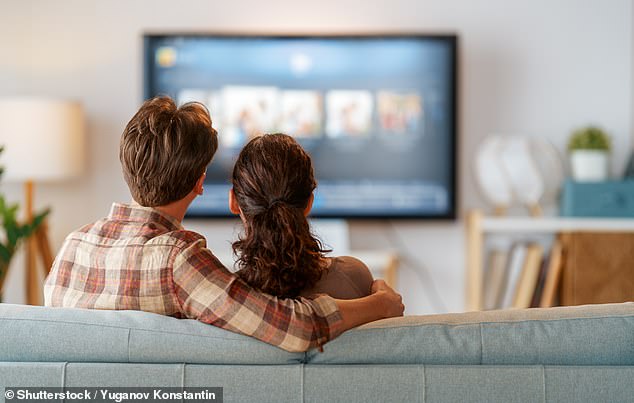
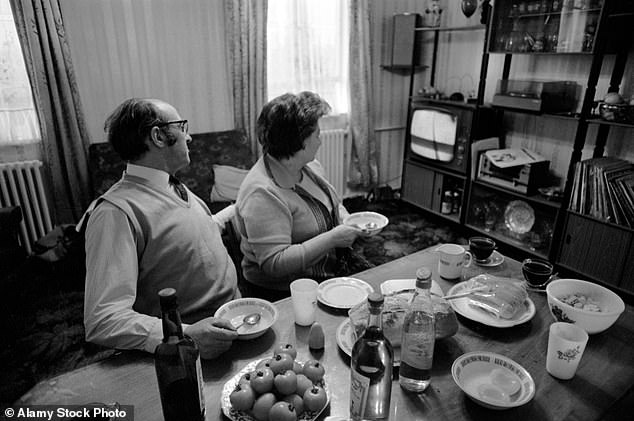
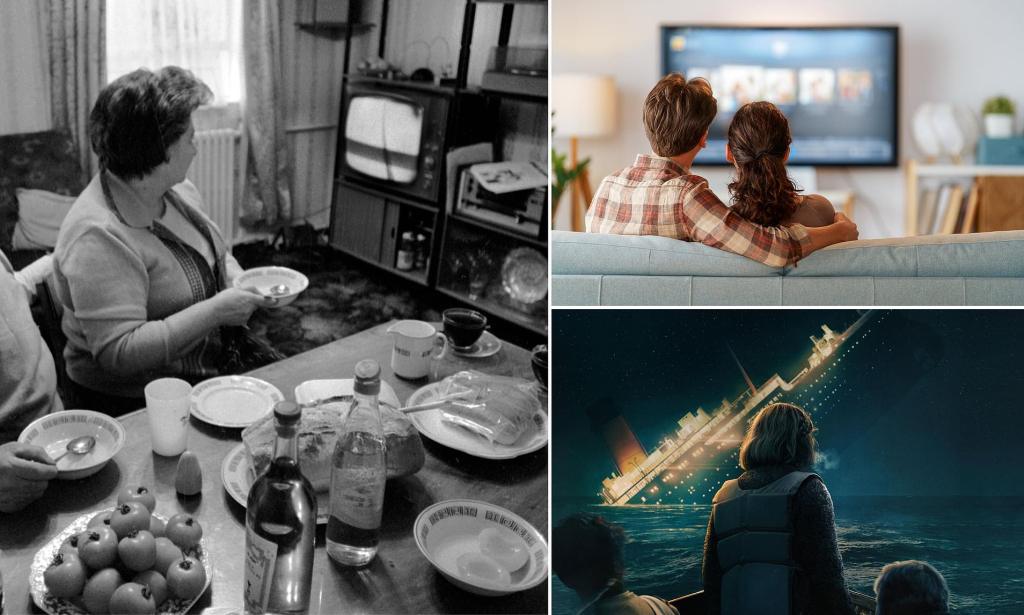
Do they still use phrases such as, “Hurry! Move to the other channel. That new David Attenborough program begins at nine”?
Some, maybe, but they are an obsolete group. And traditional television is a declining form of media.
Data released this week indicates that British people are more inclined to watch YouTube compared to the BBC.
An independent rating organization, Barb, discovered that the video-sharing platform had a reach of 51.9 million people in December, in contrast to the BBC’s 50.9 million.
YouTube also surpassed the BBC in October and November – a result that veteran TV producer and presenter Steven D Wright called ‘a tragedy’.
“The critical moment has arrived, and we are now residing in a world controlled by streamers,” he said to The Times.
The television viewers have stopped following the routine of scheduled programming, and the rise of on-demand watching has eliminated any sense of allegiance.
I’m uncertain if ‘tragedy’ is the term I would choose, but then, I am an individual with the power to decide, not a broadcasting company that insists everyone with a television pays regardless of whether they watch its content or not.
As a matter of record, I continue to be a passionate viewer of the BBC’s content even though my television is unable to receive its scheduled broadcasts. Blue Lights, a police drama series originating from Northern Ireland, stands out as one of the most notable shows within the vast array of options available through our remote controls.
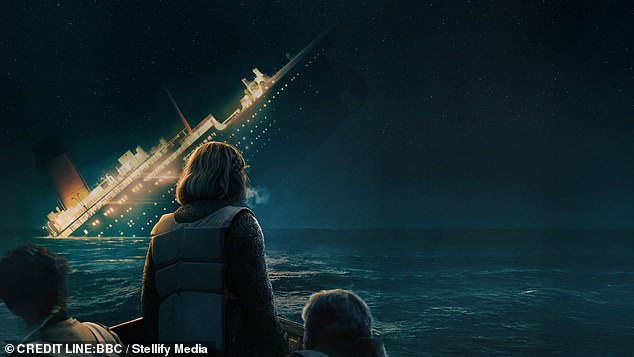
“Titanic Sinks Tonight,” which I have just viewed, is yet another achievement from the BBC – a deeply emotional, minute-by-minute documentary series that immerses the audience aboard the sinking ship and adds a personal touch to the terrifying situation and tragic loss of most of its passengers and crew.
I couldn’t do without The Traitors. And the wonderfully quirky Claudia Winkleman is far superior to her counterparts hosting other countries’ versions of the show.
I have all watched at my own convenience on iPlayer. The timing of the broadcasts doesn’t matter to me. BBC News at Ten? That’s not available where I am. I prefer BBC News at a time that suits me.
I believe this trend is becoming more common in homes throughout the nation. It represents a type of audience control that, from our perspective, carries no negative consequences.
The negative aspect lies entirely with the BBC’s side of the agreement. Whether you like it or not, it has emerged as a major streaming service. It is now competing alongside Netflix, Amazon Prime, Apple TV, and Disney+, all of which I subscribe to at home.
It is also involved with YouTube – and seemingly losing the ratings battle against it – and that is available to watch at no cost.
The key distinction, naturally, is that we have the ability to stop following those other streamers whenever we choose. However, if we stop following the BBC, we would also have to give up owning a television.
In a time when the BBC’s content is viewed similarly to that of its online rivals, this situation becomes very unusual. In an era where a newcomer like YouTube is attracting more audiences than our national broadcaster, it seems almost unacceptable.
Once more, I don’t want to cancel my subscription. I would rather lose Netflix than the BBC. The issue is that subscribing to the BBC is required. Not paying the licence fee is a criminal act – certainly the most peculiar one around these days.
It’s somewhat similar to purchasing a vehicle and being informed that we are free to obtain our fuel from any provider we prefer, but no matter where we refuel, the law requires us to cover BP’s expenses as a fuel supplier.
The BBC claims that it provides far more than streaming services, including news updates, unique sports broadcasts, and local content. This is accurate.
However, it is not the sole news channel available, and audiences are increasingly doubting its fairness.
Whether their views are accurate or not, why should they be required to fund news they have grown skeptical of?
I might be willing to pay the license fee just for Wimbledon. However, much of what we used to watch on the BBC – like live coverage of the Open – is no longer available. We now pay a competing broadcaster to view it, yet we still have to pay the BBC as well.
Regional programming? It’s often no more impressive, if not less, than what we can discover on YouTube or video blogs.
Streaming has led to a more open approach to how people watch content. The market will determine what succeeds and what fails. In a unique way within British broadcasting, the BBC sees itself as separate from market forces.
The question is, how well do you truly understand your clients before they have the ability to leave?
The data from YouTube viewership indicates that numerous customers are already making their choice by abandoning the service they previously paid for.
I understand their reasoning. The platform has evolved into an exceptional source, offering the best on-demand experience for virtually every area of interest imaginable.
Are you interested in learning how to play the Hotel California guitar solo? There are countless guitarists on YouTube who can guide you step by step. However, they don’t produce television programs about it.
Are you thinking about installing a new bathroom by yourself? There isn’t one step in the process that isn’t thoroughly explained by a YouTuber somewhere. Some individuals have even renovated entire homes using only YouTube tutorials as their reference.
This location, once frequented by individuals to view pop music videos, has transformed into the largest interview repository globally.
Wondering why philosopher Bertrand Russell wasn’t a Christian? Watch him explain his views in a 1959 clip. For researchers, the platform is extremely useful. For casual viewers, it’s endless entertainment tailored to their preferences.
And we realize that it isn’t broadcasting at all, but rather narrowcasting; television aimed at audiences too small for the BBC to bother with.
But the overall trend is that narrowcasting is succeeding. And the license fee has never appeared more at risk.
j.brocklebank@.co.uk

 jasdooit
Leave a comment