
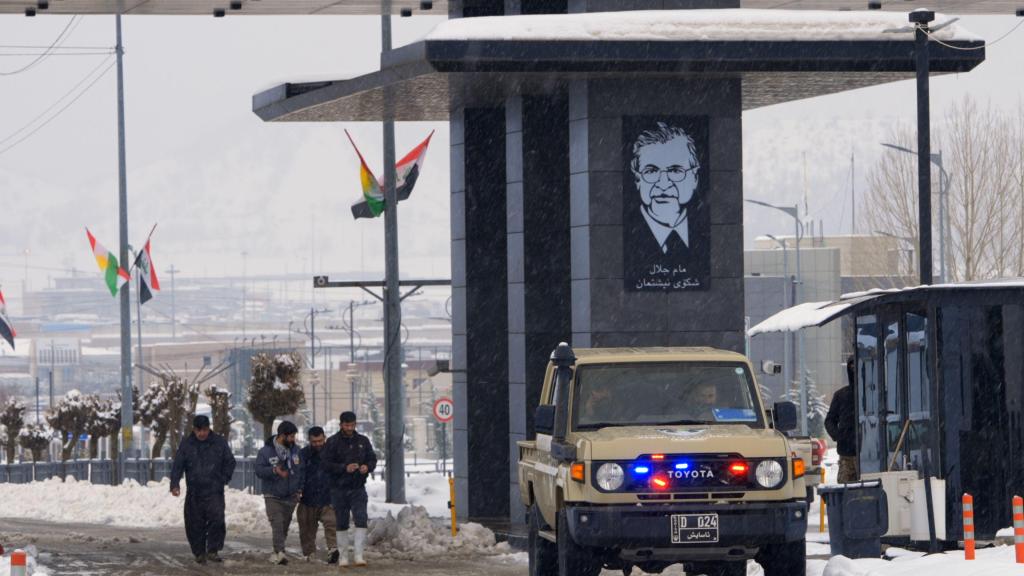
At the border checkpoint between Iran and Iraqi Kurdistan, the serious expression of Iran’s former supreme leader, Ayatollah Khomeini, watches over the small number of Iranians departing the region.
Massive snowflakes fall around the trucks and people reaching this isolated mountain crossing.
A few meters away, just past the checkpoint, an Iranian flag is waving in the snow.
Iran has cut off the internet and restricted incoming phone calls, yet its borders remain accessible.
Within the arrival area, there are numerous men, women, and children—most here to visit relatives on the Iraqi side of the border.
None of the people we encountered mentioned fleeing Iran due to the recent demonstrations and government suppression, but one individual – who requested us to conceal his identity – shared that he was shot by security forces during a protest in central Iran last Friday.
I took seven pellet shots to my face,” he said, indicating multiple marks and bruises on his face. “They hit above my eyelid, on my forehead, my cheek, my lip, beneath my ear, and along my jaw. I had to use a razor blade to remove one of the pellets.
He mentioned that he was too scared of being detained to seek medical assistance, and that others who were hurt during the government’s suppression of demonstrations were also refraining from getting care, due to the concern that security personnel would show up and arrest them.
One of my friends mentioned to me that he was hit by a pellet,” he said. “His son, who is approximately 12 or 13 years old, was shot twice in the leg with real bullets. One of the bullets is stuck in the shin bone. They are scared to go to the hospital to have it taken out.
The Iranian government has viewed these demonstrations as a critical danger to its authority. The harsh measures taken by the regime appear to be effective, with demonstrators now largely remaining indoors due to concerns of being shot or detained. Human rights organizations report that approximately 2,500 individuals have lost their lives.
However, multiple individuals here informed us that demonstrations persisted, at least up to this week. The protester we interviewed mentioned that security forces had suppressed protests in his hometown last Friday, although they continued in other areas.
Protests continued in Fardis and Malard, as well as parts of Tehran,” he stated. “My friends were present there. We remained in constant contact via phone. On Tuesday night, the demonstrations were still taking place, but I haven’t received any updates since then.
Iranians are not required to obtain a visa to enter this area, and authorities mention that there is consistent movement between the two locations.
Another individual we interviewed at the border mentioned he was in Tehran on Wednesday and observed demonstrators in the streets. It remains uncertain what type of demonstration it was, or how large the number of participants was.
No solid proof has been found that street demonstrations are still taking place. Very limited video material is coming out, and the reports received today cannot be verified. The, as well as other global media outlets, is prevented from reporting within Iran.
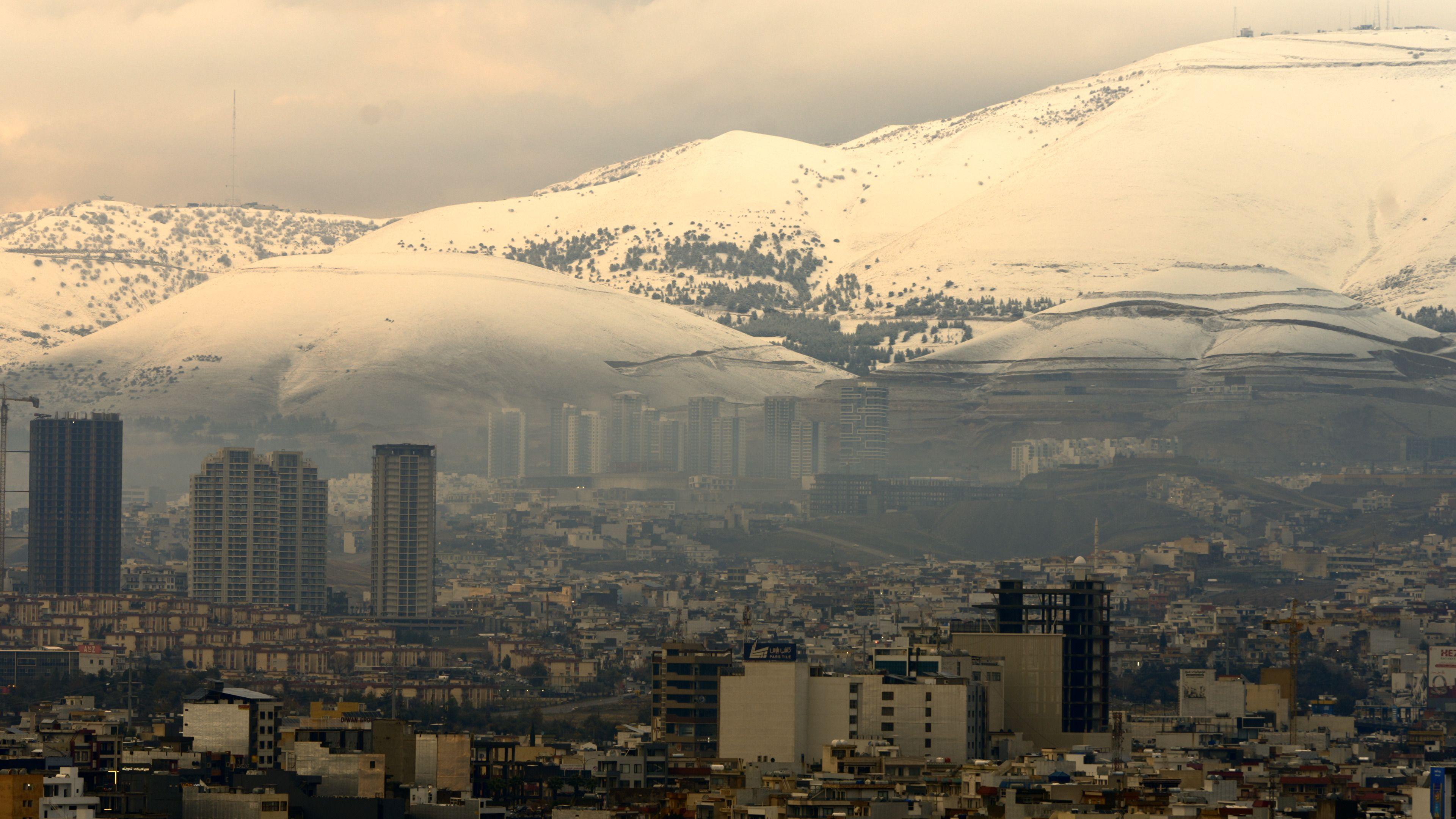
The government’s suppression appears to be largely effective. However, the economic issues that triggered this crisis remain unresolved.
A educator from a nearby town shared with us that she wasn’t concerned about who the leader was, as long as the economic conditions improved.
We aren’t seeking anything beyond our fundamental rights,” she said to me. “To own a house, to own a car, to live a regular life. My salary only lasts for 10 days, and I have to take loans to manage the rest of the month. It’s really tough.
I inquired about US President Donald Trump and his warning of military action if the regime continued to kill demonstrators.
We’re waiting to see what Trump will do,” he said to me. “In the meantime, civilians are losing their lives.
The intensity with which Iran’s leaders have suppressed this demonstration reflects their vulnerability. The regional proxy groups they previously relied on as shields against aggression have been undermined by Israel’s conflict with Hamas and Hezbollah, as well as the downfall of the former Syrian leader, Bashar al-Assad.
The Israeli-US conflict with Iran last year has weakened its military strength, making it susceptible to attacks.
Concealed behind this mountainous frontier, Iran’s government is reasserting its authority.
Yet, beneath this strict control lies the increasing anxiety of the Islamic Republic, which is unable to fulfill its citizens’ fundamental needs: security against external threats and economic stability within the country.

 jasdooit
Leave a comment