
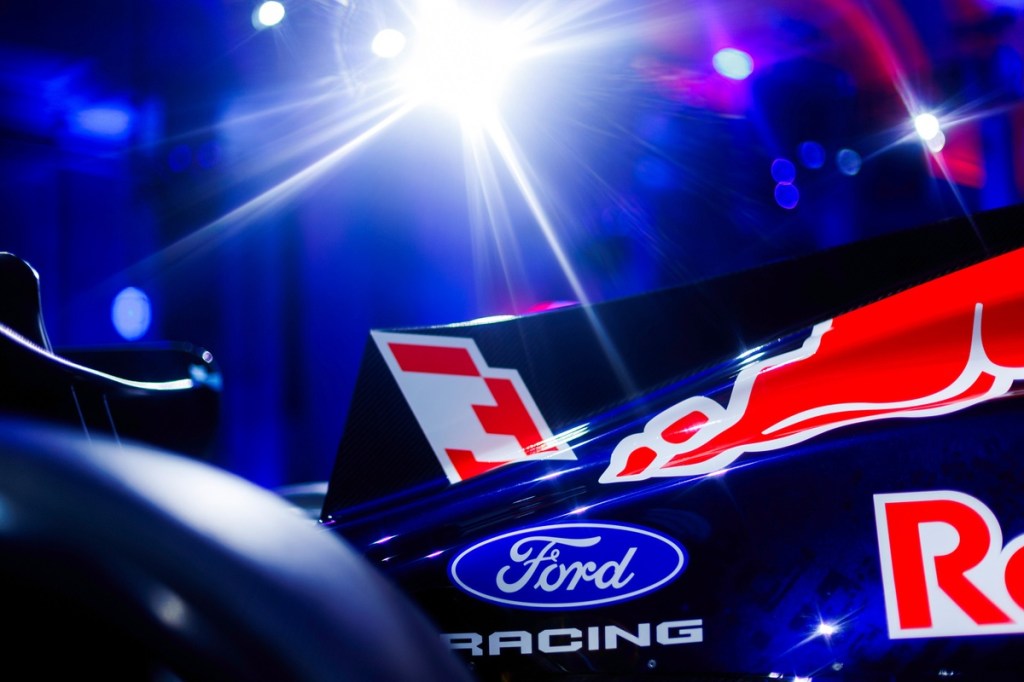
Red Bull is confident that the compression ratio of its 2026 Formula 1 engine complies with the rules, according to Ben Hodgkinson, director of Red Bull Powertrains, who described the recent debate as “a lot of fuss over nothing.”
The official start of Red Bull’s season was announced in Detroit, marking the beginning of the collaboration between Red Bull Powertrains and Ford, even though work on the engine initiative has been underway for four years at the Red Bull facility in Milton Keynes.
The question still stands on how competitive a new entrant can be right from the beginning – particularly considering the higher proportion of electric power and the limited experience of both Red Bull and Ford in this field, at least within Formula 1.
Read Also:
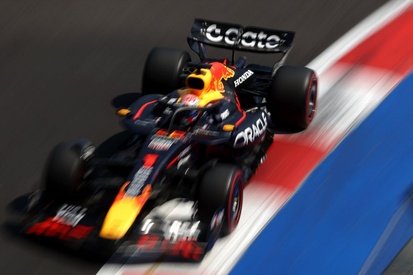
As preparations for the winter testing in Barcelona begin, much of the focus has been on the internal combustion engine, particularly the compression ratio. This refers to the proportion between the maximum and minimum volume within the cylinder. Under the previous set of regulations, this ratio was 18:1, but for 2026 it has been lowered to 16:1 – partly to make the rules more approachable for new teams.
Other companies have realized thatMercedesand Red Bull Powertrains would adhere to the 16:1 limit during static tests at room temperature – which, currently, is the sole method used by the FIA for verification – but that they might attain a greater ratio when operating at elevated temperatures.
Audi, Ferrariand Honda have jointly brought up the matter with the FIA, following which it has been added to the agenda fora discussion with specialists on 22 January– which addresses various subjects, including the aerodynamic aspects of the new rulebook.
Before the season began, Red Bull Powertrains director Ben Hodgkinson stated to a limited group of media, including , that he is confident Red Bull’s new power unit complies with the regulations.
I believe there is some anxiety among different power unit manufacturers regarding potential innovative engineering by certain teams,” he stated. “I’m not entirely sure how much of it to take seriously, to be honest. I’ve been involved in this for a long time, and it’s mostly just background noise. You have to focus on your own race.
I am aware of what we are doing, and I am certain that our actions are within the law. Naturally, we have pushed it to the absolute edge of what the regulations permit. I would be amazed if anyone hasn’t done the same. My genuine opinion is that it’s all a lot of fuss over nothing. I anticipate that everyone will end up at 16, that’s truly what I expect.
Read Also:
The core issue is that various PU manufacturers interpret different sections of the technical regulations. According to Article C5.4.3, inspections are performed only when the engine is not running and at normal temperature, which allows Mercedes and Red Bull to claim they are adhering to these conditions.
However, opponents refer to Article C1.5, which says, “Formula 1 vehicles must adhere to these rules completely at all times during a competition.” Since the 16:1 compression ratio is specifically stated, they argue it should also be applicable when in operation.
In broad terms, Hodgkinson is not satisfied with the compression ratio as it appears in the updated PU regulations. He believes that reducing it for 2026 was entirely unnecessary.
From a purely technical perspective, the compression ratio limit is too low,” he explained. “We possess the technology to achieve rapid combustion, so the current compression ratio is significantly low. We could operate effectively at 18:1 with the combustion speed we have achieved, indicating that there is performance potential in every tenth of a ratio. Every manufacturer should truly aim for 15.999 as their upper limit when it comes to measurement.




 jasdooit
Leave a comment