
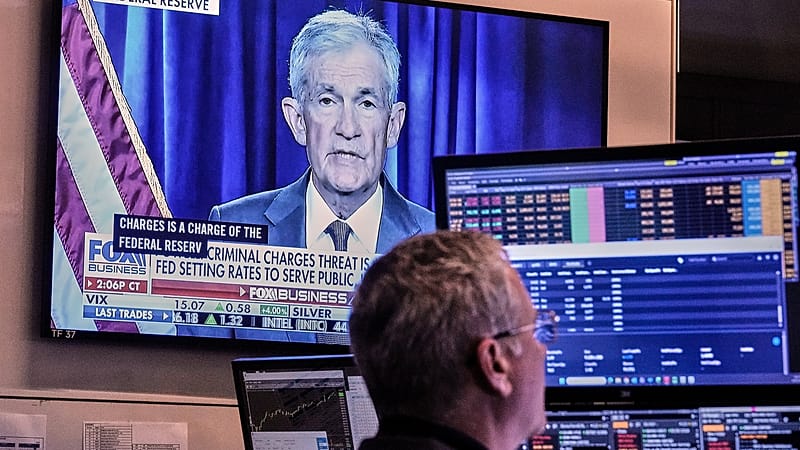
Following two weeks of rigorous political and legal examination, the Federal Reserve aims to keep this week’s interest rate meeting as routine as possible, although President Donald Trump is likely to remain dissatisfied with the outcome.
The country’s monetary policy committee is highly likely to maintain its primary short-term interest rate at approximately 3.6%, following three consecutive quarter-point reductions in the previous year.
Federal Reserve Chair Jerome Powell stated following the December gathering that they were “in a good position to wait and observe how the economy develops” before taking any additional actions.
When the Federal Reserve reduces its short-term interest rate, it may gradually impact other borrowing expenses such as home loans, car financing, and corporate lending, although these rates are also shaped by market conditions.
This week’s gathering — one of eight held annually by the Fed — will be affected by a major disclosure earlier this month indicating that the Justice Department has issued a subpoena to the Fed as part of a criminal probe concerning Powell’s testimony from last June regarding a $2.5bn (€2.1bn) building renovation. This marks the first instance of a current Fed chair being investigated, leading to an unusually open criticism from Powell.
Currently, Powell must transition from a conflict with the White House to highlighting that the Fed’s choices regarding interest rates are based on economic factors, not political considerations. Powell stated on January 11 that the subpoenas were “pretexts” aimed at penalizing the Fed for not reducing rates as much as Trump desires.
Michael Gapen, the top US economist at Morgan Stanley and previously a Federal Reserve employee, stated that even with the attention, the Fed is likely to approach its interest rate decisions as it has in the past.
He mentioned that the meetings follow a consistent pattern,” he said. “There are presentations delivered, and there are discussions that need to take place. … Some of these wider-ranging criticisms of the Fed don’t really arise.
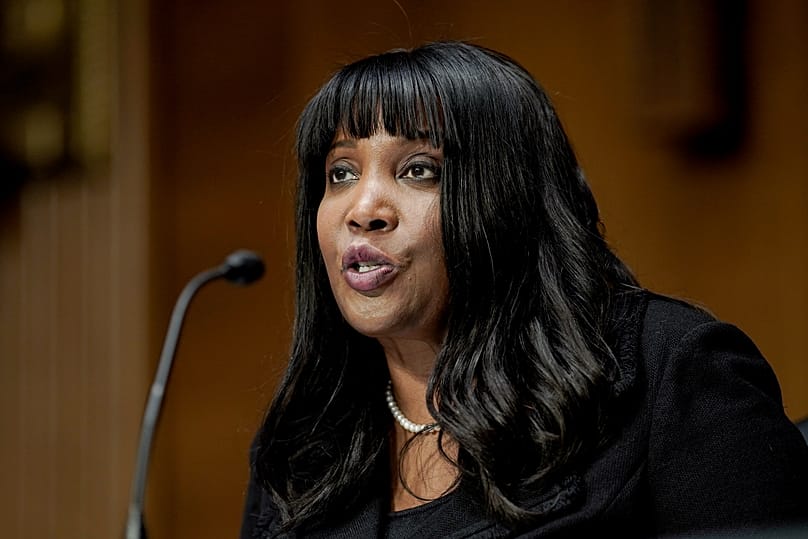
Shortly after the Justice Department issued subpoenas, the Supreme Court recently examined if Trump has the authority to dismiss Federal Reserve governor Lisa Cook due to allegations of mortgage fraud, which she denies. No president has ever removed a Fed governor in the institution’s 112-year history.
During a verbal debate, the judges seemed to be inclined to let her remain in her position until the case is settled.
Efforts to dismiss Lisa Cook
Other Federal Reserve officials have also indicated that the central bank is expected to maintain interest rates at their current level during their two-day meeting, which concludes on Wednesday.
The Federal Reserve’s three interest rate reductions in the previous year aimed to support the economy following a significant decline in job creation after Trump implemented April tariffs on numerous nations.
However, the unemployment rate decreased in December, following an increase throughout most of the previous year, and there are other indications that the job market could be becoming more stable. The number of individuals applying for unemployment benefits has remained exceptionally low, suggesting that layoffs have not surged.
In the meantime, inflation continues to be high and even increased slightly last year, as per the Fed’s preferred indicator, which undermines the argument for an immediate reduction in interest rates. Prices went up by 2.8% in November compared to the previous year, based on the most recent data. This marks an increase from the year-on-year rate of 2.6% recorded in November of the previous year.
According to experts, the Federal Reserve is unlikely to lower interest rates again in the coming months unless companies begin reducing their workforce or the unemployment level increases.
If this year’s inflation gradually decreases, as experts predict, the Federal Reserve might lower interest rates again during the spring or summer. According to futures prices, Wall Street investors anticipate only two 0.25 percentage point rate cuts this year.
Several economists anticipate that economic growth may increase in the upcoming months, providing another justification for avoiding interest rate reductions. Gapen projects that tax refunds might be approximately 20% greater this spring compared to last year due to the impact of the Trump administration’s tax cuts.
The economy grew at an annual rate of 4.4% during the July-September period of last year and could have experienced a similarly strong growth in the last three months of the previous year.
If sustained strong growth persists, Federal Reserve officials may choose to observe whether employment increases simultaneously, thereby decreasing the necessity for additional interest rate reductions.
Powell’s future
Jerome Powell has led the Federal Reserve since 2018, first named by Trump during his initial presidency and later reconfirmed by Biden.
His tenure as chair is set to end in May, with President Trump anticipated to name a new nominee in the near future. Potential candidates include Rick Rieder from BlackRock, Kevin Hassett, director of the National Economic Council, Christopher Waller, a Federal Reserve governor, and former governor Kevin Warsh.
Even though Powell is expected to step down from his leading position, it remains uncertain if he will choose to remain as a governor — his current term is scheduled to end on 31 January 2028.
The Federal Reserve’s board of governors consists of seven individuals who serve 14-year terms, although most chairpersons leave the board once their tenure in the leadership role concludes.
Should Powell remain on the board, it would prevent the White House from securing a majority, weakening the Trump administration’s attempts to increase its influence over the central bank.
He would be the first person to hold the position for almost 50 years without stepping down.


 jasdooit
Leave a comment