
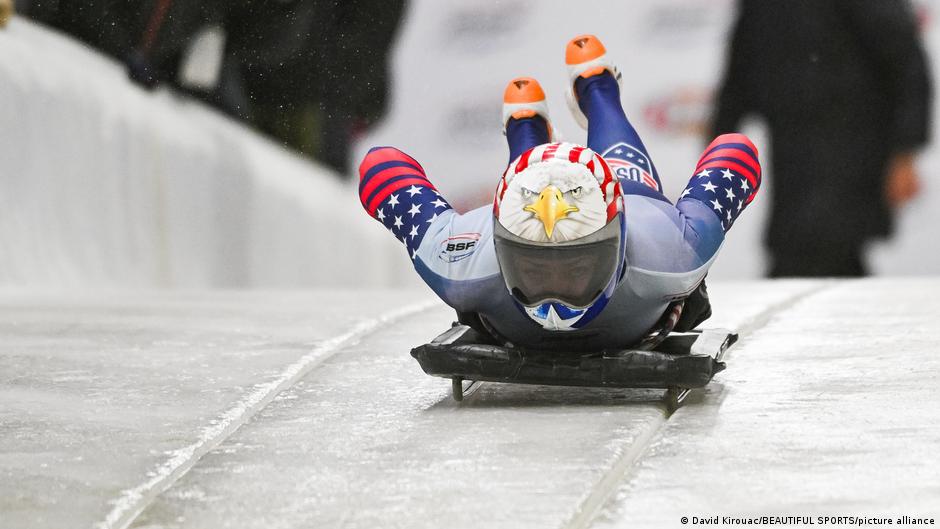
The president of the IOC, Kirsty Coventry, was requested to get involved following an incident where Katie Uhlaender reportedly faced unfair competition practices, leading her to miss the Winter Olympics in February.
The International Olympic Committee (IOC) has turned down a proposal from the United States, which urged that Katie Uhlaender, the skeleton athlete involved in an Olympic qualification dispute, be granted an exceptional spot at the Winter Olympics in Milano Cortina in February, to “safeguard” her Olympic aspirations.
Uhlaender, a two-time world champion, claims she wasunfairly deniedthe opportunity to participate in her sixth Winter Olympics at a qualification event held in Lake Placid, New York, this month.
She claimed that Canada’s skeleton coach, Joe Cecchini, intentionally withdrew his female competitors from the competition, an action designed to prevent her and other athletes from obtaining crucial Olympic qualification points.
In a letter directed to Kirsty Coventry, the IOC’s president, the United States Olympic and Paralympic Committee (USOPC) stated that Cecchini’s behavior had “bypassed the Olympic qualification standards” and “compromised equitable competition.”
A “modification” to the qualification system, the USOPC stated in a letter initially disclosed by , is “justified at this time due to the extraordinary situations […] that caused considerable damage to the sport’s reputation globally.”
“Specifically, claims that another national federation postponed removing four of its women’s skeleton athletes from the event until they could no longer be substituted by other competitors,” wrote Rocky Harris, the USOPC’s head of sport and athlete services, in a letter dated January 23.
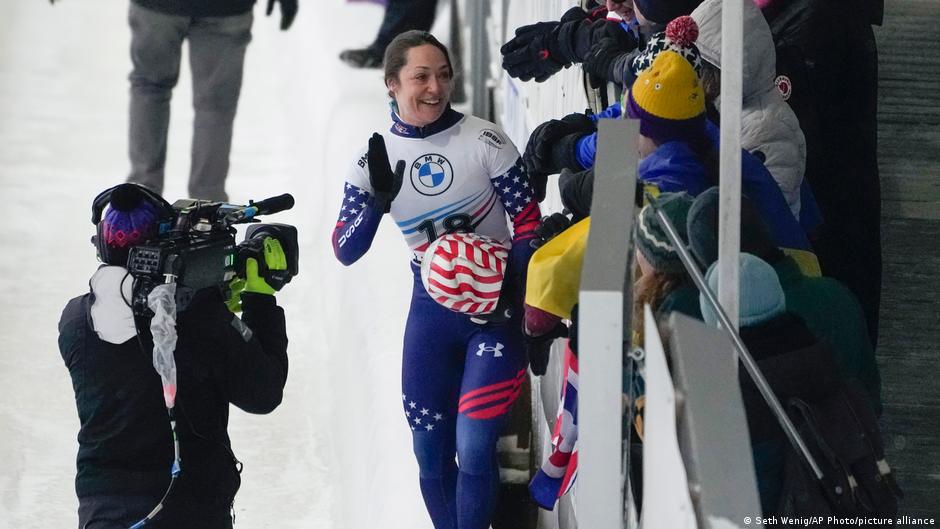
Nevertheless, on Monday, Harris stated during a press briefing that the IOC had rejected the proposal, opting instead to accept the findings of an inquiry conducted by the International Bobsleigh and Skeleton Federation (IBSF).
“We transmitted a letter to the IOC, and this morning we received a reply indicating that they back the international federation’s decision regarding this issue,” he stated.
Uhlaender expresses criticism towards the IBSF inquiry
The Canadian skeleton federation once supported Cecchini’s actions, stating they were “appropriate, transparent, and in line with athlete well-being and the sport’s integrity,” prior to the IBSF clearing the Canadian team of any misconduct on January 15, noting that no regulations were violated.
The IBSF, however, reminded athletes and coaches about the principles of “fair play and ethical behavior” — described as a “slap on the wrist” by one source — while indicating it would modify its regulations for upcoming competitions.
Nevertheless, Uhlaender criticized the IBSF for not conducting a “thorough” inquiry. She mentioned that she was not requested to submit evidence, such as a phone call recording she had with Cecchini, in which, as she claims, he confessed to his scheme.
In the recording, which has been heard by, Cecchini told Uhlaender that he needed to evaluate “what’s in the best interests of our program and my team, both psychologically and in terms of points […] We’ve had some unpredictable races that haven’t gone our way this year, and I could just rule out any chances here.”
When asked by Uhlaender if he intended to restrict the points available, Cecchini responded: “That’s my position.”
On Saturday, Uhlaender mentioned she planned to bring her case to the Court of Arbitration for Sport, the top sports tribunal globally, following the IBSF’s appeals panel’s decision to deny her request for reinstating full qualifying points for the event held in Lake Placid on January 11.
“I am currently concentrating on legally contesting what I consider to be an inherently flawed inquiry and choice made by the IBSF, in a last effort to secure my spot at what would be my sixth and final Olympic Games,” she stated in a declaration.
Uhlaender is considered one of the top skeleton athletes
Uhlaender triumphed in Lake Placid. However, she was given only 90 points for her win, rather than the full 120 that would have been granted if 21 or more competitors had participated.
Since nations can only send a certain number of athletes per Olympic event, this meant she couldn’t close the gap with her closest competitor on the US skeleton team, Mystique Ro.
In the end, Uhlaender fell short of qualifying for Milan-Cortina by a margin of 18 points.
The USOPC stated that adding an “additional spot” for the 41-year-old athlete to take part in the Winter Olympics would “support the principle of fair competition, as well as the main purpose of the qualification process, which is to ensure ‘the involvement of the top athletes.’”
Highlighting her rank of 19th in the Olympic qualification standings, the USOPC described Uhlaender as “one of the top athletes worldwide” and stated that her involvement “would enhance the level of competition.”
It is uncommon for discretionary positions to be granted. In 2023, Ukrainian fencer Olga Kharlan received a confirmed spot for the2024 Paris Olympicsby the then-IOC President Thomas Bach, despite ultimately qualifying independently.
The IBSF chose not to respond.
The piece was first released on January 24, 2026. It was revised on January 27, 2026, to include the IOC’s reaction to the USOPC’s communication.
Edited by: Wesley Dockery
Author: Jonathan Crane




 jasdooit
Leave a comment