

The room fell quiet as the lawyer opened the brown envelope. Tiny dust particles floated in the air of the council chamber, and each bench groaned as individuals leaned closer. Obinna stood with his arms folded, his jaw clenched, already smiling as if victory was certain. Ifunanya didn’t meet my gaze. Mama Uju kept twisting the edge of her garment, murmuring prayers softly.
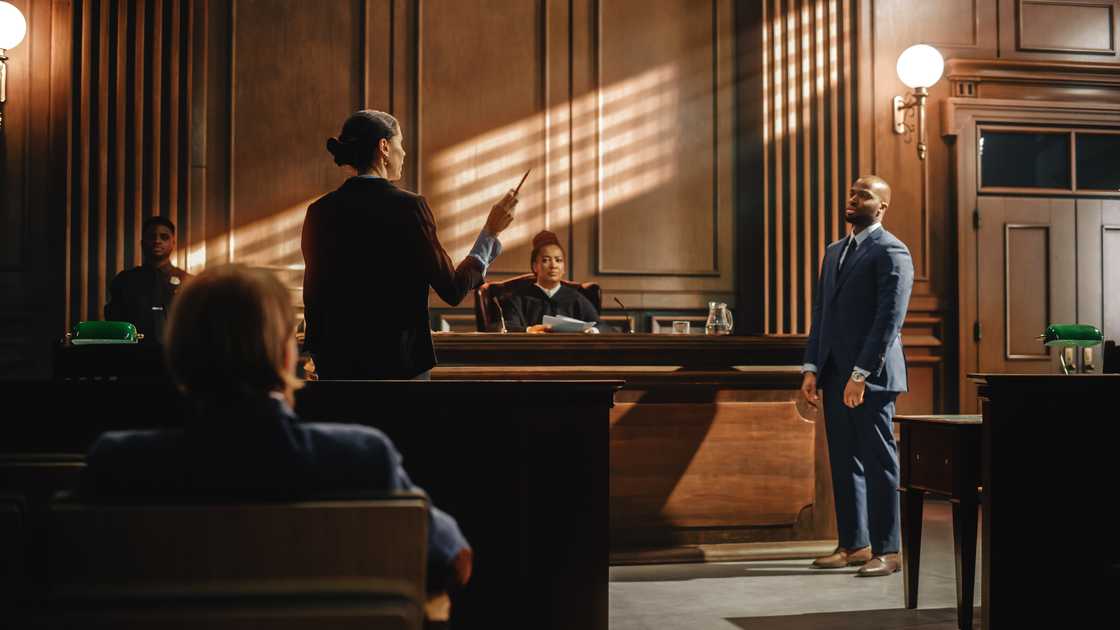
Lawyer Emeka Nwoye cleared his throat and started to read.
He read at a leisurely pace. Obviously. Initially in English. Afterwards, in a language that everyone could comprehend.
Every sentence fell like a rock.
The land title Obinna asserted I modified remained unchanged. The cooperative documents I was alleged to have misunderstood stated precisely what I had consistently informed them. Additionally, the sales contract Obinna claimed he did not write contained his full name, signature, and fingerprint.
A low sound spread across the room. A person inhaled sharply. Another chuckled, bitter and skeptical.
Obinna rushed ahead, claiming that I had prepared for this, that I had paid the lawyer. However, the papers did not respond. They merely were.
Mama Uju’s eyes eventually located mine. They were moist, shocked, and filled with embarrassment.
At that instant, I grasped a painful yet liberating realization: the truth doesn’t require anger to endure. It simply needs illumination.

My parents passed away many years ago, close enough that their loss still feels like a lingering wound, yet far enough that others believe I should have “moved forward.” They left behind a small family estate and a few pieces of land on the edge of the town—nothing extravagant, but sufficient to hold significance.
Once the funeral ceremonies concluded and the mourning veils were stored, I fully relocated to the compound with Mama Uju, my stepmother, along with her three children: Obinna, Ifunanya, and Chukwudi.
Mama Uju married my father when I was already old enough to read. She never attended school. Numbers confused her. Long letters made her anxious. She depended on her intuition and belief, as well as on me.
I became useful quickly.
Every time letters came from the local council, she would call me. When the cooperative society sent messages regarding fees, fines, or advantages, she waited for me to clarify them. When individuals approached with inquiries about property lines, inheritance, or land surveys, she requested me to sit next to her and pay close attention.

I didn’t mind. Initially.
I read aloud. I translated with patience. I provided a summary without embellishment. I offered guidance carefully. I understood how effortlessly a single incorrect word could lead to the loss of territory or respect. I approached each document as though it belonged exclusively to me.
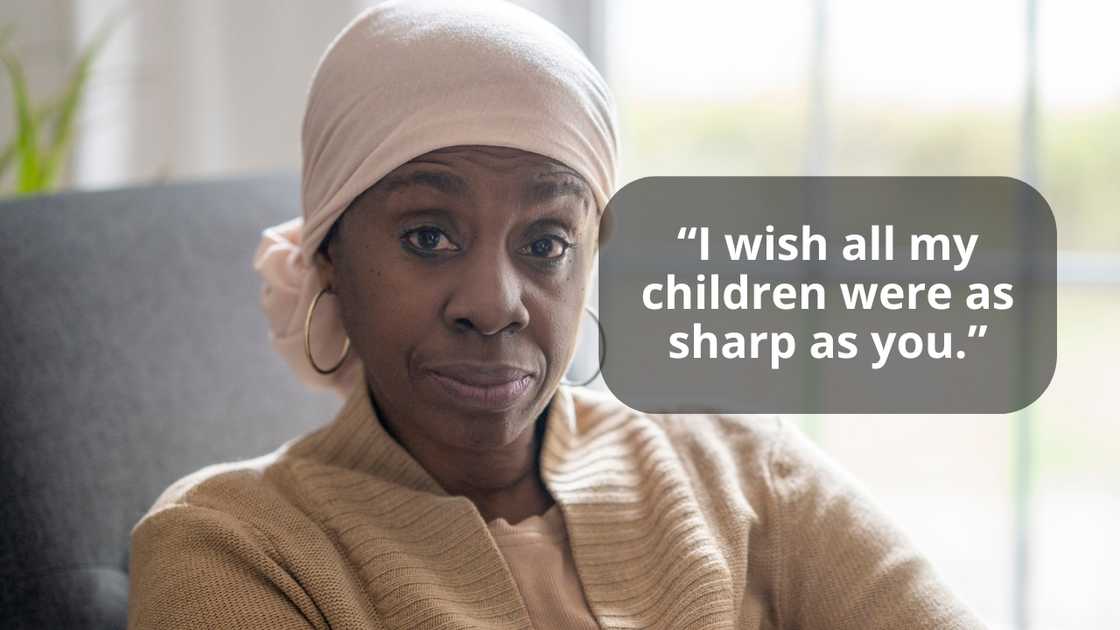
Mama Uju took note. On certain nights, when the kerosene lamp flickered dimly, she would let out a sigh and mutter, nearly to herself, “I wish all my children were as clever as you.”
She never spoke it aloud. She never intended to cause damage. Yet, words possess a tendency to spread even when murmured.
Obinna heard it.
Obinna was the oldest child of Mama Uju. He was boisterous, energetic, and constantly believed the world owed him more than it provided. He experimented with various ventures—commerce, transportation, minor political activities—but none lasted for long. He had a strong aversion to administrative tasks and avoided gatherings. When challenges arose, he accused those who “had too much knowledge.”
Ifunanya was more reserved but had a different kind of acuity. She observed. She recalled. She grasped how emotions could be manipulated as a tool. When Mama Uju complimented me, Ifunanya’s smile never extended to her eyes.
Chukwudi, the youngest, remained mostly quiet. He followed Obinna, chuckled when Obinna did, and steered clear of issues unless drawn into them.
I was not of their lineage. That reality remained in the space, even when not mentioned.
Nevertheless, I thought utility would safeguard me. I thought assistance would ease hostility. I thought kinship carried more strength than doubt.
I was wrong.
As property values increased and cooperative returns grew, the documents became more common—and more significant. Each signature was crucial. Each notice had repercussions. Mama Uju relied on me more, not less. She requested that I keep duplicates. That I explain matters twice. That I go to meetings on her behalf when she wasn’t feeling well.
That reliance altered the dynamics within the chamber.

Obinna started joking, out loud, that I was “the one who controlled all the documents.” Ifunanya began to question Mama Uju, in a relaxed manner, whether she was certain I had shared everything accurately. Minor remarks. Tiny suspicions. Like termites, operating silently.
I sensed a shift in the atmosphere. People fell silent as I walked into rooms. Neighbors started asking questions they had never posed before. Mama Uju continued to call me, but now she closely observed my face while I spoke, as if anticipating an error.
I was attempting to keep a family united through speech, without realizing that those very words were turning into the noose they intended to use against me.
The gossip did not appear all at once. It arrived subtly, like rain that seems harmless until the earth starts to collapse.
It began with murmurs claiming I was “too engaged” in land issues that weren’t mine. Soon, it progressed to hints that I took pleasure in bewildering Mama Uju so I could “advance my position.” By the time I understood how deep it had gone, the tale had already taken on a life of its own.
Obinna was no longer jesting.

At a neighborhood gathering convened to address shared responsibilities and lingering border disputes, he rose uninvited. His tone was strong, well-rehearsed, and filled with pointed blame.
This dwelling is facing an issue,” he remarked, gesturing towards me. “We have an individual who reviews papers for our mother yet does so without a pure heart.
A low sound spread among the people.
He asserted that I had mishandled cooperative refunds. That I had postponed providing information. That I had subtly changed documents to ensure my essential role. Every statement was unclear, yet collectively they created an image that left people uneasy.
I requested him to provide details. He declined.
If you have nothing to conceal,” he said, “why do you regulate all the documents?
That query remained in mind long after the meeting concluded.
Ifunanya approached things differently. She never confronted me openly. Rather, she introduced uncertainties into Mama Uju’s thoughts during calm times—while preparing meals, while organizing clothes, while getting ready for evening prayers.

Mother,” she would say softly, “are you certain the letter conveyed what she claimed? These matters can be complicated.
Mama Uju started asking me to go over the explanations again. Then, she wanted them explained once more. Finally, she asked me to leave the letters with her so she could “meditate on them” overnight.
I recognized her anxiety, yet it caused me pain.
My neighbors started showing me fresh attention. As I passed by, discussions would stop. When I spoke during meetings, individuals nodded with courtesy but shared glances. My reputation, which had been firm, now seemed open to discussion.
The most difficult moment occurred when Obinna openly accused me of planning to sell the land without their knowledge.
He did it openly, in the presence of elders, asserting that I had “connections” and “secret strategies.” He claimed I was positioning myself as the successor while pretending to be a supporter.
Mama Uju said nothing.
The quiet hurt more than his statements.
I experienced a conflict between two impulses. A portion of me longed to vigorously defend myself, to vocalize truths until they pierced through doubt. Meanwhile, another aspect of me desired to step back, to cease assisting, and allow the disorder to reveal its true nature.

But I was aware that something perilous was unfolding beneath the commotion.
Documents were disappearing and then turning up again. Signatures were being mentioned that I had never encountered. Discussions were taking place without my knowledge—conversations regarding land borders and transactions that did not align with the letters I had read.
I understood at that moment that the rumors were not the illness. They were the disguise.
Someone had a plan and required me to be discredited before it came to light.
I sensed the walls tightening around me. Mama Uju no longer gave me letters right away. She sought Obinna’s view first. Ifunanya listened to every word I said. Even Chukwudi looked away from my gaze.
I continued to reside in the same complex, consume the same meals, and rest beneath the same roof—but I was no longer secure in that place.
I decided silently.
I stopped arguing.
I started collecting.
Each action. Each notification. Each collaborative letter. Every fragment of paper that had ever gone through my hands.
And without informing anyone, I took them to a place where rumors couldn’t follow.

I visited Barrister Emeka Nwoye on a morning that seemed more burdensome than it should have been. His office was modest, located behind a line of old shops, with a fan that creaked as though it had grown weary of speaking the truth for a living. I selected him because he was known for his patience. He listened before he spoke.
I placed the papers on his desk in neatly arranged stacks. Property titles. Notices from the cooperative society. Descriptions of boundaries. Letters that were stamped and those that weren’t. Some I had translated many times. Others I had only encountered once.
He read without interruption.
After he was done, he leaned back and requested me to recount exactly how I had described each document to Mama Uju. I did so. Every word. In a composed manner. Accurately.
He nodded.
You haven’t changed anything,” he stated. “Not in terms of meaning. Not in purpose.
My chest felt relieved for the first time in weeks.
Then he revealed to me what I had overlooked.

Amidst the papers was a sales contract that had never been provided for me to translate. It included Obinna’s name. Not as a witness. As the vendor. The land mentioned was part of the family’s inherited property, still legally under Mama Uju’s guardianship.
The contract was invalid, yet perilous. If not disputed, it might have led to confusion over borders and falsely claimed approval that had never been provided.
If this had been handled discreetly,” the lawyer stated, “you would have been held responsible. You are the one connected with the documentation.
That was the instant all changed.
The claims were not based on doubt. They were planning.
Lawyer Emeka asked for an official village assembly. He demanded that the papers be read openly. Not condensed. Not explained behind closed doors. Recited aloud, in their entirety.
Chief Anozie called the meeting in a short time. The council room was filled rapidly. News had circulated that the family issue was turning into a legal matter.
Obinna arrived with assurance. Ifunanya arrived calm. Mama Uju appeared unwell and disoriented.
They renewed their allegations. Obinna raised his voice regarding deceit and treachery. Ifunanya nodded at appropriate times, with sadness clearly visible on her face.
Then the barrister stood.

He examined each document. Initially in English. Afterwards in the language that everyone comprehended. Deliberately. Systematically. Without any feeling.
Upon reaching the sales contract, the room changed.
He read Obinna’s name. His signature. His fingerprint.
Obinna attempted to interject. The leader raised his hand.
The lawyer calmly outlined the illegality. He detailed how the property was not eligible for sale. He also described who had tried to sell it and the manner in which they did so.
Then he looked towards me.
“Verify your translations,” he stated.
I did. Line by line. Without defensiveness. Without anger. Just the facts.
The whispers became more intense. People looked around. Glances shifted from me to Obinna.
Ifunanya attempted to speak, but her previous uncertainties crumbled beneath the burden of written facts. Her murmurs lacked any evidence to support them.
Mama Uju pressed her hand to her lips. There was nothing left for her to deny.
In that chamber, the narrative took a turn.
I was no longer the one in control.
I was the record.

The council did not spend much time discussing. Facts tend to shorten debates that emotions prolong.
Chief Anozie spoke with determination. Obinna’s attempt to sell the property was declared invalid and illegal. All claims he had made regarding the land were removed in front of all present. He was publicly cautioned that a second effort would result in repercussions extending beyond mere community embarrassment.
Obinna didn’t protest this time. He looked at the ground, his jaw tight, the self-assurance that had once filled his posture fading away. The same neighbors who had previously listened intently to his claims now observed him with clear disapproval.
Ifunanya’s penalty was more subdued yet more profound.
The leader confronted her manipulation head-on—how skepticism, when introduced on purpose, can be just as harmful as stealing. The room became extremely quiet as he discussed deceit that masks itself in kindness. Individuals moved away from her on the seats. Some women nodded their heads slowly. Her carefully maintained reputation shattered within a single afternoon.
Mama Uju did not stand up for them.
She remained seated with her hands together, her eyes red and puffy, taking in the results of misplaced trust. When she finally spoke, her voice was quiet.
I didn’t pay attention when I should have,” she stated. “I allowed fear to direct me.
She looked at me and offered a public apology.
I agreed to it, but a part of me had already transformed.
Following the meeting, daily life within the compound carried on, yet the dynamics had changed forever. Obinna kept his distance. Ifunanya only spoke when absolutely required. Chukwudi observed everything with increased vigilance, as though he was finally recognizing the price of borrowed security.
Mama Uju now showed me clear respect. She once again gave way to me regarding documents and decisions—but I refused.
I calmly informed her that I would no longer act as her intermediary. Not due to resentment, but because of clear understanding. I mentioned that reliance without trust is a gradual toxin. She nodded, showing she grasped more than she expressed.
Rather, I concentrated on my own future.

The cooperative group, whose announcements I had accurately translated for many years, presented me with a scholarship chance that I had never been aware of. The same careful approach that previously led me to doubt now proved beneficial. I applied discreetly. I was admitted.
When I departed the compound to continue my education, there was no formal event. Only a small bag. A strong farewell. And a place I had attained.
Years passed.
I created a life based on wisdom and limits. I discovered that being smart isn’t just about grasping written material—it’s about recognizing when to leave situations that diminish your value.
Each after each, my step-siblings returned.
Obinna was the first to arrive, seeking assistance with a land conflict he faced. Later, Ifunanya came, requesting me to “just explain” a letter. In both cases, I politely and firmly declined.
“I’m not the one for that,” I stated.
I assisted Chukwudi. I taught him how to read documents on his own. I demonstrated how to ask questions. I ensured he grasped that knowledge serves as protection, not a tool for harm.
Now, when I reflect on that council chamber, I am not filled with anger. I experience a sense of being proven right, certainly—but even more so, I feel stable and secure.

My intellect once sustained a family. When that family opposed it, the same intellect provided me with a new beginning.
And this, I have discovered, is the subtle strength that cannot be stripped away from you.
For many years, I thought that loyalty involved silently tolerating distrust. I believed that by being useful, calm, and reserved, the truth would ultimately reveal itself. What I failed to realize at the time was that truth also needs limits. Without them, sincerity can turn into a responsibility that others believe they have the right to take advantage of.
I discovered that intelligence can create fear in areas where power relies on confusion. When individuals gain from not knowing, clarity turns into a danger. This was never my mistake, yet it became my duty to react thoughtfully. I didn’t succeed by shouting louder. I succeeded by being prepared, recording details, and allowing facts to speak where emotions couldn’t.
Family, I have come to understand, is not solely defined by blood relations. It is demonstrated by how individuals handle your honesty when it causes them inconvenience. Love that lacks trust is weak. Assistance that lacks respect can be harmful.
Leaving was not a betrayal. It was about taking care of oneself.
If you are the one keeping things intact—interpreting, clarifying, safeguarding—reflect on this: are they appreciating your perspective, or simply gaining from your quietness?
This narrative is based on the genuine experiences shared by our readers. We feel that each story holds a valuable lesson that can illuminate the path for others. In order to maintain everyone’s confidentiality, our editors might alter names, places, and some specifics while ensuring the essence of the story remains intact. The pictures are solely for visual purposes. If you wish to share your own tale, kindly reach out to us through email.


 jasdooit
Leave a comment