
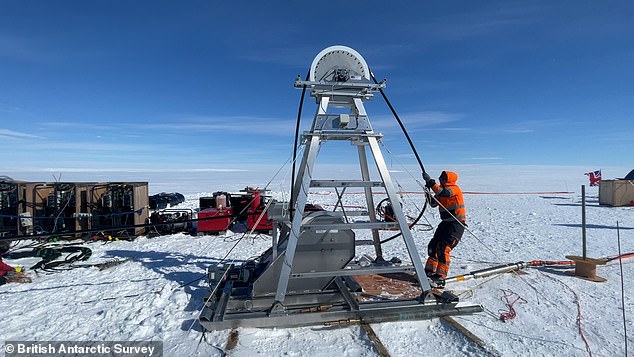
Researchers are on the verge of boring into the most remote and least-studied section of the Thwaites Glacier.
Approximately the same size as the United Kingdom, this massive ice formation in West Antarctica is among the biggest and most rapidly evolving glaciers on the planet.
Concerningly, studies indicate that if it collapses, the glacier could lead to a significant increase in global sea levels by approximately 2.1 feet (65 centimeters) – submerging whole communities beneath the water.
For this reason, it is known as the ‘Doomsday Glacier’.
Although it is significant, not much is understood about the ocean mechanisms that cause melting from beneath the ice.
Scientists from the British Antarctic Survey (BAS) will now employ hot water to penetrate the ice and install equipment in one of the most significant sections of the glacier.
They wish this will provide insight into the exact process by which the glacier is melting from underneath – before it’s too late.
“This is among the most significant and volatile glaciers on Earth, and we are now finally able to observe what is occurring in the areas that matter most,” said Dr. Peter Davis, a physical oceanographer at BAS.
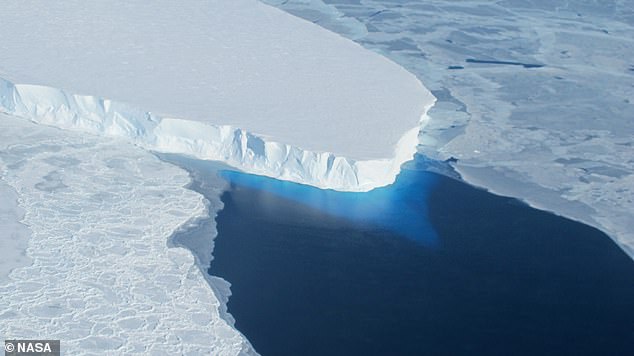
Although the BAS has been examining the Thwaites Glacier since 2018, the majority of their studies have centered on the more stable sections of the glacier.
The primary body of the glacier is filled with perilous cracks, making its exploration challenging – but that has changed.
To access this uncharted area, the BAS departed from New Zealand on the RV Araon, embarking on a three-week journey to the Thwaites Glacier.
Prior to the team stepping onto the ice, they deployed a remote-controlled vehicle to survey the terrain for concealed cracks beneath the surface.
After the vehicle found a secure spot, the team traveled the 18 miles by helicopter, needing more than 40 trips to move everything.
Currently, researchers have only two weeks left to finish the drilling operation located just below the grounding line – the location where the glacier detaches from the ocean floor and transforms into a floating ice shelf.
“This is the essence of polar science,” remarked Dr. Won Sang Lee, head of the expedition from the Korea Polar Research Institute (KOPRI).
We embarked on this remarkable journey without any assurance that we would even reach the ice, so being on the glacier and preparing to install these devices is a reflection of the abilities and knowledge of all those involved from KOPRI and BAS.
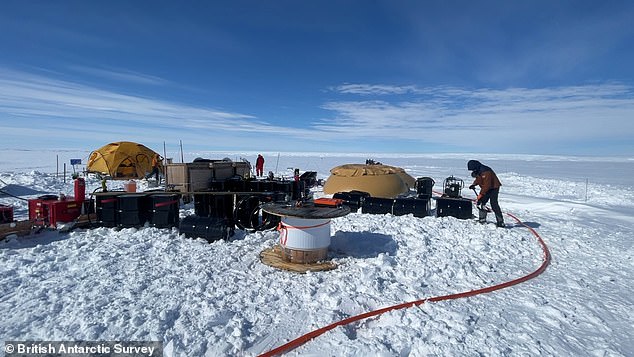
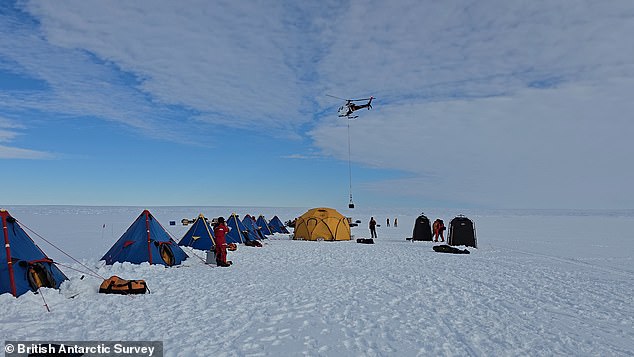
The group intends to bore 3,280ft (1,000m) into the ice by employing a method created by the BAS.
This includes warming water to around 90°C and then forcing it under high pressure through a hose to dissolve the ice.
This should form an opening approximately 11 inches (30cm) in width, through which the scientists can insert their equipment.gather precise data on sea temperature and flow in this area.
The group will also gather sediment and water samples to gain further insight into past events at the Thwaites Glacier, as well as current developments.
Nevertheless, due to the extremely cold temperatures, the hole will freeze again every one or two days, indicating that the procedure needs to be carried out consistently.
“This is a highly difficult task,” Dr. Davis explained.
For the first time, we will receive daily data from under the ice shelf close to the grounding line.
We’ll be observing, almost as it happens, the effects of warm ocean water on the ice located 1,000 meters beneath the surface.
It has only recently become feasible – and it is essential for grasping how quickly ocean levels might increase.
Although this may seem highly risky, the outcomes could be essential for forecasting – and avoiding – subsequent increases in sea levels.
Throughout the globe, millions of individuals reside in coastal areas that could be submerged if Thwaites were to collapse.
“The findings gathered during this journey will assist researchers in enhancing forecasts regarding the rate at which ocean levels might increase, providing authorities and local populations additional time to prepare and adjust,” the group stated.




 jasdooit
Leave a comment