
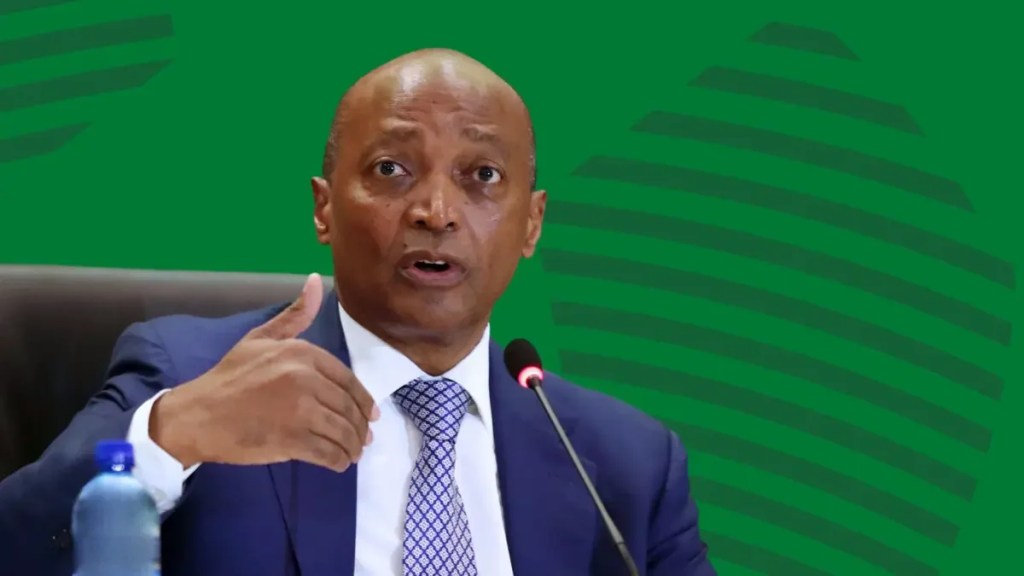
Patrice Motsepe, the head of the Confederation of African Football (CAF), is facing a challenging position after the disciplinary committee’s contentious decision regarding events in the Morocco-Senegal final of the 2025 Africa Cup of Nations. Although he does not openly challenge the judicial authority’s verdict, Motsepe’s remarks indicate a feeling of discomfort and irritation, expressed through well-constructed official terminology.
“I was deeply disappointed by the unacceptable events that occurred during the Finals of the TotalEnergies CAF AFCON Morocco 2025,” Motsepe stated in a release issued on Friday.on the CAF website. He was quick to stress that he “respects and will comply with every decision made by our CAF Judicial Bodies”.
Nevertheless, this stated respect is quickly followed by the announcement of a CAF Executive Committee (COMEX) meeting, which will comprehensively examine the regulations, especially the Disciplinary Code. Officially, the aim is «to ensure that the CAF Judicial Bodies have the authority to impose suitable and deterrent penalties». Implicitly, the message implies that the penalties applied were not entirely satisfactory, beginning with the president himself.
Motsepe refrained from explicit criticism, opting instead to highlight the significance of preserving the «reputation, integrity, respect, and global competitiveness of African Football and CAF Competitions». This strategy aims to maintain the autonomy of disciplinary authorities while responding to the frustrations of part of the African sports community.
Elaborating on his comments, the CAF president also addressed the topic of refereeing, highlighting notable advancements in recent times and expressing a commitment to additional financial and technical assistance. «It is crucial that African referees, VAR operators, and match officials are seen, valued, and recognized as impartial, just, and of international standard», he stressed.
Under this official declaration, there is a subtle political strategy: offering reassurance without causing damage, and most importantly, ensuring the CAF does not seem to be struggling with its own choices. The issue still stands as to whether the suggested changes will be enough to conclude a period that keeps testing the credibility of the regional organization.
 jasdooit
Leave a comment