
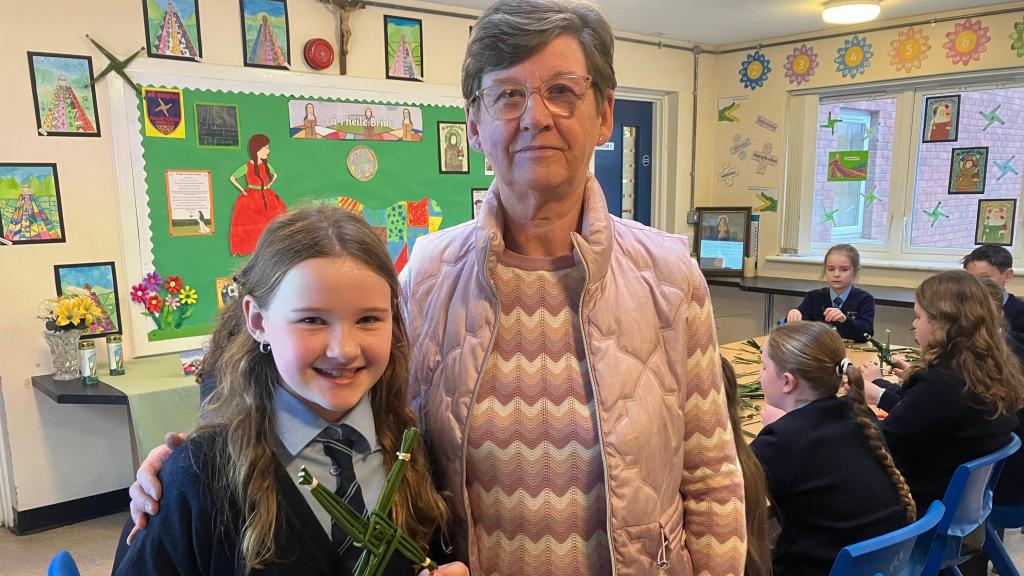
For over two decades, Carmel Hayes has been traveling to St Brigid’s Primary School in Drumilly, south Armagh, to show students how to create St Brigid’s crosses.
“The entire key is to keep them secure and firm,” she remarked.
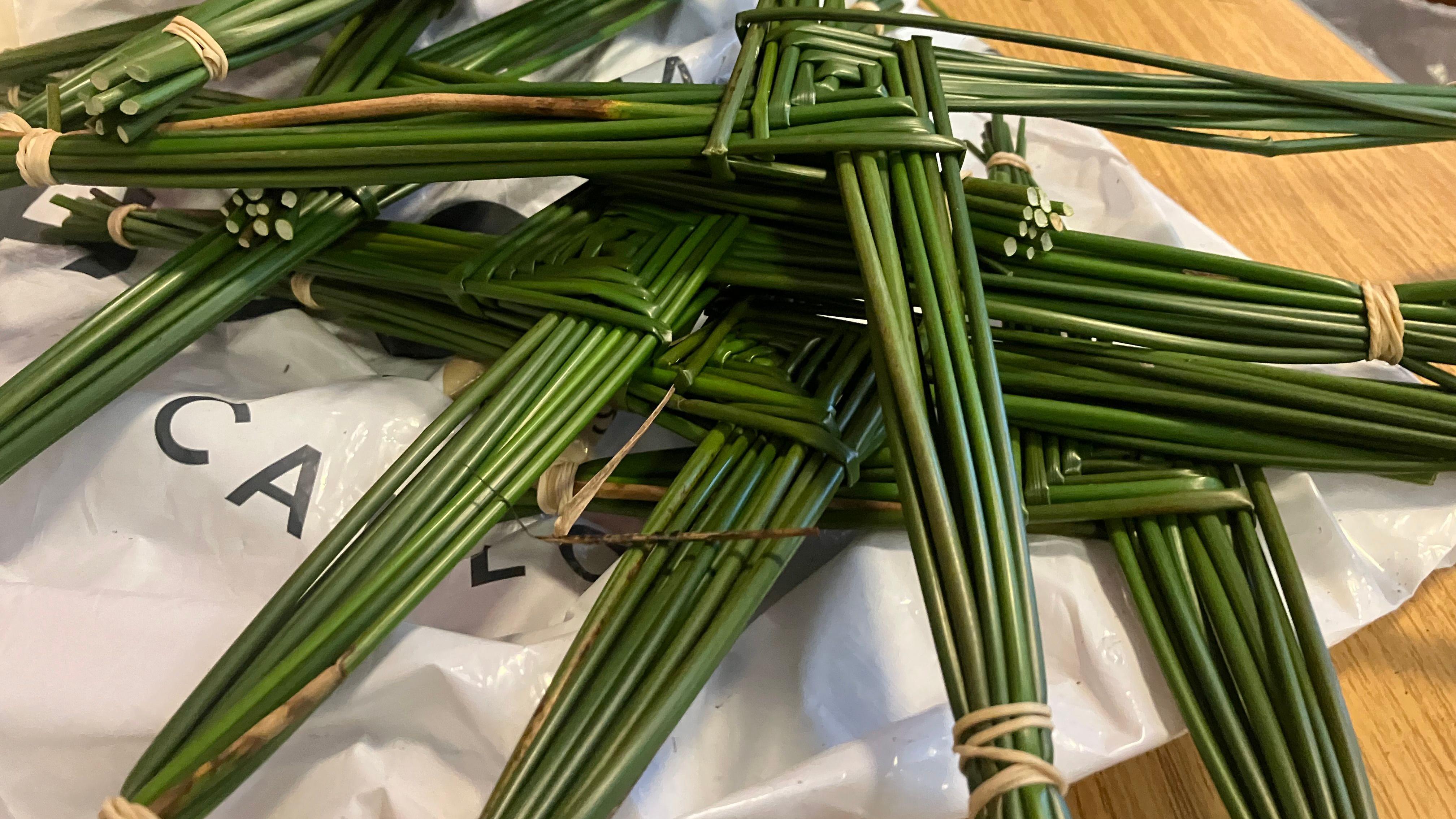
The ‘them’ she is talking about are rushes, the dense, grass-like plant that farmers often wish wasn’t growing in their fields.
Among Carmel’s most dedicated pupils is her granddaughter Mya. She explained that the key to creating a fine St Brigid’s Cross is to fold the reeds, keep them firm, and gradually add more on each side.
In a corner of the room, there is a basket filled with rushes, some of which were gathered by Olivia.
“I ventured to the fields, felled them, and carried them to the school,” she stated.
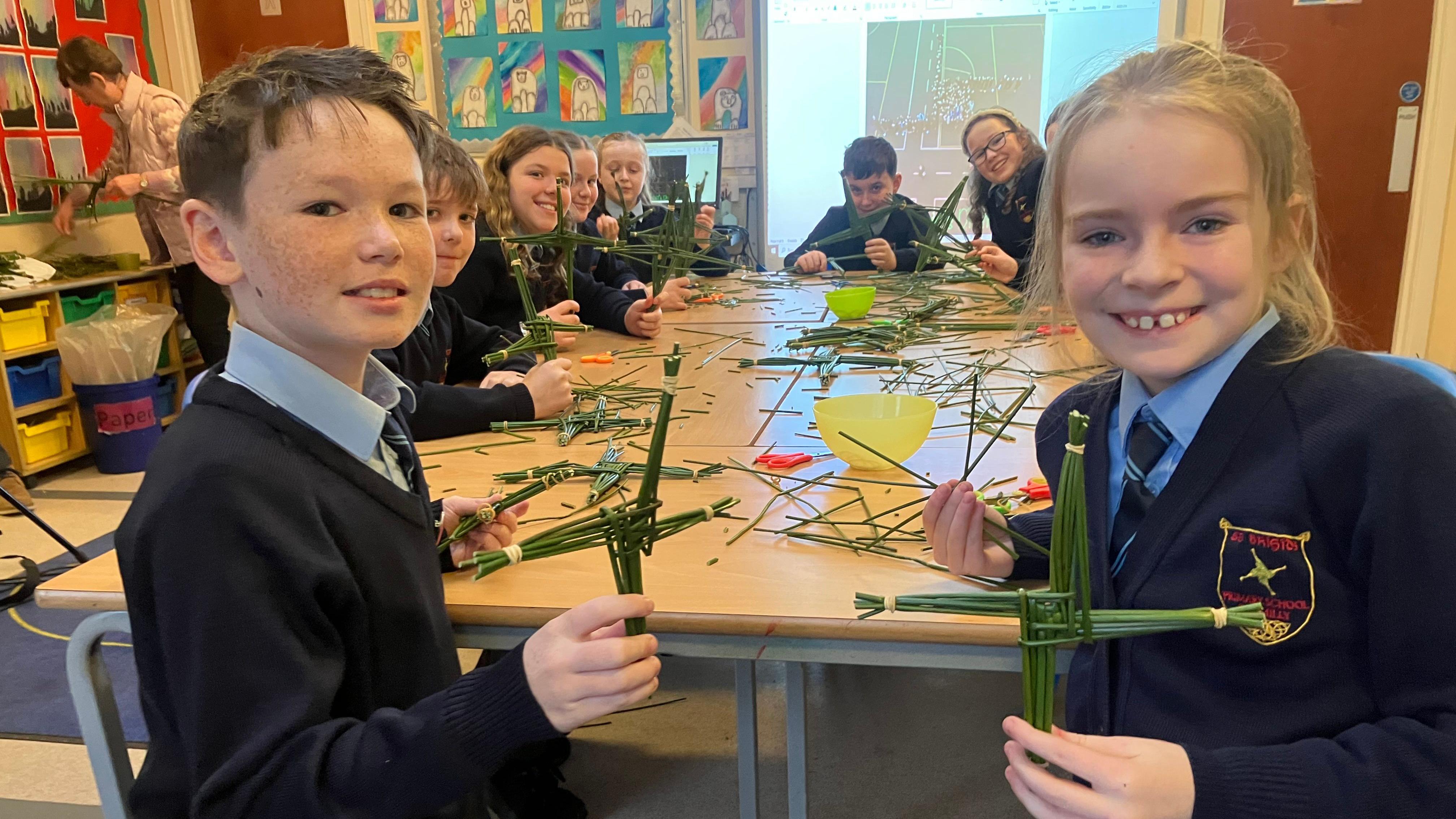
In addition to cross making, Carmel is educating the children about some of the tales connected to St. Brigid and explaining that her feast day, February 1, signifies the beginning of spring or Imbolc, in the Celtic calendar.
“It’s pleasant to speak about her at a school named in her honor,” Carmel said.
It is a yearly custom on 1 February to escape the winter gloom and welcome spring, by searching for snowdrops and flowers, as the beginning of spring is closely associated with St Brigid.
Among the tales the children have been studying is the story of Brigid requesting land from the King of Leinster for her endeavors. He refused. She then persuaded him to grant her as much land as her cloak could cover.
Riona stated: “She desired land to construct a church, and she possessed a cloak that spread across the entire area, but the king was unwilling for her to obtain the land.”
With land obtained, Eadaoin says, “She constructed that church in Kildare, which was her most renowned church, but she hailed from nearby in Louth.”
Faughart in County Louth is slightly more than 10 miles away from the local primary school.
Although Louth and Kildare might have the most well-developed links to St Brigid, Downpatrick in County Down also holds a significant claim.
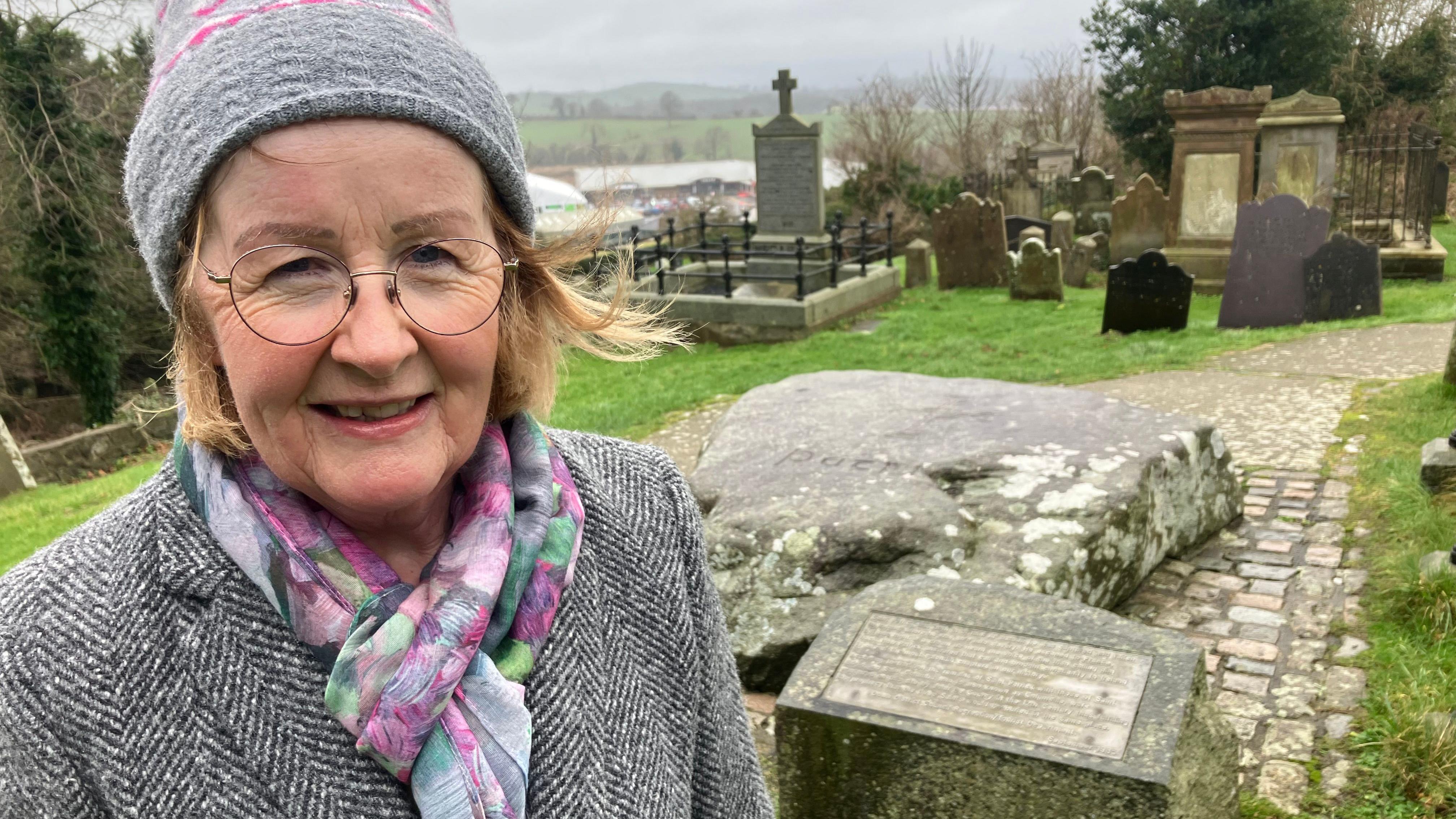
The town in County Down might be more famous as the birthplace of St. Patrick, but it is believed that Ireland’s other two patron saints, Brigid and Colmcille, are also buried there.
Located at the tomb of the three saints in Down Cathedral is the fittingly named tour guide Brigid Watson.
“When she passed away, she was laid to rest next to the main altar in Kildare,” she stated.
But due to Viking raids, it was determined in 878 AD to move her remains to Downpatrick, where she is now interred alongside St. Patrick and St. Colmcille – thus, the three patron saints of Ireland are all buried together on Cathedral Hill.
Currently, Watson stated that it is uncertain how much of St. Brigid’s remains are still in Downpatrick, as some relics, including her skull, were moved elsewhere.
“I have, in fact, visited the church located on the edge of Lisbon where her skull is housed,” Watson stated.
It was transported there by three knights who departed from there in the 12th century.
In recent times, St. Brigid’s Day has become more significant. It is now recognized as a public holiday in the Republic of Ireland. While it is not a holiday in Northern Ireland, an increasing number of events are held annually to celebrate her feast day.
One of the events is a multi-day festival held at Down Cathedral, located very close to her tomb.



 jasdooit
Leave a comment