
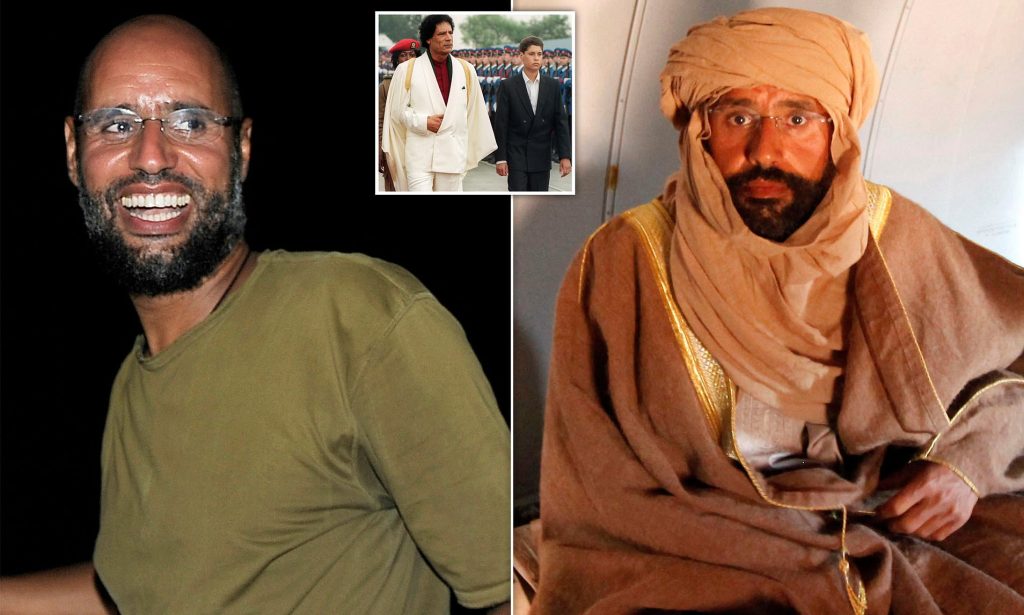
The son of the late Libyan leader Colonel Gaddafi, who was educated in London, was killed by armed individuals in his native country.
Saif al-Islam Gaddafi, aged 53, was assaulted by unknown individuals who entered the garden of a facility that was supposed to be a high-security site in Zintan, located in north-western Libya, on Tuesday.
Abdullah Othman Abdurrahim, a companion of the Gaddafi family, stated: ‘Four armed individuals broke into Saif al-Islam Kadhafi’s home after disabling the security cameras, and then carried out his execution.’
Saif al-Islam’s cousin, Hamid Kadhafi, stated that he had ‘died as a martyr’, adding that the location of the compound was intended to remain confidential.
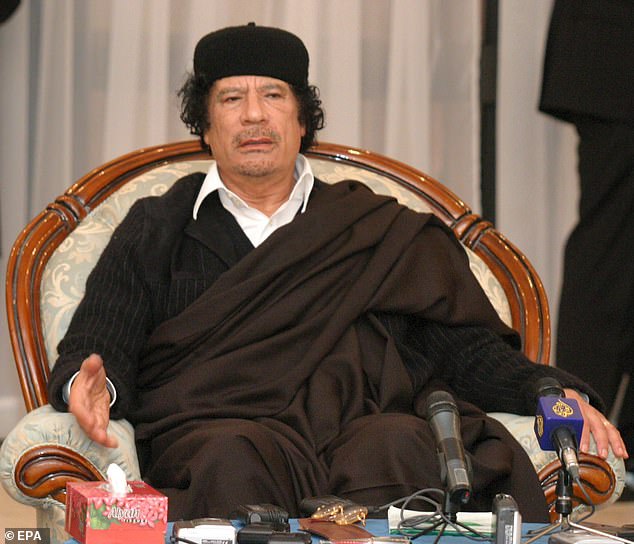
After his father, Muammar Gaddafi, was killed in 2011, Saif al-Islam emerged as the leading authority in the oil-rich nation of North Africa.
Being the second son of the dictator and his second wife, Safia Farkash, Saif Al-Islam was involved in his father’s inner circle, carrying out diplomatic tasks on his behalf.
A proficient English speaker earned a PhD from the London School of Economics and was consistently regarded as a potential heir to his father’s legacy.
He helped the West ensure that Libya gave up its weapons of mass destruction and arranged compensation for the families of victims from the 1988 bombing of Pan Am Flight 103 over Lockerbie, Scotland.
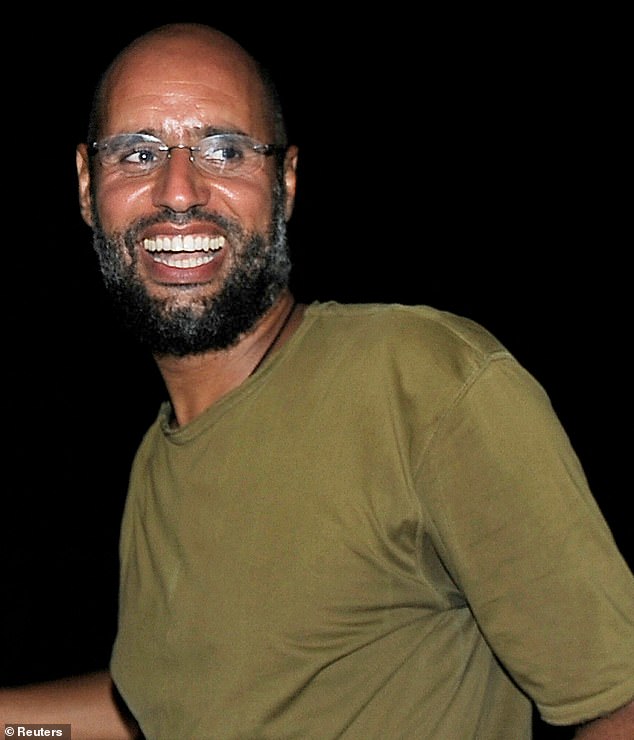
Saif Al-Islam referred to himself as ‘a reformer’ and advocated for a Libyan constitution along with the promotion of human rights.
This occurred prior to British and French aircraft being part of a group that conducted bombing raids in Libya during the 2011 Arab Spring, leading to the downfall of Colonel Gaddafi’s regime.
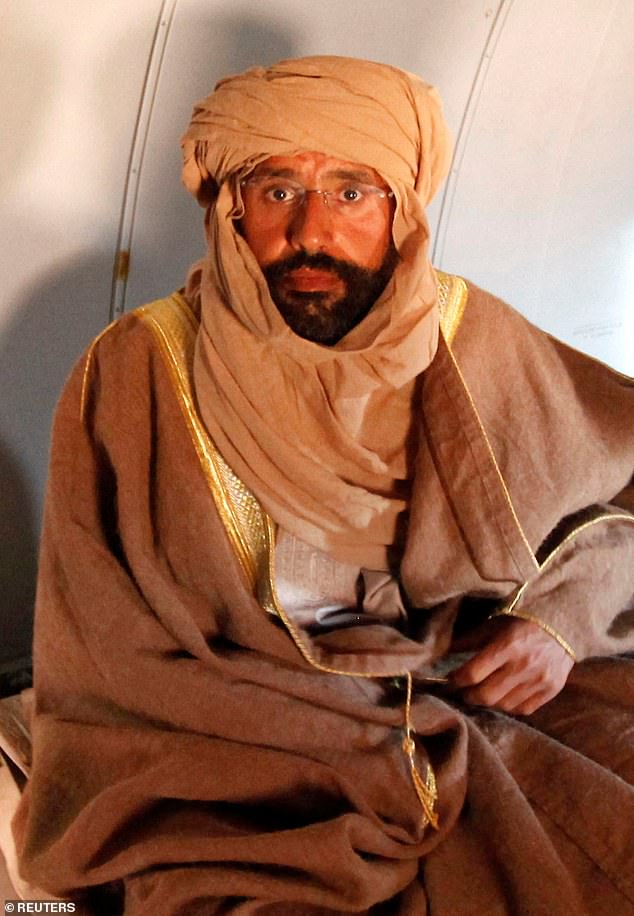
Following the rebels’ capture of Tripoli, Saif al-Islam escaped to nearby Niger, disguised as a member of a Bedouin tribe.
The Abu Bakr Sadik Brigade group took him on a desert road and transported him to the western town of Zintan approximately one month following his father’s pursuit and death.
Saif al-Islam received assistance while in prison, and in 2015 was given a death sentence by a court in Tripoli for war crimes.
He was also under the jurisdiction of the International Criminal Court (ICC) in The Hague for these offenses.
The ‘reformer’ went into hiding in Zintan to escape assassination following his release by militiamen in 2017 under an amnesty law.
In 2021, Saif Al-Islam went to the southern city of Sabha to submit his application for the presidential election.
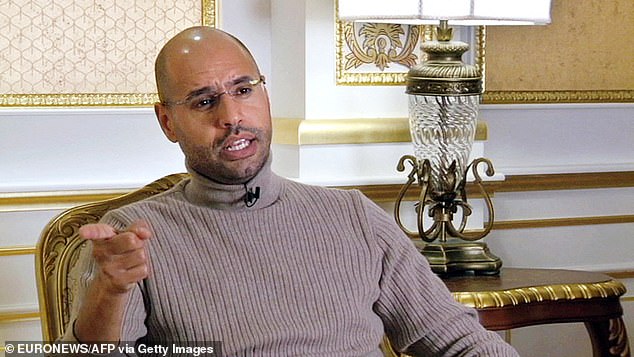
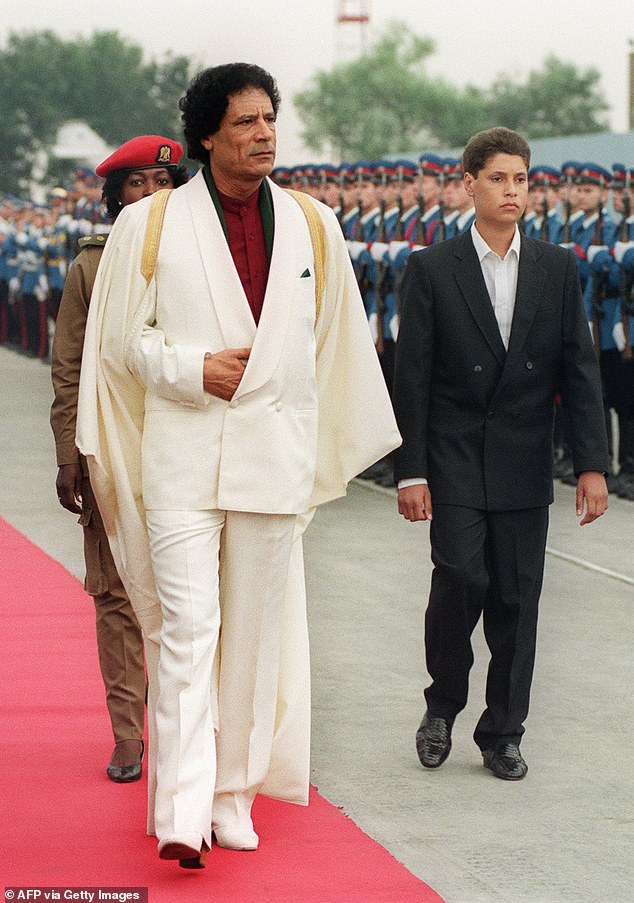
However, his candidacy was highly contentious, and faced opposition from numerous adversaries of the Gaddafi family in a Libya that had turned into a failed state.
Many unverified stories circulated regarding Saif Al-Islam’s private life, such as one claiming he was married and had a daughter.



 jasdooit
Leave a comment