
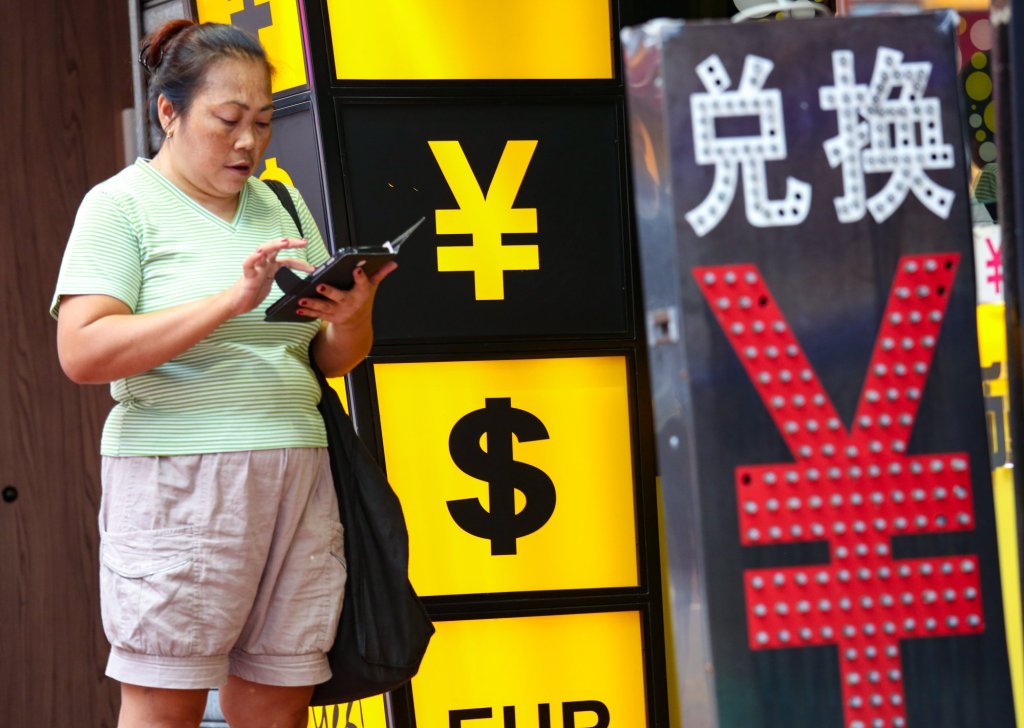
Following a surprising theft of 51 million yen last week, the South China Morning Post looks into the dangers within the city’s currency exchange business.
Last week, Hong Kong was shocked by a theft worth 51 million yen (US$327,560), following reports from two employees of a Japanese currency exchange firm that their money was taken outside a money exchange office in Sheung Wan.
Two Japanese men informed officers that they had scheduled a meeting to exchange approximately 190 million yen at a local money transfer office on the day they traveled to the city. Authorities have detained six individuals, including one of the victims, who is suspected of serving as an informant in the scheme.
Industry experts mentioned that exchanging significant amounts of cash through foreign currency exchange services was a frequent occurrence. The South China Morning Post investigates the functioning of these business methods and the regulation of this trade.
Are you curious about the most significant issues and developments happening globally? Find the solutions withSCMP Knowledge, our latest platform offering carefully selected content including explainers, FAQs, analyses, and infographics, presented by our acclaimed team.
1. Is it common for employees to transport significant amounts of money to Hong Kong?
A person well-versed in the regulatory framework, along with multiple industry representatives, stated that transactions involving significant sums of money between domestic and international currency exchange services were a longstanding common practice.
The source informed the SCMP that she had encountered situations where money exchange companies based in Dubai or India sent personnel to Hong Kong, carrying foreign currency to convert into different currencies.
She mentioned that a currency exchange company may have to acquire more cash reserves when its supply of a specific currency is depleted, which could result in it seeking assistance from international money exchangers.
Hitesh Mishra, the chief executive of the money exchange company Zeus Hong Kong Limited, also mentioned that it is typical for these outlets to trade various currencies with other businesses through cash transactions.
“They are given numerous foreign currencies, so their task is to either deposit them in a bank or trade them with other partners [for local currency],” he stated.
He mentioned that numerous smaller exchanges lacked a business bank account, necessitating cash-to-cash transactions.
Vincent Tse, the founder of MPL Corporate Consulting, a firm that offers advisory services to currency exchange businesses, mentioned that some individuals also converted Japanese yen into Hong Kong or U.S. dollars within the city to buy gold, which is tax-free locally but incurs a 10 percent consumption tax in Japan.
2. Which regulations govern businesses involved in currency exchange in Hong Kong?
Currency exchange businesses, often referred to as money service providers, are permitted to function legally only when they secure a permit from the Customs and Excise Department and adhere to rigorous anti-money laundering protocols.
Licensed operators are required to perform due diligence and document customer information for transactions exceeding HK$120,000. Although they are not obligated to report details of significant transactions to customs, officials might ask for business records during inspections.
Mishra mentioned that exchangers would need clients making transactions exceeding HK$120,000 to submit personal information and complete a form. The individuals’ names would subsequently be verified against a list of sanctioned persons or those with criminal records before the exchange can take place.
3. Is it permissible to carry such a large amount of cash?
Individuals arriving in Hong Kong are required to inform the Customs and Excise Department if they have more than HK$120,000 in cash, by utilizing the red channel.
If the passengers are not the individuals who own the cash, they are required to supply details regarding the owner on the declaration form.
First-time offenders can eliminate legal responsibility by paying HK$2,000 provided they have no history of money laundering or terrorist financing crimes and are not believed to be involved with illegal funds.
In situations that proceed to court, the highest penalty includes a fine of HK$500,000 and a two-year prison sentence.
The source mentioned that it was not required for individuals utilizing the red channel to explain how they planned to use the money they possessed.
4. How many individuals have been identified for failing to report cash?
Customs documented 107 instances of incoming travelers not declaring cash amounts exceeding HK$120,000 in 2024, 80 instances in 2025, and seven cases up to last month.
The biggest unreported amount entered into Hong Kong between 2024 and last month was approximately HK$11 million.
5. In what ways do currency exchange offices ensure the safety of cash during transportation?
Tse mentioned that some customers who had significant sums of cash immediately went to currency exchange shops after arriving in Hong Kong without hiring private security.
He mentioned that exchange stores ought to hire armed security firms and acquire insurance to safeguard their deposits.
“Occasionally, stores may also offer currencies to banks. In such instances, we recommend they avoid going to the bank at the same time and via the same route, so that thieves cannot identify a routine,” he stated.
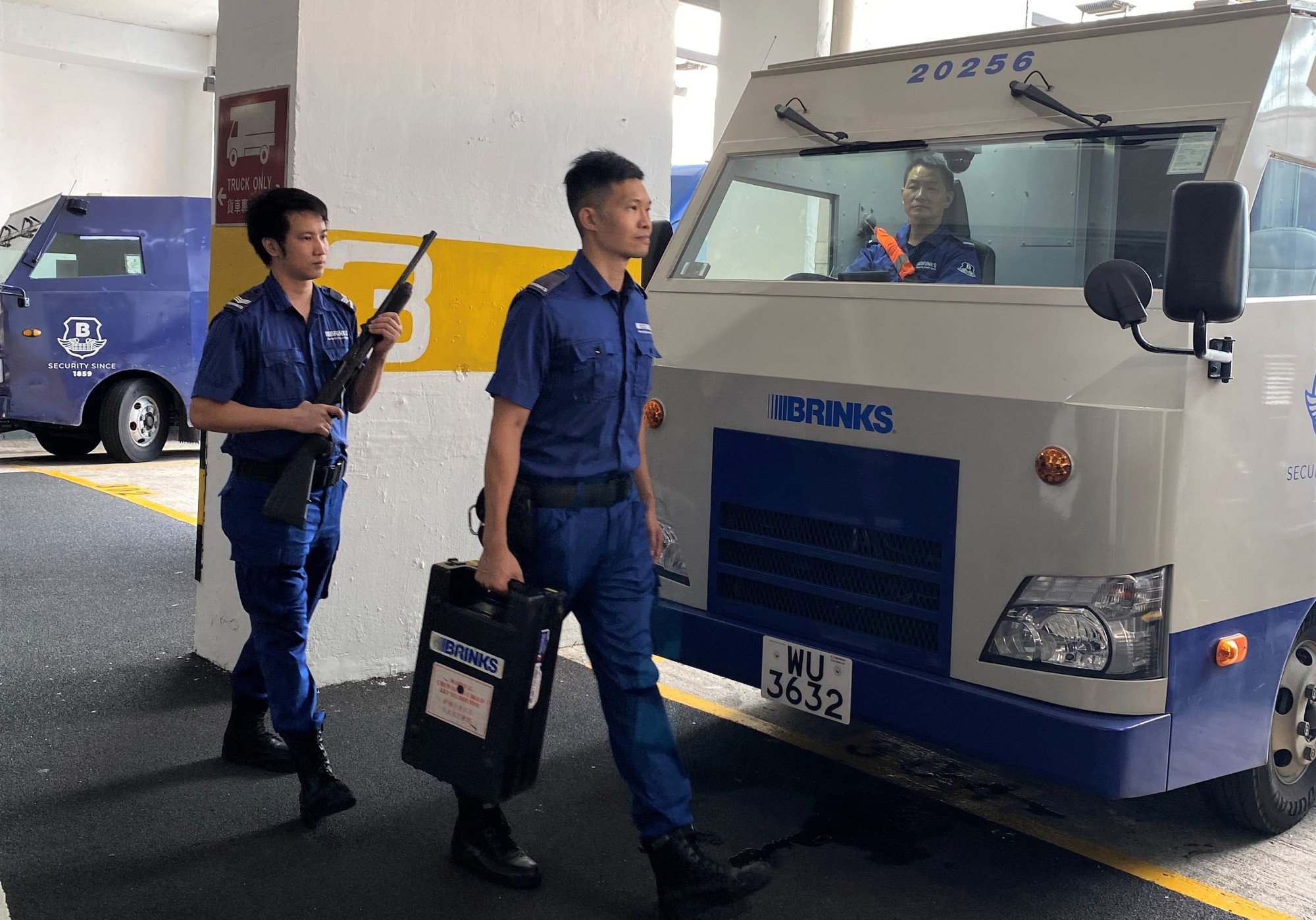
Mishra mentioned that companies might opt to use security firms for cash transportation when transactions reach HK$500,000 or higher, as this would make the expense of hiring an armored vehicle and security staff worthwhile.
He mentioned that companies would avoid significant transactions involving millions from a new client, since employees need to conduct a thorough background investigation on the customer first.
Ngau Kee, a consulting firm for the Hong Kong Money Service Operators Association, stated that it would implement additional measures when handling transactions exceeding HK$1 million and would only conduct such large deals with established clients.
“Out of additional caution, we will also ask individuals who conduct three or more transactions worth HK$120,000 or more annually to sign up as our members,” a spokesperson stated.
In terms of security, she mentioned that the company plans to employ armed guard services to protect the currency notes.
More Articles from SCMP
As the US-Russia agreement is set to end, the risk of a new nuclear weapons competition increases.
Hong Kong may introduce a fixed fine of HK$3,000 for smoking at construction sites.
American allies are now beginning to protect themselves from American risks.
China’s gold trading center is shaken as a second platform encounters a payment emergency
This piece was first published in the South China Morning Post (www.scmp.com), a top news outlet covering China and Asia.
Copyright (c) 2026. South China Morning Post Publishers Ltd. All rights reserved.

 jasdooit
Leave a comment