
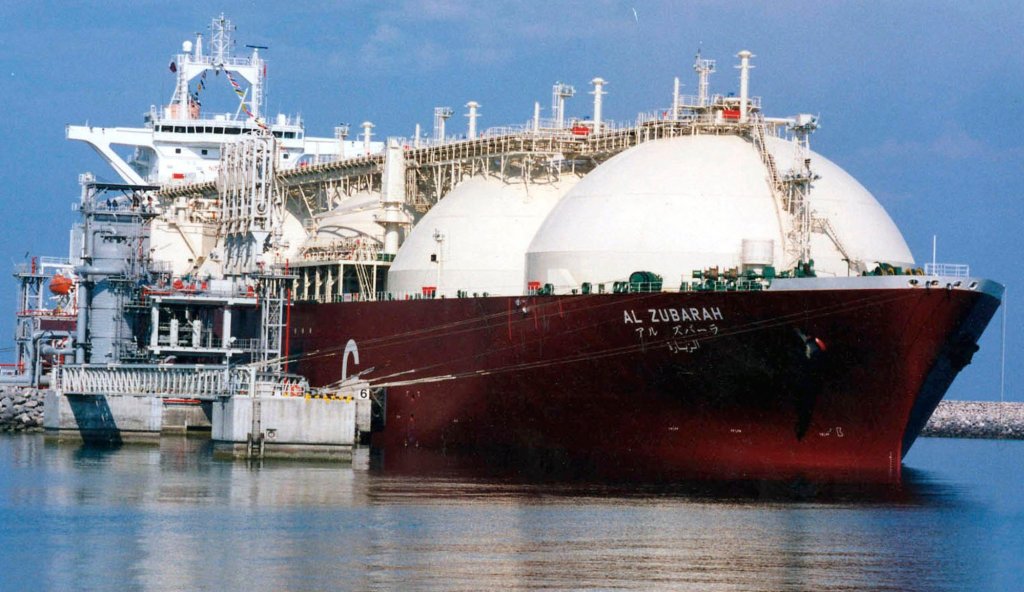
QatarEnergy has also entered into a 27-year agreement to supply LNG to Japan’s JERA, marking the first long-term contract between the two countries in more than ten years.
MalaysiaA state-owned company, Petronas, is expected to finalize a liquefied natural gas supply agreement with QatarEnergy, as the Southeast Asian country aims to secure additional supplies of this super-cooled fuel, according to two individuals who are aware of the situation.
Petroliam Nasional, or Petronas, will enter into a contract for as much as 2 million tonnes (2.2 million tons) annually of LNG, one source mentioned.
Qataris the world’s second-largest liquefied natural gas exporter following theUnited States, shipping out 81.07 million metric tons of the fuel last year, according to Kpler data.
Are you curious about the major issues and global trends? Find the solutions withSCMP Knowledge, our latest platform offering carefully selected content including explainers, FAQs, analyses, and infographics, presented by our acclaimed team.
The significant North Field development initiative is set to generate its initial LNG during the latter part of 2026. Once operating at maximum capacity, the project is projected to yield 126 million tonnes of LNG annually by 2027, increasing QatarEnergy’s production by approximately 85 percent compared to its present output of 77 million tonnes per year.
Petronas faces decreasing local gas reserves as domestic consumption of the fuel increases, leading it to actively search for new gas sources overseas and establish collaborations with other energy companies, while also aiming to secure new long-term LNG import agreements.
The company mentioned last year that it was striving to launch a third regasification facility in Malaysia.
In recent years, Petronas has entered into LNG import agreements with Woodside Energy, Commonwealth LNG, Venture Global, and ADNOC.
The Petronas deal follows Qatar’s signing of a 27-year contract to supply LNG toJapanIts greatest benefit, the first long-term supply agreement between the two nations in over a decade.
Japan’s JERA is set to buy approximately 3 million tonnes of LNG annually from QatarEnergy beginning in 2028, as stated in a release made in Doha on Tuesday. Last year, Qatar provided roughly 3.3 million tonnes of the fuel to Japan, whereas in 2017, the amount was around 10 million tonnes.
The contractual agreement, among the most extended for a Japanese purchaser in recent years, serves as a boost for Qatar, which had gradually lost trade in Japan—the world’s second-largest LNG importer—as the country’s utility companies chose more adaptable supply sources from competing exporters like the United States.
“It guarantees that we stay completely in line with Japan’s national policy and the objectives of the energy transition, ensuring a stable and robust energy future for the country,” JERA stated in a release.
However, Qatari LNG agreements include some of the most rigorous conditions, such as so-called destination clauses, which prevent the simple resale of the supply. Additionally, due to the uncertain future of Japanese gas demand, partly because of possible restarts of nuclear reactors, companies have been hesitant to commit to supplies that cannot be easily traded or redirected.
A Japanese firm has not entered into an LNG buying contract with Qatar for over ten years. JERA chose not to extend a major purchase agreement with Qatar after it ended in 2021, and has been discussing new supply arrangements with the nation for several years.
QatarEnergy has also entered into a non-binding agreement with Japan’s Ministry of Economy, Trade and Industry and JERA to provide extra LNG to Japan in case of emergencies, as stated by Qatar.
More Articles from SCMP
Documents related to Epstein expose the hidden side of Western elites
SCMP’s Top Picks: Corleone may take charge at Happy Valley
As the US-Russia agreement is set to end, the risk of a new nuclear weapons competition increases.
This piece was first published in the South China Morning Post (www.scmp.com), a top news outlet covering China and Asia.
Copyright (c) 2026. South China Morning Post Publishers Ltd. All rights reserved.




 jasdooit
Leave a comment