
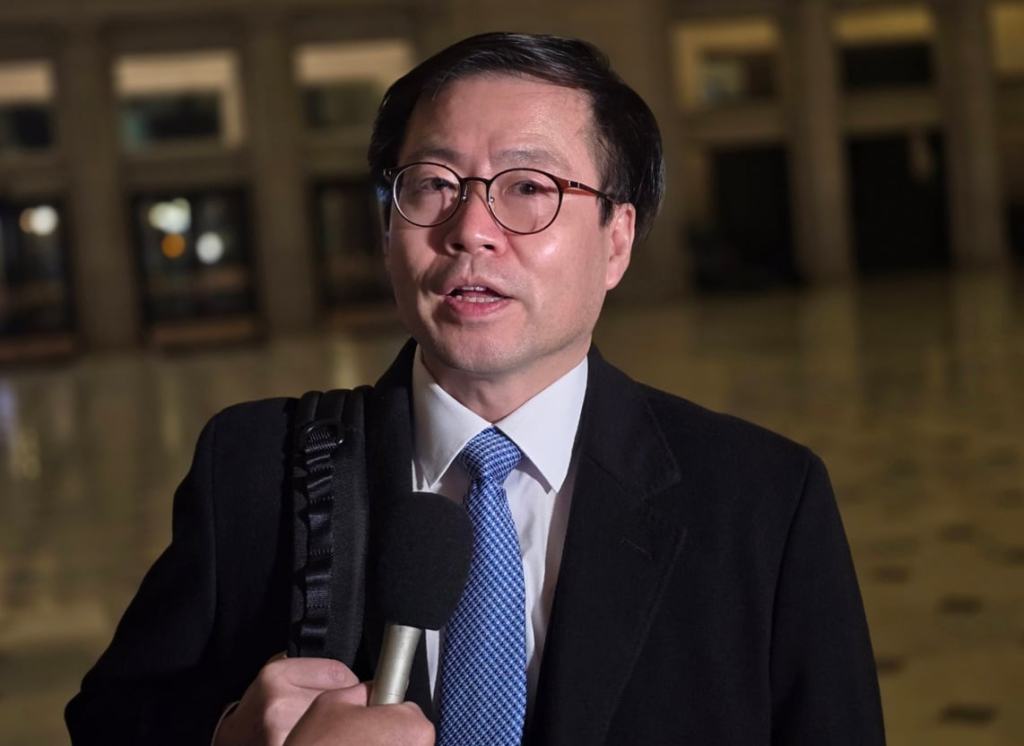
Trade Minister Yeo Han-koo, during his trip to the United States, returned to South Korea on the 4th without meeting his counterpart, Jamieson Greer, the U.S. Trade Representative (USTR). Yeo had traveled to the U.S. on the 29th in an effort to convey the South Korean government’s dedication to honoring its investment commitments to the U.S. after President Donald Trump announced higher tariffs on South Korea.
Following the end of his trip to the United States, Yeo spoke with journalists at Union Station in Washington, D.C., stating, “I met with Rick Switzer, the Deputy U.S. Trade Representative, and had detailed conversations that lasted more than two hours.”
He stated, “Concerning the issues that were previously agreed upon during negotiations, such as the execution of investments in the U.S. and the reduction of non-tariff obstacles, we emphasized that South Korea is committed to meeting its obligations and is currently advancing in this area.”
Concerning the ‘Federal Register publication process’ aimed at finalizing the U.S. tariff increase, he mentioned, “We are aware that the South Korean government is still engaged in internal deliberations.” On the specific date for the tariff rise, he noted, “It has not been definitively determined yet.”
At the heart of President Trump’s comments, he stated, “As reflected on social media, we recognize that the main concern was a minor postponement in the legislation concerning investments.”
Yeo added, “We need to elaborate on our stance as thoroughly as possible, clearly convey the advancements and upcoming strategies, and avoid the real implementation of higher tariffs. I think ongoing conversations should take place in Seoul too.”
The meeting initially planned between Yeo and USTR Representative Greer failed to occur, reportedly because of the U.S. decision to impose tariffs on India.
The Ministry of Trade, Industry, and Resources mentioned that during his trip to the United States, Yeo conducted private meetings with approximately 20 legislators and their aides who focus on trade matters, as well as met with officials from the U.S. Chamber of Commerce, business associations, and research institutions.
Yeo stated, “Although digital matters are seen as significant by the U.S. government and Congress, we held the view that Coupang should not be linked to digital trade issues,” and noted, “The main issue with Coupang is data exposure.”
 jasdooit
Leave a comment