
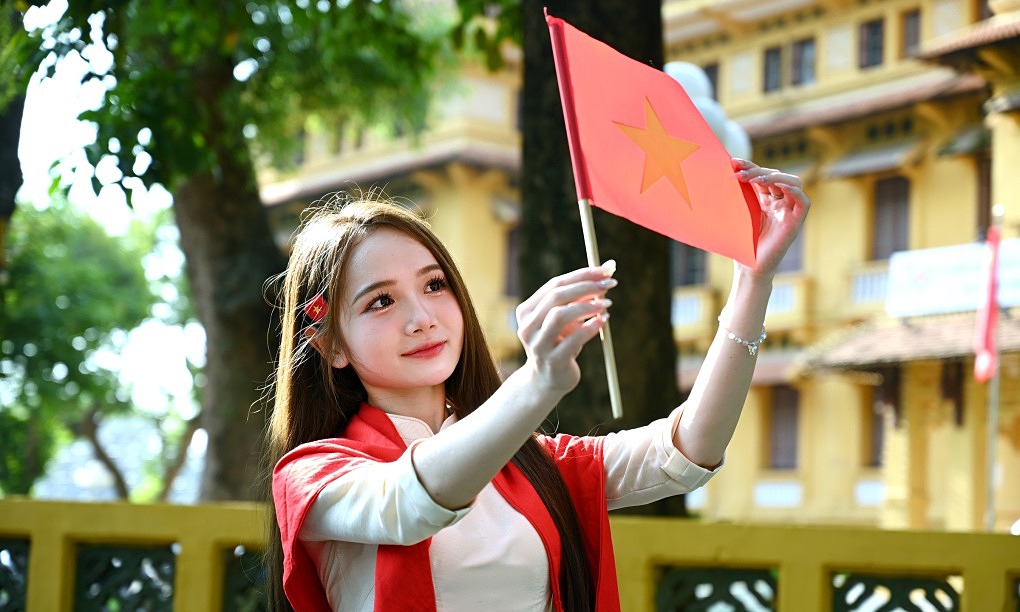
Vietnam’s approach to international communication seeks to establish the nation as one of Asia’s prominent countries by 2045, aiming to be within the top three in ASEAN and within the top 30 worldwide in terms of national soft power.
The Prime Minister, Pham Minh Chinh, has introduced a plan aimed at enhancing Vietnam’s global reputation for the years 2026 to 2030, with an outlook extending to 2045. The document highlights the promotion of the national image as a crucial element of international communication, emphasizing its long-term and broad importance in connection with the country’s overall development strategy.
According to the plan, efforts to promote the country’s image will be closely linked with diplomacy, economic growth, culture, national defense, security, grassroots diplomacy, and digital transformation, with the goal of boosting Vietnam’s reputation, status, and global influence.
The approach aims to portray Vietnam as a peaceful, stable, vibrant, innovative, reliable, and credible nation with a robust cultural identity and extensive global engagement. Vietnam’s visibility, acknowledgment, and standing on international media and global online platforms are set to grow by a minimum of 20% every year, with favorable reporting in international media anticipated to increase by at least 20% annually.
Employees in charge of external communication will receive more advanced training, focusing on language abilities, technical expertise, and the skill to interact successfully with global audiences.
By 2045, Vietnam hopes to stand among Asia’s top nations in terms of national branding and reputation, securing a place in the top three within ASEAN and the top 30 globally for national soft power. The nation’s image is intended to reflect that of a developed, compassionate, innovative, responsible, and trustworthy country, as well as a desirable location for tourism, investment, creativity, and international cultural interaction.
To meet these goals, the strategy presents six main categories of solutions, highlighting a transition from unilateral promotion to the structured development of national image, branding, and soft power, with an emphasis on engaging global audiences and promoting positive values and friendly relations.
Communication content and messages at the national level will be designed around well-established pillars that represent Vietnam’s image, with key messages that stay consistent while offering adaptability across various stages and markets. Notable stories about Vietnam will be promoted in a structured manner, along with the creation of a cohesive national visual identity.
The plan also emphasizes the broad use of digital technologies, artificial intelligence, and large-scale data in creating and spreading content, along with a more prominent role on global media platforms. Collaboration with international media groups, Vietnamese communities abroad, specialists, and thought leaders will be strengthened.
Communities are urged to create their own communication approaches that reflect local identities, while setting up metrics to assess global awareness and views about Vietnam.
The financial support will be sourced from the state budget and additional legal means, such as private donations and sponsorships.
The Department of Culture, Sports, and Tourism is responsible for guiding content creation, crafting messages, establishing the national visual image, setting evaluation criteria, overseeing key communication initiatives, and managing the overall implementation process.

 jasdooit
Leave a comment