
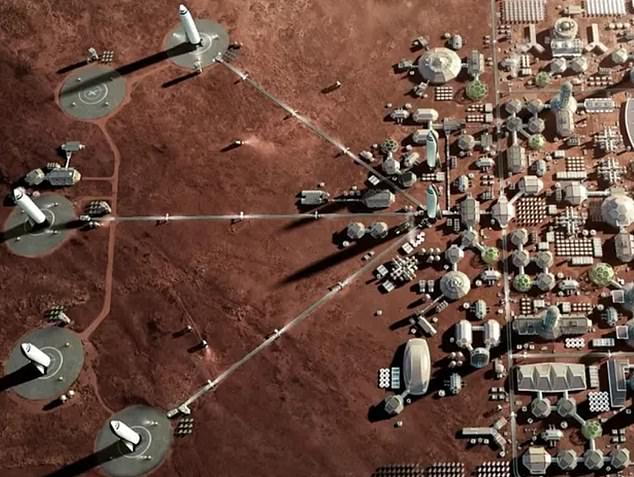
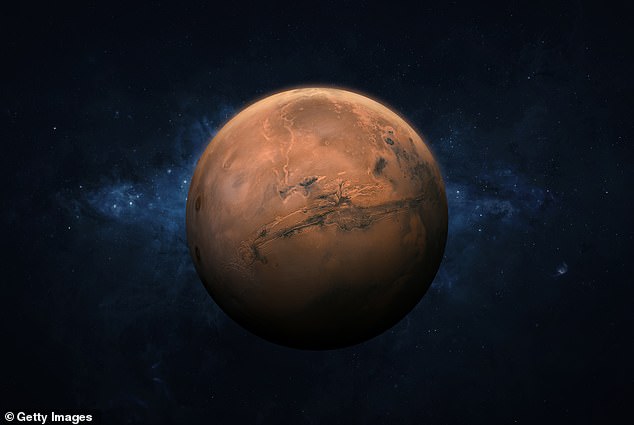
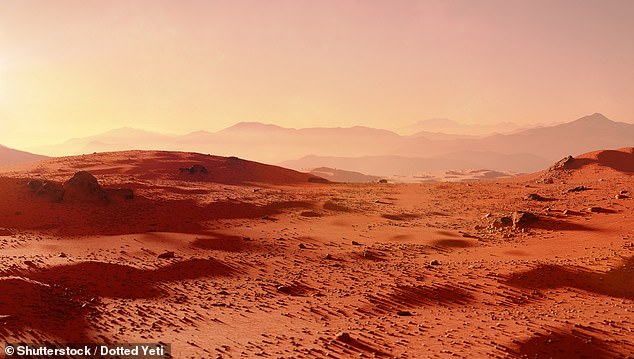
From altering size, to weakened immune systems and issues during childbirth, humanity’s colonizationMarsmight lead to numerous issues for the human body.
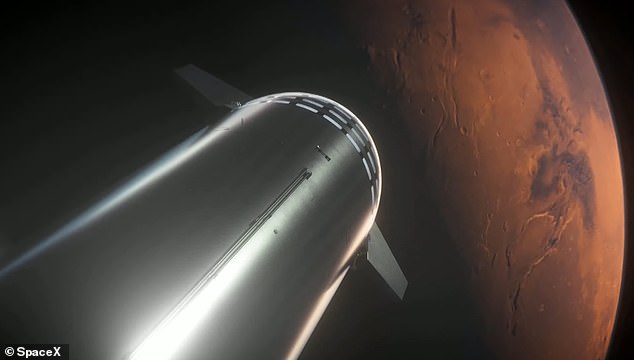
Elon Muskthinks a Mars colony could be achievable by 2050, although there are significant challengeschallenges and questions those that still require answers before a lasting presence on the planet is genuinely contemplated, according to Scott Solomon, a professor at Rice University.
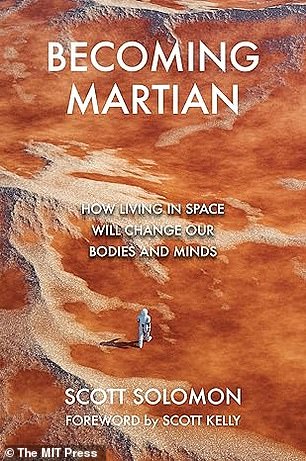
In his upcoming book, Becoming Martian: How Residing in Space Will Transform Our Bodies and Minds, Solomon contends that one of the most significant unresolved issues is whether humans are capable of reproducing beyond Earth.
It remains uncertain if a child could be born in space or on a different planet, where gravity is less strong or absent, and radiation exposure is significantly greater compared to Earth, our pale, blue planet.
In “Becoming Martian,” Solomon outlines that there have beenno documented instances of individuals engaging in sexual activity in space, and there has been limited study on how a fetus develops and how childbirth might occur in a low-gravity setting.
The effects of long-term habitation on Mars from an evolutionary perspective remain unclear, although Solomon suggests it is probable that humans would grow smaller andcould be unable to return to Earth.
In an interview with the Daily Mail, the professor remarked: ‘We are currently experiencing a time when history is being made as people are truly pushing the boundaries of exploring deeper into space.’
I believe readers might find it intriguing to discover more about what could occur if those initiatives succeed. That’s the narrative I aim to present here—let’s explore what comes next.
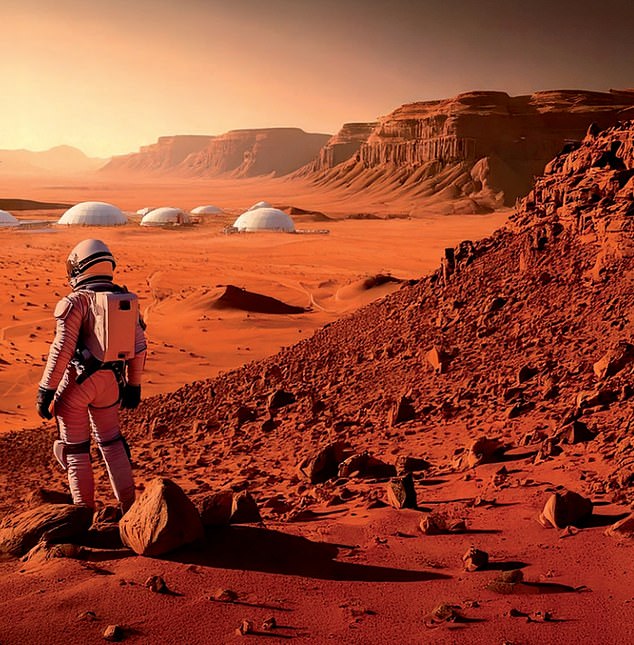
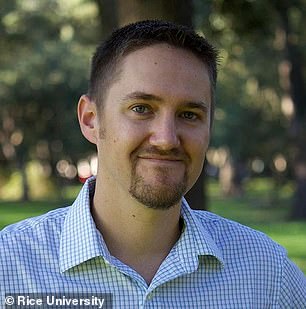
While working on his book, Solomon interviewed numerous specialists from NASA, SpaceX, and other organizations involved in space exploration.
Throughout that time, he mentioned one of the most significant surprises was “how limited our understanding is regarding reproduction in space.”
“The concept of establishing a settlement, a city, on another planet or in space inherently presumes that individuals can travel there and start a family,” the professor remarked.
Can we have children on Mars?” Solomon added. “I believe that remains an unanswered question.
And whether the answer is no, or if the answer is yes but there are complications, I believe we should be aware of that before proceeding with plans to establish settlements outside Earth.
The gravitational force on Mars is roughly one-third of that found on Earth.. A significant amount of research has been conducted oncosmonauts that have been in space for a period of time, which shows that bone mass reduces in low-gravity conditions.
This implies that a female from Mars would have weaker bones, which might pose significant challenges during childbirth.
“We are aware that childbirth carries inherent risks, and thus it’s possible to envision a situation where women born on Mars face an increased likelihood of complications during delivery,” Solomon stated.
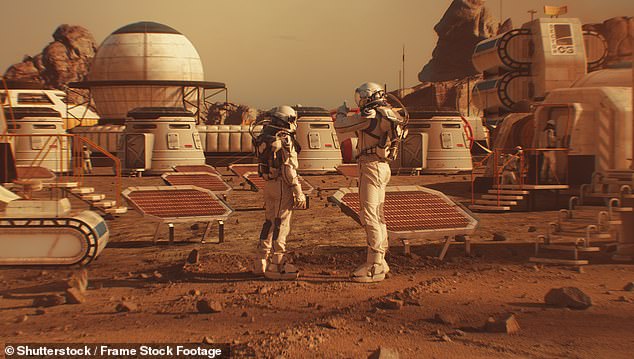
The professor also mentioned that the low-gravity conditions on the Red Planet could lead to evolutionary pressure that benefits individuals with stronger bones, “so they can essentially withstand losing bone density as they grow older.”
Solomon then stated that, in his opinion, it is probable that Martians would be smaller than humans because of different evolutionary forces on the Red Planet.
“We are aware that on islands on Earth, animals frequently become smaller or larger, a phenomenon referred to as the island rule, which I outlined in my book,” he stated.
It’s possible that we might encounter either bigger or smaller Martians. I suggested that smaller ones could be more probable for several reasons, one being that the smaller you are, the less resources you require.
And particularly during the initial stages of a Mars colony, these resources could be very scarce, potentially offering an advantage to requiring less of them.
Solomon continued by stating that even if, despite the difficulties, humans manage to create a settlement on the Red Planet, our smaller, more compact-boned Martian relatives might not be able to travel to Earth.
The intricate microbial environment on Earth might present significant dangers to someone who has grown up on Mars.
One of the major difficulties could be our immune systems,” Solomon stated. “On Earth, we come into contact with a vast array of microorganisms.
If we travel to Mars, we will carry with us just a minuscule portion of all those microorganisms… A child born on Mars would only come into contact with that small amount of microbes that successfully reach Mars.
So, if they returned to Earth, many of the microorganisms we regularly encounter that aren’t harmful to us because our immune system is accustomed to them—these could pose a significant threat to someone from Mars.
In his book, Solomon highlights that risk is similar to the time when European explorers first came to the Americas, introducing diseases to indigenous people who had no prior exposure, leading to a significant decline in their population.
In addition to the scientific inquiries regarding reproduction, evolution, and immunity, Solomon’s book also explores how the relationship between civilizations on Earth and Mars could appear.
The instructor mentioned that the culture of Mars could develop in a manner akin to how immigrants on Earth maintain specific elements of their background, yet gradually start to feel a stronger connection to the place they call home after several generations.
The first individuals to travel to Mars will likely still feel strongly connected to Earth,” Solomon stated. “However, with each subsequent generation born on Mars, I believe they will gradually begin to see themselves as Martians, despite maintaining their Earthly origins.
Solomon mentioned that the speed of this cultural difference, along with the rate of separate development, would be influenced by how straightforward it was for individuals to move between planets.
If humans often have offspring with Martians, the genetic makeup of individuals on each planet would stay more alike for a longer period.
But Solomon stated, “If I’m correct that it will be challenging to [travel between planets] due to the risk of becoming ill, for instance, then you could begin to observe them (Martians) developing significant differences in culture, politics, and even biology.”
Another element that would lead to unique civilizations on each planet is the time required for communication, Solomon stated.
It may take as long as 20 minutes for an email, image, or video to be transmitted from one planet to another. As a result, instant messaging, phone calls, or video chats, as we know them on Earth, would not be feasible.
Numerous individuals doubt the value of space exploration and settlement, thinking that it is more crucial to concentrate on Earth and work towards resolving the many issues present on our planet.
Solomon largely shared that view, but mentioned that it’s feasible to work on resolving Earth’s issues while also gazing toward the stars.
“It is crucial for us to allocate significant attention and resources to addressing our issues on Earth,” he stated.
However, I believe we have the capability to achieve that while also gaining insights into life in space and whether it could potentially be a place where we might one day reside.
Although there are difficulties and dangers involved in exploring and settling Mars, Solomon stated to the Daily Mail that he would ‘enjoy visiting.’
“I enjoy traveling. I love experiencing new adventures. I am a scientist and naturally inquisitive. I would really appreciate the chance to go out and explore,” the professor stated, followed by a qualification.
But I would like to return home.
Becoming Martian: How Living in Space Will Transform Our Bodies and Minds by Scott Solomon will be released on February 17, published by The MIT Press.



 jasdooit
Leave a comment