
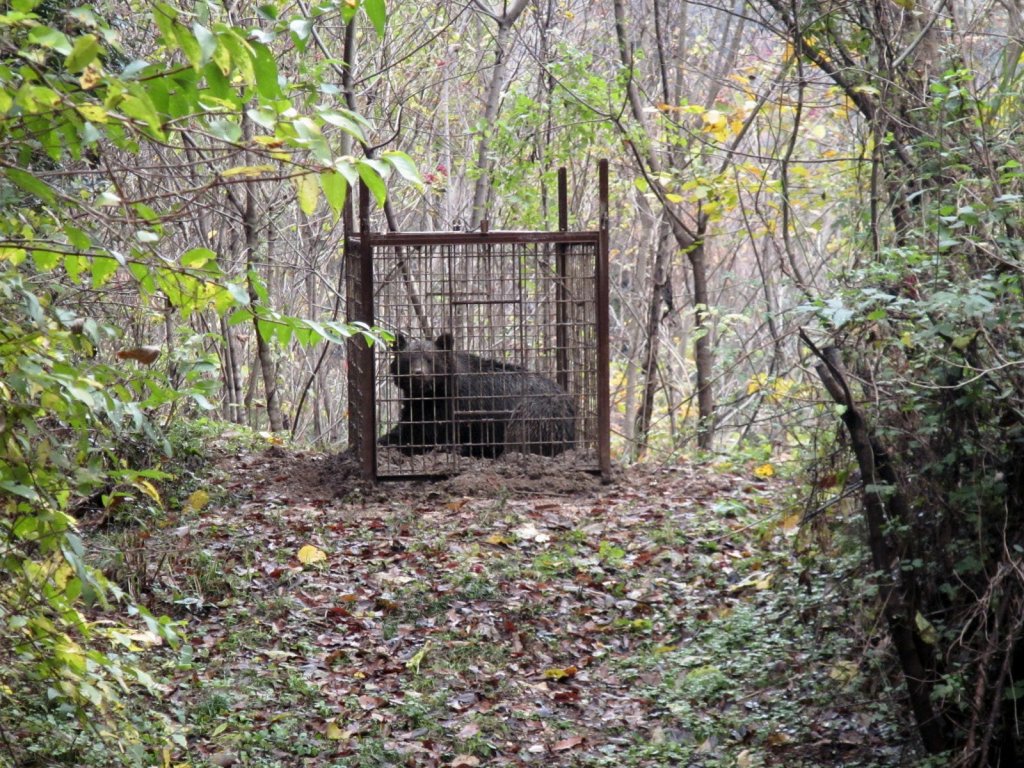
TOKYO – A recent study in western Japan found that bears ventured into regions close to human homes, even when they had sufficient food, particularly during years when acorns were limited in their natural environments, possibly drawn to fruit trees growing on abandoned farmland.
A group of researchers, comprising the Tokyo University of Agriculture and Technology and the Shimane Prefecture’s Mountainous Region Research Center, studied the relationship between acorns, which serve as bears’ primary food in autumn, and their body fat levels. The increase in bear incursions in Japan has been partially linked to a lack of food in their natural environments.
The results indicate that actions such as eliminating “attractants” including dropped persimmons and chestnuts, and preventing bears from entering communities, are crucial, said Shinsuke Koike, a university professor who focuses on ecology.
The research analyzed 651 Asian black bears, one of the two bear species found in the country, which were killed due to being a danger to human communities or in traffic accidents in Shimane between 2003 and 2018. The researchers noted that it remains uncertain if these results are applicable to other regions with different environmental conditions.
The bears’ nutritional condition was assessed through three indicators — subcutaneous, visceral, and bone marrow fat — as when an animal is malnourished and its health deteriorates, it utilizes fat stores in a particular sequence.
Their fat content reached its highest point in the fall as they consumed large amounts of acorns before entering hibernation, decreasing by 62 percent for subcutaneous fat and 39 percent for visceral fat during the spring following hibernation. Fat levels continued to drop from spring to summer due to reduced food supply.
During hibernation, it is thought that bears initially burn subcutaneous fat, which is simple to store and break down. When their nutritional state worsens, they begin to utilize visceral fat and bone marrow fat.
Deep and bone marrow fat levels stayed low all year when there was a lack of acorns the year before, according to the research, whereas there was no significant variation in subcutaneous fat.
At the research location, prolonged periods of low acorn production from oak trees were usually followed by years with good or average levels, and bears that entered communities during these times were “not necessarily in a poor nutritional state.”
“Such intrusions were probably not caused by a lack of nutrition but by the availability of appealing food sources,” stated the report released by the Mammal Society of Japan in its publication.




 jasdooit
Leave a comment