
The city of Venice and its nearby lagoon are permanently vulnerable to the effects of climate change.
Rising ocean levels pose a risk of flooding the island in the next few decades, as the existing network of flood defenses that is currently preventing high tides from reaching it will no longer be effective.
However, this only presents part of the situation. Venice coexists with its nearby brackish waters, and the condition of these waters is also growing more vulnerable.
Recent studies have shown that rising sea temperatures are introducing non-native species that endanger the lagoon’s environment and the income of nearby fisherfolk.
Cannibalistic jellyfish infiltrates the Venetian lagoon
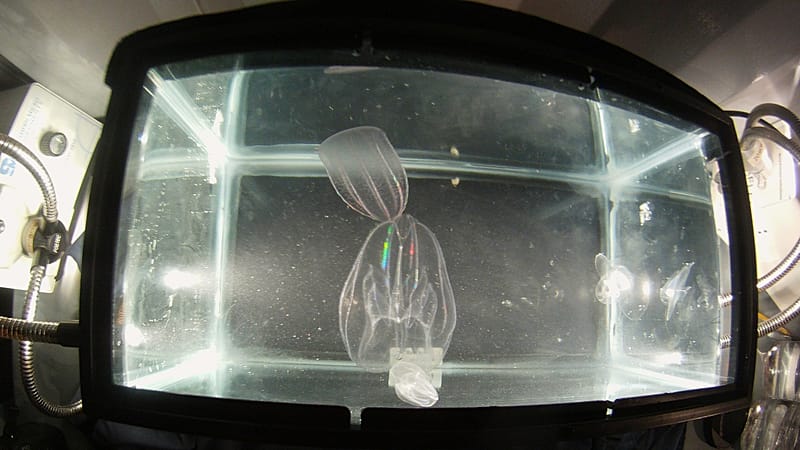
The newest invasive presence in the Venetian lagoon is a flesh-eating comb jelly, recognized as one of the 100 most damaging non-native species globally.
The spiky comb jelly is a ctenophore, agelatinousinvertebrate, and has been observed to eat its own young.
Also known as a sea walnut, it has been found in the Adriatic Sea for nearly ten years.
Recently, climate changehas led to especially favorable circumstances for the spread of the warty comb jelly in the waters near Venice, according to a recent study conducted by scientists from the University of Padua and the National Institute of Oceanography and Applied Geophysics (OGS).
“This may enhance its occurrence in major groupings and, therefore, raise the likelihood of significant consequences for the operation of the entire lagoon ecosystem,” states Valentina Tirelli, a scientist at OGS.
The research detects a seasonal trend characterized by increases in reproductive flowering during late spring and from late summer into early autumn. Thesebloomsare probably affected by increases in temperature and ideal salt concentration levels.
The large number of the species indicates that it can endure various temperature and salinity levels, although extreme heat or very low salinity can greatly affect its survival, according to researchers.
Invasive species pose a risk to fishing communities.
The bumpy comb jelly presents a major risk to a flourishing lagoon environment in Venice.
“To sustain its rapid reproduction, this species is a strong predator of zooplankton,” says Tirelli, which forms the main diet of numerous fish.
“This ctenophore has also been observed to feed on the eggs and larvae of ecologically and economically significant species, including fish and bivalves, which could potentially harm recruitment and the stability of the ecosystem,” she states.
This presents major difficulties forfishingoperators, who are noticing their catch decreasing and theirnetsblocked by the slimy creatures.
Our findings indicate a total decrease of more than 40 percent in the catch of the primary target species since the invader’s arrival,” Tirelli states. “The species most impacted are cuttlefish and grass goby, both of which hold significant cultural and economic value for the Venetian lagoon.
During the 1990s, fishermen in the Black Sea attributed the decline in fish populations and the severe economic impact to the increase of ctenophora.
Blue crabs significantly reduce fish harvests in the Adriatic Sea.
Fishermen in the northern Adriatic are currently facing another dangerous predator.
The giant blue crabThe population has grown rapidly in recent years. The crustacean is not native to any area alongItalyIts coastline. It probably traveled over in the late 1940s from the coasts of North and South America on cargo ships in the ballast water.
Although their existence is not recent, the population of the rapidly reproducing crab has increased to a dangerous level, particularly because it lacks natural predators in Italy’s waters.
The suspected culprit is climate change“Due to warmer waters, the crabs have become more active and hungry,” a fisherman says to Euronews Green. When the water temperature decreases, the crabs consume and reproduce less, but this has recently changed.
“Typically, during specific times of the year, when the water temperature falls below 10°C, this crab struggles to survive, but it now enjoys the perfect temperature throughout the entire year,” said Enrica Franchi, a marine biologist from the University of Siena, in an interview with AP news.
Blue crabs feed on native speciesseafoodand, equipped with strong claws capable of tearing through fishing nets, appear to be unbeatable. Clams, mussels, and oysters—as well as clawless crabs called moeche in Venice—are all in danger.
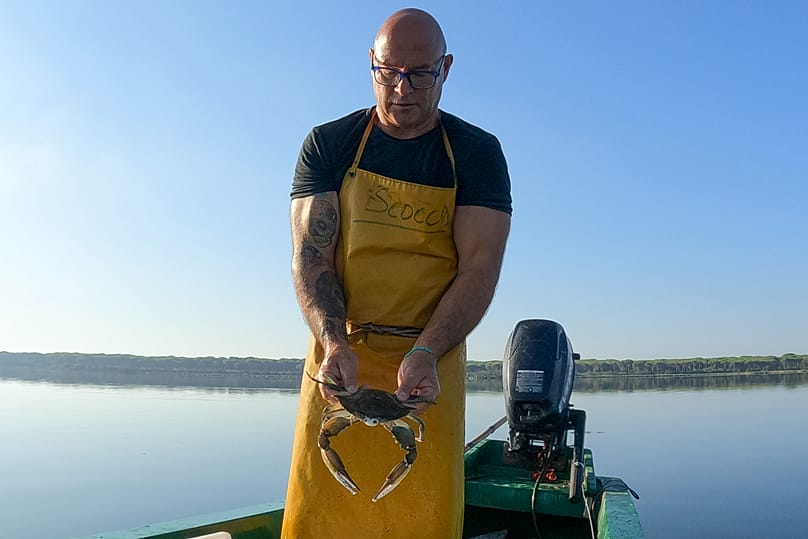
Authorities and fishinglobbies are working quickly to discover methods for utilizing and getting rid of the shellfish – such as shipping full containers to the US where it is regarded as adelicacy.
However, the Italian agricultural lobby Coldiretti has suggested embracing American dietary practices and implementingblue crabs featured on the menu.
Blue crabs can now be found in fish markets and supermarkets, priced approximately at €8-10 per kilogram.
However, the “if you can’t beat them, eat them” strategy carries significant dangers. Allocating resources to capture blue crabs as a food item threatens both fishing and cooking customs in the Adriatic.
Advanced methods of raising, catching, and preparing native species such as clams, along with traditional recipes and meals that form part of the region’s culinary history, might disappear.




 jasdooit
Leave a comment