
Udayapur, February 8 – Following a footbridge spanning the Gideri stream from Banadanda in Belaka Municipality-22 within Udayapur district, the narrow path leads to Srilanka Tapu, a river island created by the nation’s largest water system—the Saptakoshi.
Life in Tapu, Sri Lanka, is influenced by two constant anxieties: the danger posed by wild elephants in winter and the risk of flooding during the rainy season. For the people living in this river-enclosed community, staying safe means dealing with both dangers.
Tetru Rajbanshi, hailing from Prakashpur in the adjacent Sunsari district, currently resides in a bamboo and thatch house on the island, tending to his vegetable garden. “We spend the entire day working in the fields, but at night, roaming elephants come and destroy everything,” he mentioned.
Elephants harm not only crops but also occasionally destroy homes and have led to human deaths. “You can’t rest easy. The fear starts when it gets dark,” said Rajbanshi.
For years, human-elephant conflicts have been a challenge for communities living along the Koshi river area. Conservationists state that decreasing forest areas and increasing agricultural land have caused elephants to move nearer to human dwellings in eastern Nepal, making farmers susceptible to losing their crops and feeling unsafe.
During the rainy season, the danger changes from wild elephants to water. When the Gideri stream rises, the suspension bridge is no longer safe, cutting off access to the island. Locals must gather supplies of food, salt, and cooking oil before the rains arrive, aware that movement will be almost impossible for several weeks.
Medical emergencies pose significant dangers. Suraj Mahato from Ramnagar in Sri Lanka Tapu mentioned that pregnant women frequently deliver at home since accessing the closest medical facility involves crossing a stream and walking several kilometers to Bhagalpur, which becomes unfeasible during flood conditions.
Basic infrastructure is still limited in Sri Lanka Tapu. Farmers have collectively installed electric water pumps to irrigate their fields, but an unstable electricity supply limits their effectiveness. Mahato mentioned that repeated appeals to local authorities for better power supply have resulted in minimal improvements.
“Electricity is sufficient for lighting bulbs, but not enough to power irrigation pumps or mills. Farming becomes challenging,” he said. The locals have repeatedly brought up the problem with ward 2 Chairman Prem Dahal and Belaka Municipality Mayor Ashok Karki, yet the issue remains unresolved.
Another obstacle in the settlement is education. The Ramjanaki Basic School offers classes only through fifth grade. Attendance rates are low. Students need to travel approximately an hour to get to Bhagalpur Secondary School, which discourages many families from sending their children on a regular basis. Bijay Mahato, another resident, mentioned that parents frequently prefer children to assist with agricultural and home tasks instead.
Communication services in the region are also inadequate, offering only minimal 2G access, and access to potable water is mainly through hand pumps that frequently run dry during winter. Locals are calling for a different solution to ensure a reliable water supply.
Although facing these challenges, over 2,000 families reside on the island, also referred to as Garai Tapu, with people arriving from Udayapur, Sunsari, Morang, and Saptari during certain seasons for agricultural activities. Farming continues to be the main source of income, particularly the growing of vegetables for local markets.
No electoral excitement in Sri Lanka Tapu
With political parties and candidates increasing their efforts to engage voters before the House of Representatives election set for March 5, the campaign has not yet made its way to Srilanka Tapu. Locals on the island mention they have minimal time to talk about politics as survival comes first.
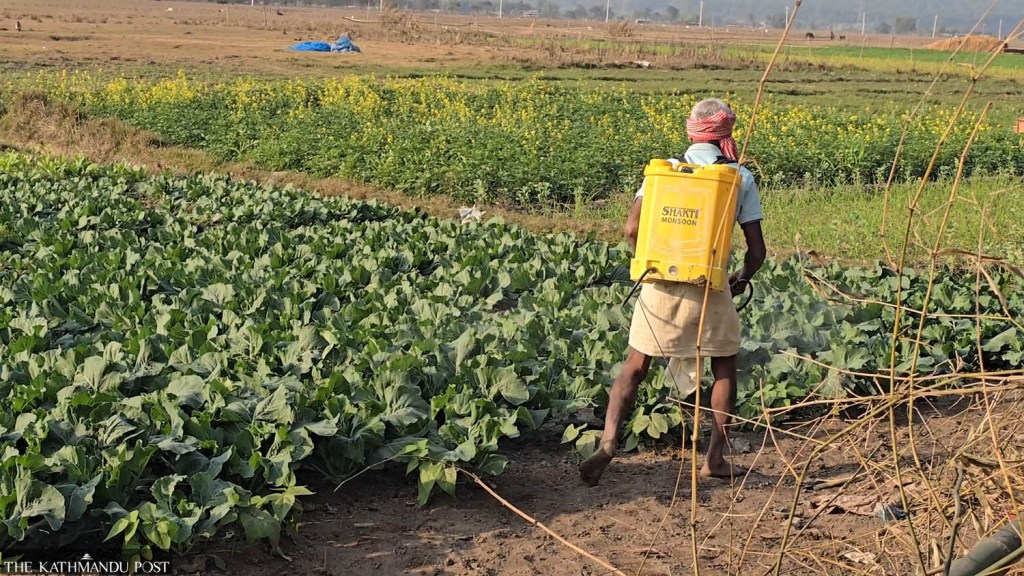
Saroj Mallik from Ramnagar spends the majority of his time working in the fields, cultivating potatoes, tomatoes, carrots, radishes, spinach, cabbage, and cauliflower. His responsibilities include taking care of the crops, using fertilizers, watering the land, and delivering vegetables to local markets. “We are constantly occupied throughout the day and don’t have time for political speeches,” he mentioned.
As per Mallik, farming occupies their days, but the threat of wild elephants keeps locals awake at night. “Why bother informing leaders about our issues if they never address them? We must deal with these challenges ourselves,” he expressed his frustration, pointing out that politicians make pledges during elections but neglect the island’s concerns after the votes are cast.
Sri Lanka Tapu, part of Udayapur Constituency-1 and Sunsari Constituency-4, has not had any candidates come to the region. The island comprises Wards 2 and 9 of Belaka Municipality in Udayapur and Wards 6, 7, and 9 of Baraha Municipality in Sunsari.
As per Ward Chief Prem Dahal from Belaka-2, over 2,000 families reside on the island, but only approximately 300 residents in Ramnagar within Undaypur Constituency-1 possess voter identity cards. Voters from this region need to go to Saptakoshi Secondary School in Belaka-2 to vote.




 jasdooit
Leave a comment