
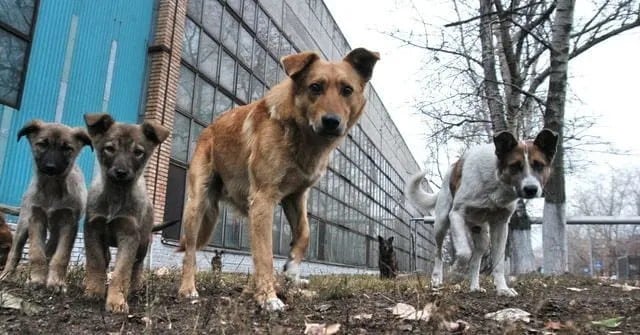
The conflict in Ukraine has not only affected people. A new study reveals that dogs living nearer to the front lines have grown smaller and more slender.
The study was carried out by Professor Ihor Dykhyi and Researcher Mariya Maruchiu from the Biology Department at Lviv National Ivan Franko University, in collaboration with other researchers. They examined 763 stray dogs across nine regions of Ukraine between March 2023 and January 2024. The findings were featured in the international academic journal *Evolutionary Applications* (진화 응용) at the end of last year.
◇ Changes in the Appearance of Dogs on the Battlefield
A group of researchers worked with Ukrainian animal shelters, vets, and helpers to study the look of 763 dogs in nine different areas. They gathered information on stray dogs from places that are fairly secure to those with greater danger.
After reviewing the data, the group discovered that dogs living close to the front lines had a much lower average body mass index (BMI) of about 1.5. By contrast, dogs in other areas generally had a BMI ranging from 2.4 to 2.5, suggesting that those near the front lines were considerably lighter.
Moreover, traits usually linked with pet dogs—such as short legs, floppy ears, and flat snouts—have declined. On the other hand, features typical of wild canines, including erect ears, moderate leg length, and well-proportioned snouts, have become more common. This indicates that the dogs’ physical appearance is quickly evolving in response to war-related challenges such as food scarcity and areas filled with explosives. The research group stated, “In other words, the dogs’ look is becoming more similar to that of wild creatures like wolves or coyotes.”
◇ Modifications Took Place in 1–2 Years
The group saw these modifications as strategies for survival. Smaller dogs are less prone to set off landmines and can conceal themselves better in tight areas, providing them with a better chance of surviving.
Dogs in conflict areas have undergone changes both in their physical appearance and behavior. Normally, they moved about by themselves, but close to the front lines, they were often seen gathering in groups. This change is viewed as a method to find food or provide mutual protection. In fact, groups consisting of two or three dogs were more frequently spotted in frontline regions compared to lone dogs.
The research group was also amazed by the speed at which these changes took place. They mentioned, “In as little as 1–2 years, clear differences appeared between dogs near the conflict zones and those in other areas,” and noted, “This shows that harsh conditions can result in significant alterations in an animal’s physical traits and behavioral habits.”




 jasdooit
Leave a comment