
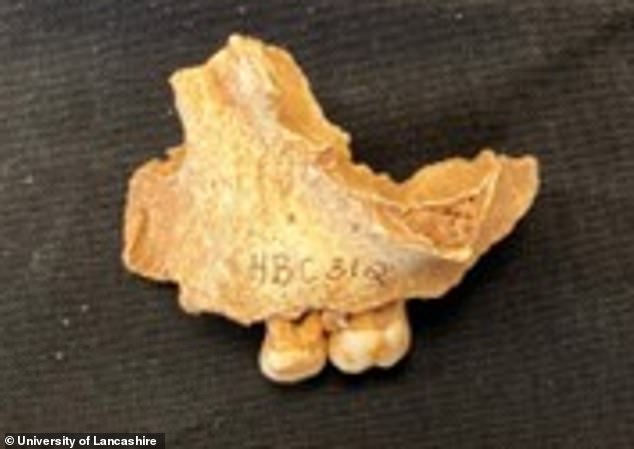
The latest research has uncovered that Britain’s ‘oldest Northerner’ was a three-year-old girl.
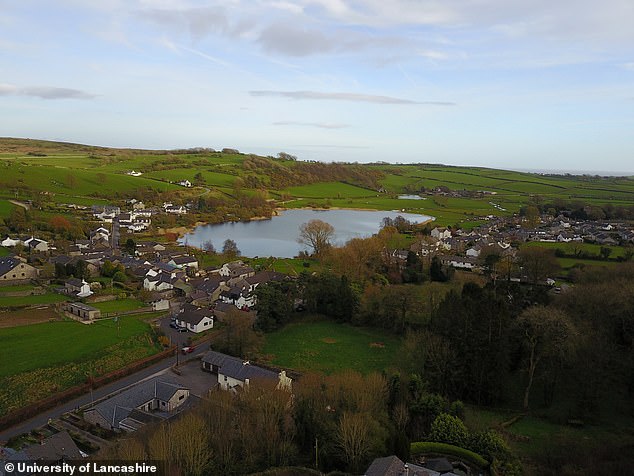
Remnants from 11,000 years ago werelocated at Heaning Wood Bone Cave in Cumbria’s Great Urswick in 2023.
At first, researchers believed the ancient remains were those of a male.
Nevertheless, researchers from the University of Lancashire have recently succeeded in obtaining sufficient DNA from the bones to determine their true owner.
As per their assessment, the individual is likely a female child between the ages of 2.5 and 3.5 years.
The group has given the young girl the nickname “Ossick Lass,” which in the regional dialect translates to Urswick girl.
“This is the first time we have been able to determine the age of a child’s remains that are so ancient and be confident they belong to a female,” said Dr. Rick Peterson, the study’s lead author.
Although human remains were previously discovered in southern England and Wales, this represents the earliest find in Northern England.
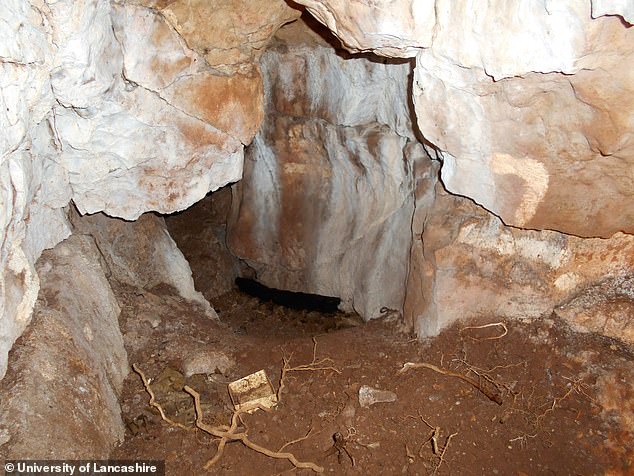
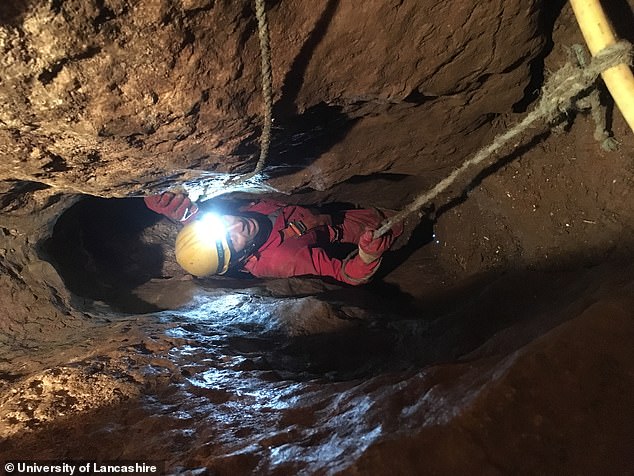
Local archaeologist Martin Stables started exploring the location in 2016.
Since that time, he has uncovered a variety of items including human and animal bones, stone tools, ancient pottery, and adornments.
“It has been almost 10 years since I began the excavations in July 2016, and I never could have predicted the path I have followed,” Mr. Stables stated.
Essentially, I was the first to observe the clearly compassionate interment of a child’s remains that took place more than 11,000 years ago.
A total of eight humans were discovered in the cave, while the remaining remains are estimated to be from the Bronze Age (4,500 to 2,500 years ago) or the Neolithic era (7,100 to 3,500 years ago).
Scientists were taken aback to discover that the remains of the Ossick Lass were significantly older than the rest.
The child could have been among the initial humans to return to Britain following the last Ice Age, a time when ice covered roughly 30 percent of the Earth’s surface.
In Britain during that period, glacial ice and water currents extended as far south as the Bristol Channel.
Ancient human remains have been discovered in southern England and Wales, yet the impact of ice ages has made such findings uncommon in northern Britain.
Dr. Peterson had previously mentioned theBBC that 11,000 years ago is “remarkably early for the northern region.”
“To give some context, the most recent Ice Age ended approximately 11,600 years ago,” he stated.
Following that era, the world’s temperature increased quickly within approximately a century, resulting in the climate we experience now.
These individuals are roughly as early as we might have anticipated – the trailblazers returning to the land following the Ice Age.
Prior to this finding, the ‘oldest northern individual’ was a 10,000-year-old burial uncovered at the adjacent Kents Bank Cavern in 2013.
As part of the most recent research, the group also examined a pierced deer tooth and beads found at the location.
This confirmed that they are 11,000 years old – placing them at a similar age to the Ossick Lass.
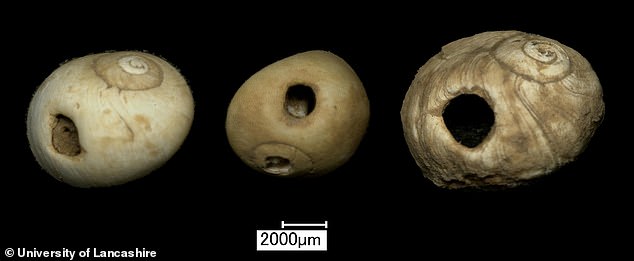
“Linking the jewelry to the same era as the remains offers further proof that this was an intentional burial and raises discussions about the importance of cave burials in this time period,” said Dr. Peterson.
Modern foraging communities frequently regard caves as a passage to the spiritual realm.
This could explain the numerous caves that were utilized for burial purposes by early Mesolithic hunter-gatherers in northern Europe.




 jasdooit
Leave a comment