
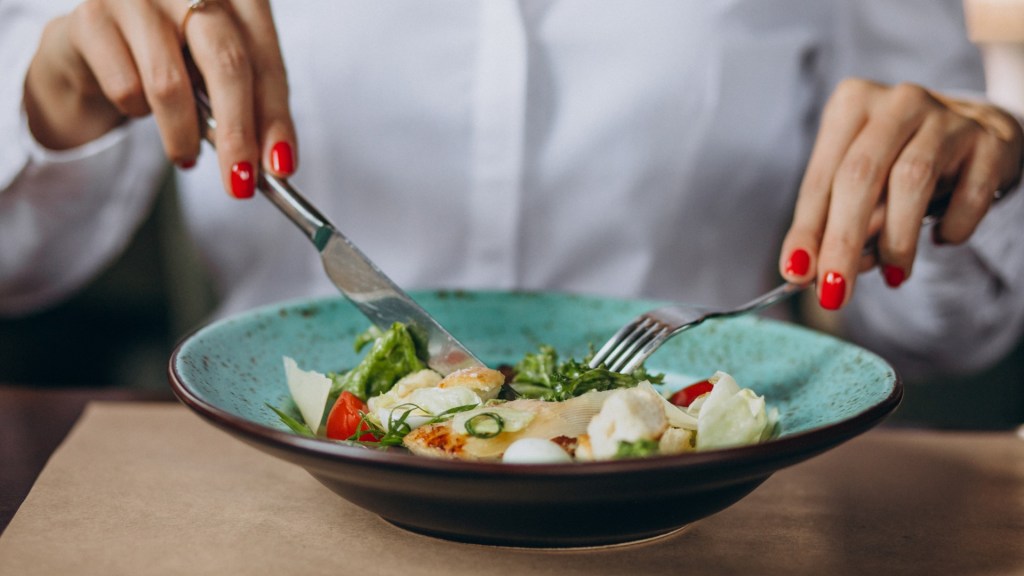
During meal times, we frequently take the first plate available without much consideration for its look. This is particularly common when residing in furnished housing and needing to use mismatched dishes supplied by the landlord. However, the color of the plate affects our hunger levels and sense of satiety.
We consume food using our mouths, yet we also experience it through our eyes.
When we enjoy a meal, our taste buds are pleased, but all five senses come into play. There’s a reason the expressionto take on more than you can handleexists. Naturally, a well-presented lasagna looks more appealing than a plate of flageolet beans, carelessly scattered by the cafeteria worker. However, appearance is not the only consideration. The color of the plate itself also plays a role.
The food we eat can be influenced by the shape and color of the dishes, which can either enhance or reduce our hunger. This is entirely a mental response. Still, this aspect is often overlooked. Usually, we pick a plate randomly from the cupboard without considering its look. We might make an exception when hosting guests, using our blue stone plates or Scandinavian-style dishes. However, we fail to recognize the impact these have on our eating patterns.
However, a dish presented on a flat green ceramic plate will not have the same flavor if it is placed in a terracotta bowl. In one container, remnants will remain, whereas in the other, guests will request more. Severalstudieshave studied this occurrence and observed a distinct variation in eating habits based on the kind of plate used.
The hues that enhance hunger
In conventional dining establishments, cuisine is placed in the middle of a white plate intentionally to prevent it from visually overpowering and to highlight the colors of the components. In this plain shade, the plate serves as a basic utensil. Nevertheless, at home, plates are seldom perfectly white, particularly if they were given by Grandma or purchased at an antique market.
Nevertheless, certain colors can actually stimulate our saliva production and lead us to consume more than what our bodies require.ResearchersTested this with approximately fifty individuals between the ages of 18 and 30. The findings showed that the overall energy consumption was notably greater when using red plates compared to white ones. This is somewhat surprising, as the color red typically signifies warning or risk.
Those who alleviate hunger without being observed
In cafes and other bistro or modern-style venues, the dishes that come with our meals are typically colored in cool shades. The same color philosophy is seen in the displays of home decor shops. In addition to earthenware plates, which give the impression of a memento from Italy, blue and dark blue plates are common. This makes sense, as these colors are inherently soothing.
In contrast to warm hues, the colors that are opposite on the color wheel have a lesser effect on hunger. The same principle holds true for the color of food. We naturally tend to be more attracted to French fries or melted cheddar cheese than to spinach or broccoli. And if mostfast-foodChains choose shades that lean towards red, and there’s a justification for this choice.
Does it also affect flavor?
According to another complementary study, published in the journal Food Quality and Preference, the color of our plate can also affect our taste. Two groups of participants were involved in the experiment: one that was highly open to trying new flavors and another that was more cautious about their food choices. The objective was to address concerns about food neophobia, or the dislike of unfamiliar foods.
The kids were split into two groups and sampled salt and vinegar flavored crisps presented in three differently colored bowls: red, white, and blue. The amount was identical each time. Following each tasting, they were asked if the crisps tasted more or less salty, how strong the flavor was, and whether they found thesnackdelicious. After each bowl, they took a brief pause to rinse their mouths with water, enabling them to begin again with neutral feelings.
An unexpected finding: the color of the bowl affected how “picky” children perceived the taste. They considered the chips more salty when served in red and blue bowls compared to a white one. However, for children who were less particular, the bowl’s color did not influence their taste experience.
In the end, the goal isn’t to replace your red dishes with entirely blue plates to limit your serving sizes or follow dietary restrictions. These intriguing studies mainly show that the color of our plates is more meaningful than it seems. This should inspire us to eat with greater awareness.




 jasdooit
Leave a comment