
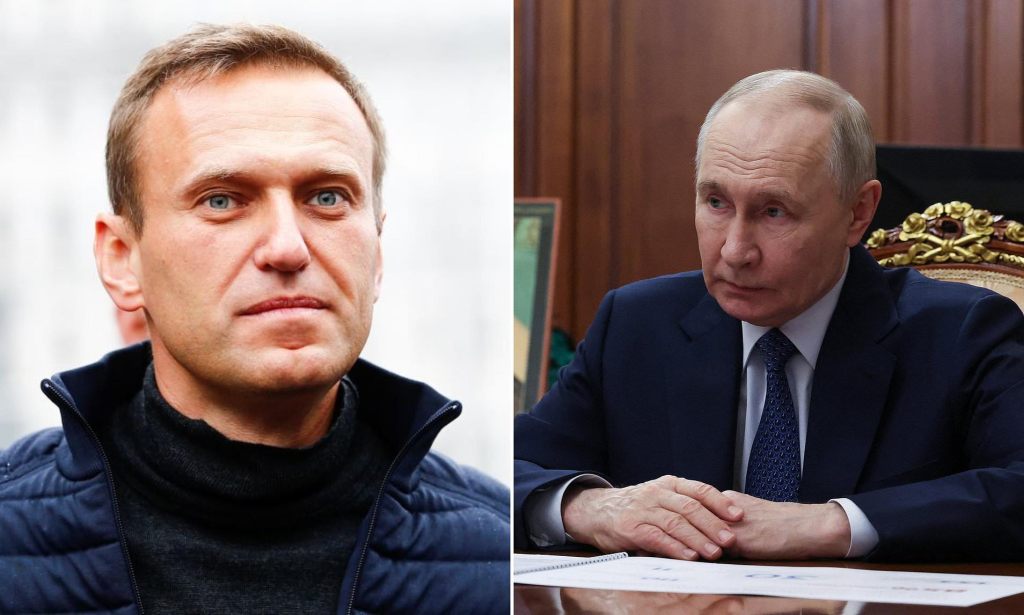
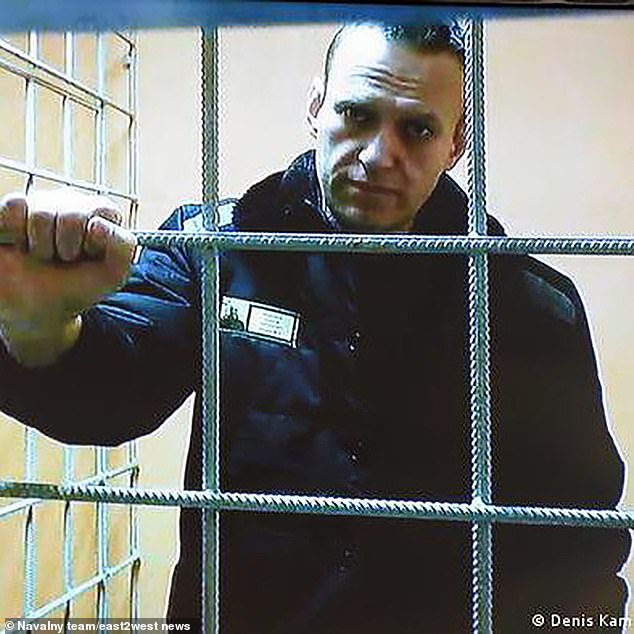
His body was slender and his eyes sunken, but in the final pictures ofAlexei Navalny, appearing in court through a video link from his Arctic prison, the Russian opposition leader was in high spirits, even making a joke with the judge about needing more money.
Just a day later, in February 2024, he passed away on the floor of his prison cell, experiencing vomiting at the time.
We now understand what many had assumed from the beginning: this was not a ‘natural’ death as the Russian authorities claimed.
It was a murder – and an especially strange and horrifying one, involving an extremely potent neurotoxin obtained from South American poison dart frogs.
This was an assassination that was unusual even according to the exaggerated standards of Vladimir.Putin.
We are aware of this because samples from Navalny’s body were secretly acquired by his family and supporters, and then taken out ofRussiaand examined in independent laboratories across various nations.
Both identified the neurotoxin epibatidine, which is not found naturally in Russia, and leads to respiratory failure even in small amounts.
The application of dart frog toxin brings up two unsettling questions. First: why choose such an unusual means of killing? Second: why let it be found out in the first place?
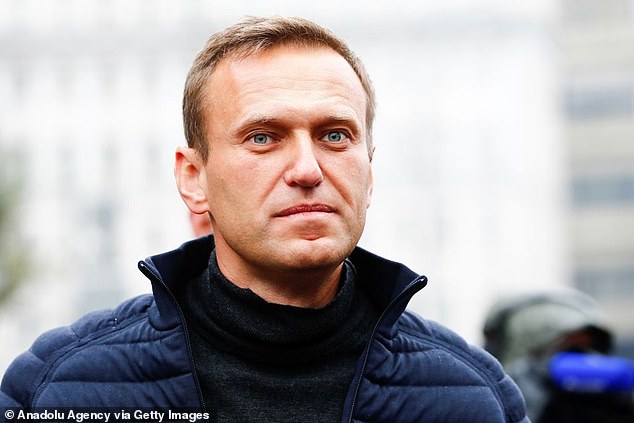
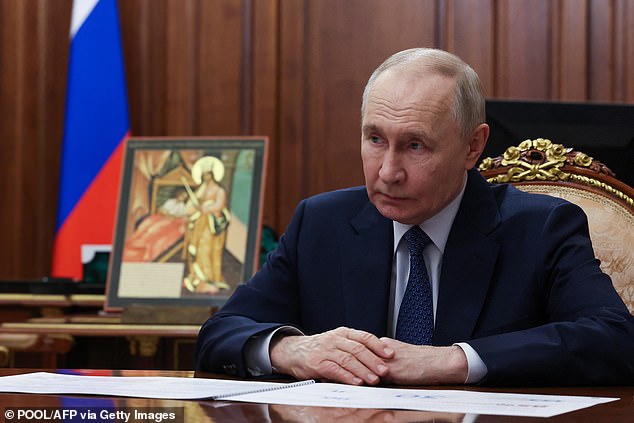
Putin had previously instructed for Navalny’s murder in August 2020.
A group from Russia’s intelligence agency, the FSB, poisoned him using Novichok – the same toxic substance employed in the attack on Sergei Skripal in the UK.
Navalny was saved only due to his plane making an emergency landing, with Russian medical professionals, who were not aware he had been intentionally poisoned, providing treatment.
However, Putin allowed Navalny and his family to travel to Germany for recovery, possibly hoping he would remain there.
Maybe also hoping that the media attention the poisoning would receive in the West would plant the roots of suspicion among his adversaries residing there.
Navalny courageously came back to Russia in January 2021 and was officially given multiple decades in prison through a set of staged trials that resembled those from the 1930s.
If the Kremlin wanted to kill Navalny while he was in prison, there were simpler methods available.
He might have been killed by ‘overzealous’ guards. He could have been gradually starved. He could have been allowed to deteriorate physically until his body gave out.
This result would have meant a bleak, slow demise. However, Putin – with the directive for Navalny’s death likely originating from Putin himself – had his rival killed in an exceptionally dramatic and horrifying manner.
This was entirely sadistic enjoyment from the Russian leader. Navalny was more than just another critic, a lawyer who became an investigator whose reports on corruption targeted Putin’s innermost circle.
Navalny symbolized a different route for Russia, one that was generally pro-Western and based on the rule of law, standing in stark contrast to the country’s corrupt mix of secret police, organized crime, and favoritism-based authority.
The killing of Navalny by Putin represented a last demonstration of disdain, hatred, and scorn, not only taking a man’s life but also extinguishing a potential future for Russia.
Similar to Ivan the Terrible or Vlad the Impaler, he desires that the deaths of his adversaries be distinctive. This reveals a great deal about the Russian leader’s mental state.
But there must have been a risk that the method of death would be revealed? Maybe, similar to Navalny’s previous escape to Germany, Putin was complacent – or even desired it.
If that’s the case, the message is direct: if Russia cannot be loved, it will be dreaded.
Putin’s perspective is encapsulated in a Russian saying: “Punish your own, so that others will fear you.”
Nevertheless, the statement issued by Britain and European nations also conveys a message.
Initially, the results were disclosed at the Munich Security Conference – a place rich in symbolic significance.
This was the place, in 2007, where Putin announced that the post-Cold War era had ended and indicated Russia’s shift towards a more confrontational approach.
To Putin, Europe is conveying: we are aware of you, we recognize your chemical weapons, and we perceive what you symbolize.
We are aware that you are violating the Chemical Weapons Convention by creating these toxins.
For skeptics in the US, whose dedication to European security is not assured, it serves as a reminder of Donald Trump’s view on the harmful character of Putin’s government; a danger to both people and countries.
- Dr. Bob Seely MBE is the writer of The New Total War


 jasdooit
Leave a comment