
Chinese artificial intelligence (AI) firms are involved in a competitive “hongbao” (red envelope) campaign before the Lunar New Year to boost adoption of their AI services, providing cash-like rewards to encourage app downloads. Although Chinese AI has attracted international recognition after the Deepseek surprise, the local market continues to be vital. Businesses are escalating their promotional efforts to capture the restricted domestic market.
◇Alibaba’s “Milk Tea Chaos”
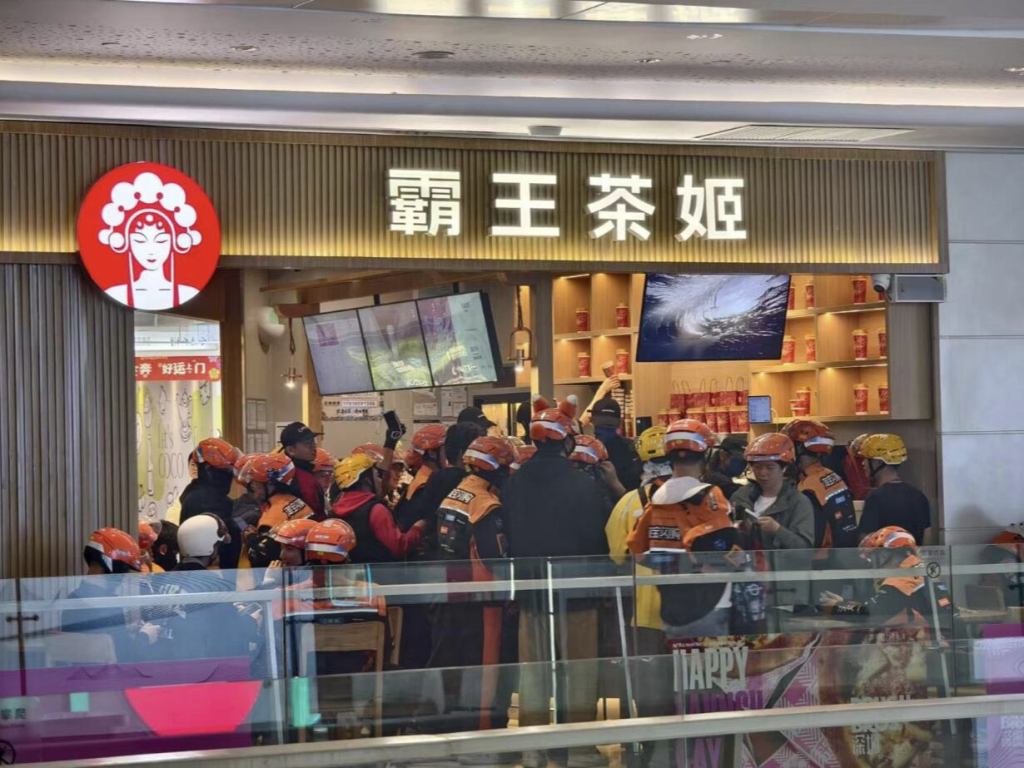
On the 6th, Alibaba launched an event where free milk tea could be obtained through its AI app Qwen (known as Qianwen in Chinese) as part of a 3 billion yuan (around 630 billion South Korean won) red envelope campaign before Lunar New Year. Users who download the Qwen app and ask, “Order me a milk tea,” get a 25 yuan (about 5,200 South Korean won) coupon. This coupon lets them buy a milk tea for 0.01 yuan (approximately 2 South Korean won) at 300,000 stores, including well-known brands like Heytea and Miss & Mrs. Cheng. Inviting friends to join provides both parties with an extra milk tea coupon, and users can invite up to 20 people—possibly earning 525 yuan (around 110,000 South Korean won) in coupons.
Following the event’s launch, milk tea shops across the country were flooded with delivery requests. In just five hours, 5 million coupons were distributed, and certain stores received more than 1,000 orders each day, leading to disordered situations. This “milk tea frenzy” helped Qwen become the most downloaded free AI app on Chinese app stores.
◇WeChat’s Latecomer Offensive
Tencent, the company behind China’s most popular messaging application WeChat, revealed a hongbao initiative worth 1 billion yuan (around 209 billion South Korean won) to boost its AI app Yuanbao. Tencent, which is trailing Deepseek and Alibaba in AI advancements, reportedly established an internal target to regain its former success via this Lunar New Year promotion.
Tencent introduced online hongbao activities in 2014, giving away 500 million yuan during the Lunar New Year. By connecting the event with its payment platform WeChat Pay, it posed a challenge to Alipay’s leadership, handling more than 1 billion transactions on New Year’s Eve.
Nevertheless, the success of hongbao events during the AI period is still unclear. Tencent’s Yuanbao app temporarily led in free AI downloads by providing cash rewards of up to 10,000 yuan (around 2.09 million Korean won) starting on the 3rd, but it quickly dropped out of the top position due to Alibaba’s milk tea promotion within three days.
In reply, Tencent restricted Qwen invitation links through WeChat, stopping users from distributing them. Social media users mentioned turning to sending links via text to relatives.
◇Escalating Marketing Battles
In addition to Alibaba and Tencent, Baidu intends to distribute 500 million yuan in red envelopes by March to boost its Wenxin AI. ByteDance, a major player in AI, does not offer cash rewards but instead concentrates on advertising during CCTV’s popular Lunar New Year gala “Chunwan,” acting as the event’s AI cloud provider.
Experts cast doubt on whether these financially motivated campaigns will transform the AI sector. A representative from the technology field remarked, “It’s simple to switch between AI services following one-time occurrences. Without genuine service superiority, intense advertising might deplete resources essential for AI progress without attracting users.”

 jasdooit
Leave a comment