
- One Country leading Labor in Upper House election
- Liberal Party holds the majority in the two-party preferred count
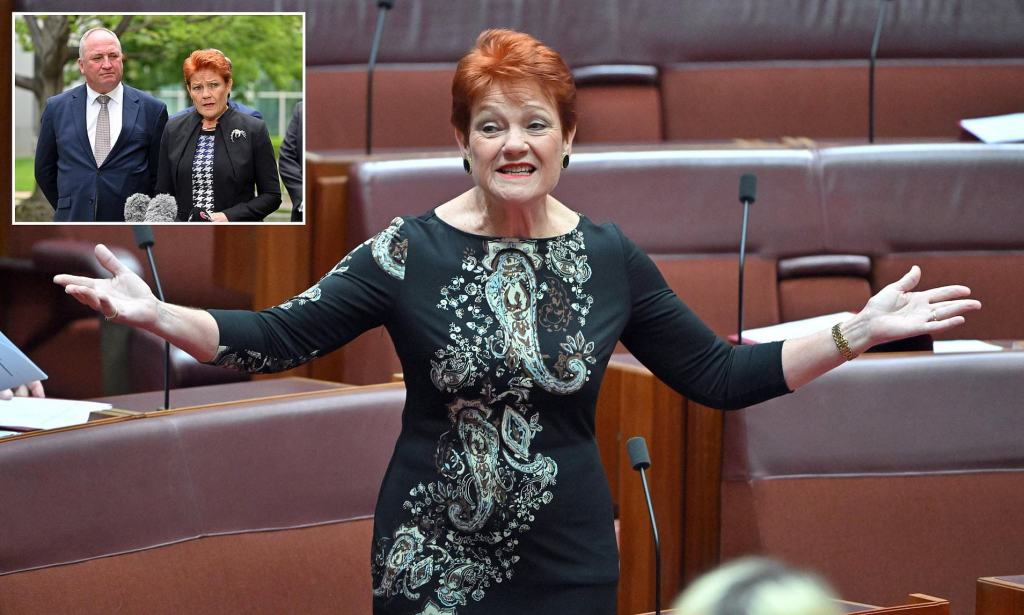
A recent survey shows that support for One Nation has quickly risen to record highs in Victoria, potentially giving it significant influence in the political landscape.
The DemosAU/PremierNational survey indicates that One Nation has reached a 21 per cent primary vote, its highest level in the state – only two points behind Labor, which has dropped to 23 per cent.
It signifies a major change in Victoria, a region that has remained a Labor base for over a decade since Dan Andrews became state leader in 2014.
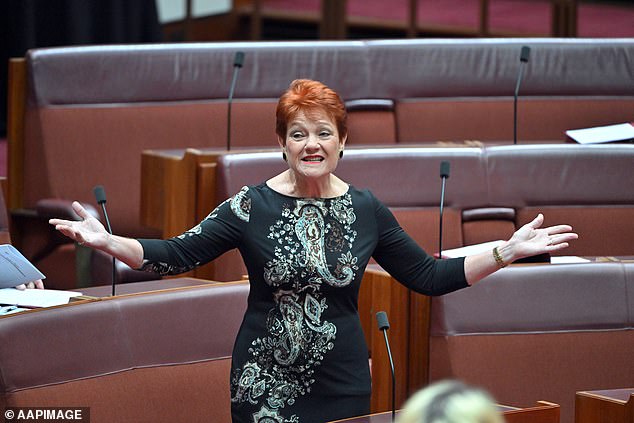
Victorians are shifting to Pauline Hansontheir gathering in large numbers due to increasing dissatisfaction with rising costscrime, continuous financial strain, the deteriorating housing situation and growing concern regarding the state’s economic future.
One Nation is getting ready for a significant campaign, intending to put forward candidates in all lower house seats during the November election.election– only the second instance it has occurred in the state.
The survey shows a decline in backing for both main political parties: the Coalition has fallen by eight points since October, reaching 29 percent, while Labor has also decreased by three points, with both now significantly lower than their performance in the 2022 election.
The labor party is facing significant challenges, with its main support standing at 23 percent – a decrease of 13 points from its earlier result of 36 percent.
Although there has been a general decline, the Coalition has increased its two-party-preferred advantage to 53–47, placing it in its most favorable position to establish a government since Ted Baillieu’s victory in 2010.
Although their standing has improved, the Liberal Party encounters a significant political obstacle, requiring them to secure 16 seats to attain a majority.
In the upper house, a survey conducted between February 1 and 10, which gathered responses from 1,274 Victorians, indicates that one in five voters intends to cast their first preference for One Nation.
The Liberal Party has 28 percent, while One Nation comes in second with 20 percent, and Labor follows with 19 percent.
This outcome could disrupt the state’s upper house, possibly compelling the current government to engage in discussions with One Nation to advance laws.
Crime is still the primary public worry, with 30 percent identifying it as their top problem. An additional 29 percent select the cost of living, while 12 percent mention housing.
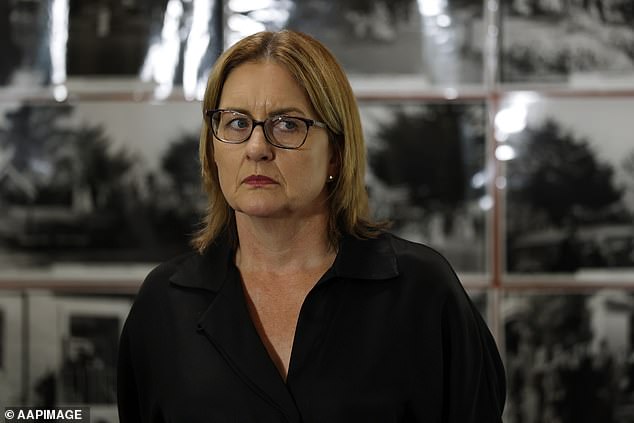
Opposition Leader Jess Wilson has further increased her advantage as the preferred leader, with 40 percent of support, while Premier Jacinta Allan holds 31 percent.
Wilson currently holds a net favorability score of +3, whereas Allan has dropped to -37.
The outcomes bring unfavorable news for Labor, which has remained in control of Victoria for over a decade.
Andrews solidified his power in 2018 through the so-called ‘Danslide,’ a massive electoral win that transformed the voting map into a landscape of red.
Labor increased its representation to as many as 60 seats in the 88-member legislature, securing up to 15 additional positions, while the Liberal-National Coalition experienced a major decline.
By 2022, Andrews secured a third clear victory, even amid continuous criticism from rivals, negative media reports, and persistent frustration regarding lockdown measures.
The election was portrayed as a direct vote on his leadership, but Labor once more won with an estimated 52 seats, maintaining a strong majority.
Nevertheless, after Andrews stepped down in September 2023, the Labor Party led by Jacinta Allan has found it difficult to achieve the same level of public support.
The party has experienced a steep drop in opinion polls, with Allan personally suffering a notable decline in voter support.
An internal Labor survey from February reportedly indicated the party’s net satisfaction score was -20 with all voters, and -40 among individuals aged 50 and above.
Current controversies regarding the government’s management of CFMEU corruption in the state’s major infrastructure developments, rising crime rates, especially those involving knives, and concerns about the reaction to recent bushfires have all been attributed to the party’s drop in popularity.



 jasdooit
Leave a comment