
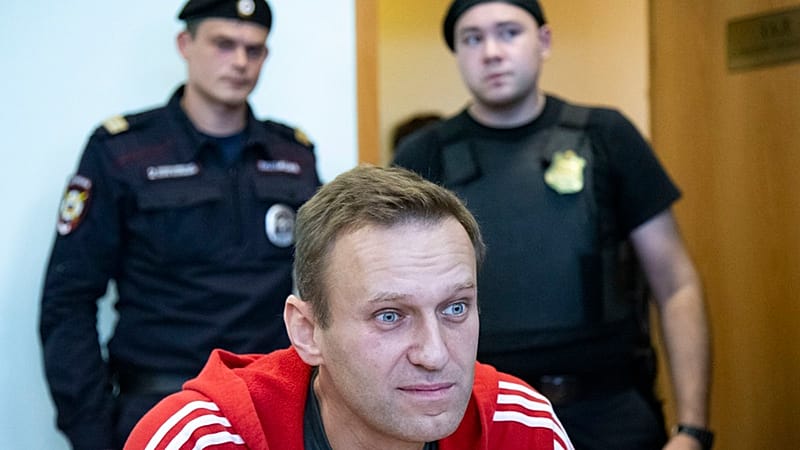
European laboratories “conclusively confirmed” that Russian opposition figure Alexei Navalny was poisoned by the Kremlin using a deadly toxin from a dart frog, according to statements from the foreign ministries of five European nations over the weekend, reigniting discussions about his death in an Arctic prison in 2024.
Navalny passed away in February 2024 at the Polar Wolf maximum-security prison, located near the western Siberian town of Kharp. He was serving a 19-year sentence for “extremism,” a charge that he and his supporters claim was used to suppress his activities as an opposition figure.
Russian officials claim that Navalny passed away after taking a walk and becoming sick while in custody. They then spent several weeks withholding his body and compelling family members to sign a death certificate that listed his cause of death as “natural causes,” fueling allegations of a cover-up.
On Monday, Moscow dismissed the conclusions from five European nations — the UK, France, Germany, Sweden, and the Netherlands — that claim Navalny’s death resulted from epibatidine, a neurotoxin produced by poison frogs.
Nevertheless, the most recent disclosure from European allies aligns with the Kremlin’s established history of poisoning its adversaries and an earlier attempt on Navalny’s life in 2020 involving a novichok nerve agent, which led to Navalny’s evacuation to Germany for extended medical treatment and rehabilitation.
Epibatidine and the Ecuadorian poison frog
Epibatidine occurs naturally in Ecuadorian poison frogs in their natural habitat and can also be synthesized in a laboratory, with European scientists believing this was the source of the substance used on Navalny.
It affects the body in a manner comparable to other nerve agents, leading to difficulty breathing, convulsions, seizures, a reduced heart rate, and eventually death.
In a shared statement, the five European nations mentioned that the poison from the dart frog does not occur naturally in Russia. Nevertheless, according to experts, this would not hinder a state-affiliated entity from either gathering it from the wild or producing it in a laboratory.
“Russia stated that Navalny passed away due to natural causes. However, considering the high toxicity of epibatidine and the reported symptoms, it was very probable that poisoning led to his death. Navalny died while in prison, indicating that Russia had the ability, reason, and chance to give him this poison,” the statement mentioned.
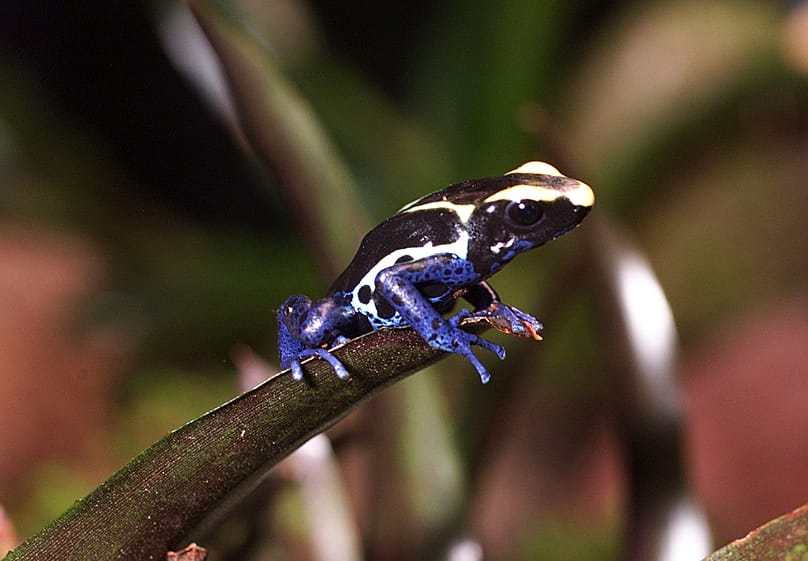
European authorities stated they had a strong level of confidence in the evaluation that Navalny succumbed to epibatidine poisoning. When questioned about the delay in the results, German Foreign Minister Johann Wadephul mentioned that it had been “a complex procedure.”
Only Putin’s allies will be able to provide a detailed account of what occurred on February 16, 2024, in the Russian prison camp,” Wadephul stated. “However, it is evident that Russian officials had the opportunity, the reason, and the ability to poison Navalny.
Russia viewed Navalny as a danger,” said British Foreign Secretary Yvette Cooper. “By employing this type of poison, the Russian government revealed the vile methods it possesses and the immense fear it holds towards political rivals.
French Foreign Minister Jean-Noël Barrot stated on X that the poisoning of Navalny demonstrates “that Vladimir Putin is willing to employ biological weapons against his own citizens to maintain his authority.”
A concerning report,” said U.S. Secretary of State Marco Rubio to journalists during a trip to Slovakia on Sunday. “We have no basis to doubt its validity.
Russia has faced accusations of involvement in multiple poisoning incidents targeting critics of the Kremlin, including the 2006 death of former FSB agent Alexander Litvinenko, who was poisoned with radioactive polonium-210 in London.

The 2018 incident in which former double agent Sergei Skripal and his daughter were poisoned with a nerve agent from the novichok group in Salisbury, a case that both UK and European courts have linked to Russian state actors, stands as the most notable case in recent times.
The Kremlin was also blamed for poisoning Russian opposition figure Vladimir Kara-Murza in 2015 and 2017, who survived two life-threatening events following encounters with FSB agents.
The toxic incidents led to the failure of several organs, resulting in Kara-Murza suffering from nerve damage, which necessitates the use of a cane and has caused a long-term neurological issue.
The 2004 dioxin poisoning incident involving Ukraine’s former President Viktor Yushchenko, which resulted in severe facial disfigurement, has also been connected to Russia, although the inquiry has stalled and is still officially unresolved.
Relatives demand responsibility
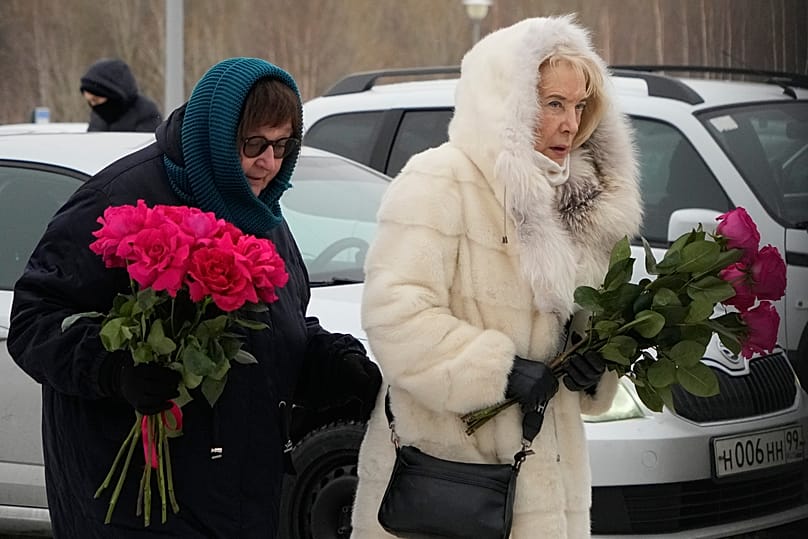
Meanwhile, Navalny’s mother Lyudmila told journalists she felt justified by the European statement and urged that those responsible be held accountable, as dozens of individuals, including relatives, foreign diplomats, and supporters, visited Navalny’s grave on Monday to honor him on the anniversary of his passing.
“This verifies what we always knew from the start. We were aware that our son didn’t just pass away in prison, he was killed,” she stated near the cemetery where he was laid to rest in Moscow.
“I believe it will take some time, but we will eventually discover who was responsible. Naturally, we hope this occurs within our country, and we desire justice to be served,” she added.
Yulia Navalnaya, the wife of Navalny, stated on Saturday that it is now “scientifically confirmed” that her husband was assassinated.
She had previously stated in September that laboratory testing of smuggled biological samples confirmed her husband had been poisoned.
Navalnaya has promised to assume the role of Russia’s opposition following Navalny’s passing but has faced challenges in generating broad-based support.


 jasdooit
Leave a comment