
LondonHealth authorities have encouraged parents to ensure their children receive the measles vaccine, after a significant outbreak occurred in the Enfield area.
From the start of the year, 96 confirmed instances of the dangerous virus have been recorded in England, with most cases impacting children below the age of 10.
The Enfield borough in north London has reported the most infections, with 34 confirmed cases, although the UK Health Security Agency (UKHSA) cautioned that this figure is probably much lower than the actual number.
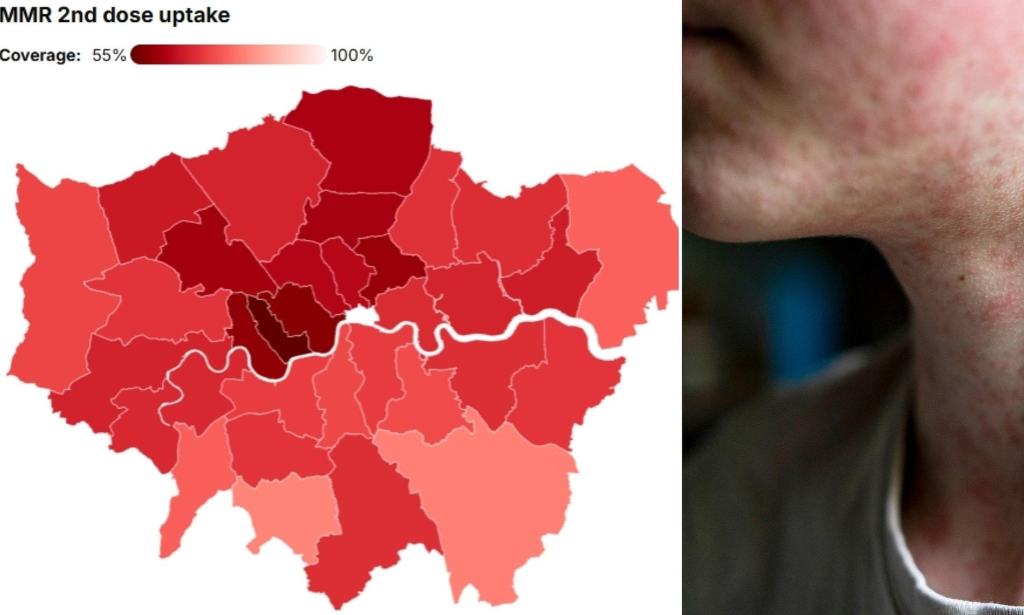
Experts have attributed the low rate of measles, mumps, and rubella (MMR) vaccination in the Capital to the ongoing outbreak. In Enfield, where the current outbreak is taking place, only approximately 62 percent of children under five have received the two-dose vaccine, according to the latest official statistics.
Nevertheless, the Daily Mail’s interactive map shows that there are five London boroughs with even lower MMR vaccination levels than Enfield, according to specialists, which could lead to a ‘perfect storm,’ enabling the virus to spread throughout the city.
These areas consist of Hammersmith and Fulham, Hackney, Westminster, and Haringey.
The wealthy area of Kensington and Chelsea has the lowest vaccination rates in London, with just 51 percent of children under five vaccinated.
Experts have attributed the growing appeal of alternative medicine — in which patients opt for natural treatments instead of prescription medications — to the increasing number of vaccine-resistant individuals among affluent and middle-income residents of London.
“I am disappointed that parents are turning down these safe and effective vaccines that have been in use for many years,” says Dr. Nisa Aslam, a London-based NHS doctor.
Throughout my entire career, I have never witnessed such a surge in infections, and it is truly concerning.
And I don’t believe it’s always due to logistical issues – some parents are deliberately declining vaccinations, possibly because of concerns about supposed side effects, a lack of trust in the government and drug companies, or a sense of indifference.
She stated, “We implement vaccination programs very effectively, and since there is a wide timeframe along with a catch-up initiative, there are opportunities and access available to ensure your child receives the necessary vaccinations. It all comes down to what you choose to prioritize.”
But refusing to vaccinate your child is endangering thousands; we must take action as soon as possible to ensure safety.
Measles is a very infectious viral illness that transmits quickly from an infected individual through coughing, sneezing, or even simple respiration.
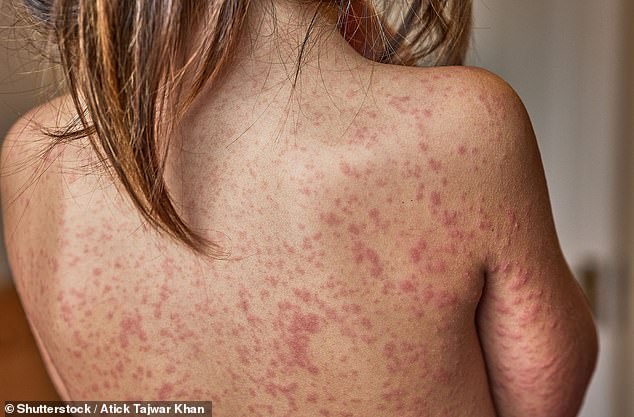
Symptoms appear between six and 19 days following infection, and may involve a runny nose, cough, red eyes, a fever, and a skin rash.
In 1 out of 15 instances, measles may lead to severe complications such as pneumonia, seizures, and encephalitis.
In July 2024, a child passed away in Liverpool — a place where 72 percent of children under five have received both doses of the measles vaccine — following infection with the virus during the nation’s most severe measles outbreak in history, which has recorded 3,681 confirmed cases.
Other parts of the UK with low vaccination rates are Nottingham (71 percent), Birmingham (75 percent), and Manchester (75 percent).
According to modeling conducted by the UK Health Security Agency, as many as 160,000 individuals might become infected in the event of an outbreak in London.
At present, there is no treatment available for measles, only the MMR vaccine, which was recently modified to also cover chickenpox, medically referred to as varicella.
However, adoption declined in the late 1990s and early 2000s following a now-retracted 1998 study by Andrew Wakefield that incorrectly associated the vaccine with autism.
Although the vaccine has since been shown to be safe and effective, these claims—intensified by doubts about the Covid vaccines—have continued within certain minority ethnic groups, leading to reluctance in getting vaccinated, according to Dr. Aslam.
Measles, which typically causes flu-like symptoms and the distinctive rash, can lead to severe and potentially deadly health issues if it affects the lungs or brain.
The virus spreads via coughs and sneezes, as well as contact with infected surfaces – which partly explains why so many school children are impacted.
Initial signs may consist of a fever, headache, a runny or congested nose, and coughing. The distinctive rash typically emerges a few days afterward, beginning on the face and then spreading across the body.
One out of every five children who contract the infection may require hospitalization, while approximately one in 15 could experience serious complications like meningitis or sepsis.
The NHS is still encouraging families to get their vaccinations, and is now scheduling the second dose earlier—moving it to an 18-month check-up.




 jasdooit
Leave a comment