
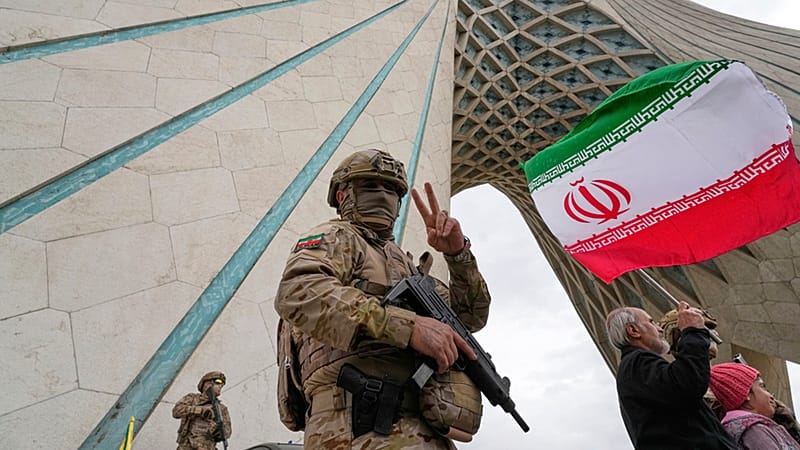
Iran’s Foreign Minister Abbas Araghchi has arrived in Geneva in preparation for the second round of talks between Iran and the United States.
Tehran states that indirect Iran-US nuclear discussions, facilitated by Oman, will take place on Tuesday. Washington aims to broaden the scope of the meeting to cover Iran’s ballistic missiles and its extensive network of proxies in the region.
Tehran and Washington resumed discussions this month following earlier talks that broke down when Israel and Iran were involved in a 12-day confrontation in June.
U.S. Secretary of State Marco Rubio expressed to journalists on Monday that he was optimistic the Geneva negotiations would result in an agreement.
“The president (Donald Trump) consistently favors peaceful and negotiated solutions,” Rubio stated during a press conference while in Hungary.
The future of Iran’s stockpile, which contains over 400 kilograms of uranium enriched to 60%, remains unclear since it was last observed by nuclear monitoring officials in June, marking a minor technical advancement toward the 90% enrichment level required for weapons-grade material.
The top Iranian diplomat mentioned in a message on X that he was meeting with Rafael Grossi, the director of the International Atomic Energy Agency (IAEA), “for detailed technical talks.”
I am in Geneva with genuine concepts aimed at securing a fair and just agreement,” Araghchi stated on X. “What is not up for discussion: yielding prior to threats.
Washington stated it had sent Middle East special envoy Steve Witkoff and Trump’s son-in-law Jared Kushner to Oman for the meeting on Tuesday.
IRGC conduct military exercises in Hormuz region
Recent discussions come after repeated warnings from Trump regarding military action towards Tehran, triggered by Iran’s violent suppression of anti-government demonstrations.
The West thinks the program is intended to develop a bomb, which Tehran has consistently denied, stating it is solely for peaceful purposes.
On Friday, Trump stated that a shift in leadership in Iran would be “the most beneficial outcome,” following the announcement of sending a second aircraft carrier group to the Middle East, aiming to increase military pressure and strengthen the U.S. combat capabilities.
At the same time, Iran’s Islamic Revolutionary Guard Corps (IRGC) initiated a series of military drills in the Strait of Hormuz on Monday, according to official media, ahead of discussions with the United States.
The war exercises, whose length was not mentioned, are intended to train the IRGC for “possible security and military challenges” in the strait, according to state television, following the US sending a significant naval force to the region.
Iranian conservative politicians have frequently warned about closing the strait, particularly during periods of increased conflict with the United States, although it has never actually been shut down.
Approximately 20% of global oil production flows through this critical waterway.
The drills, supervised by IRGC head General Mohammad Pakpour, are intended to enhance the Guards’ capacity for rapid response, according to Iranian government media. The IRGC serves as the ideological branch of Iran’s armed forces.

 jasdooit
Leave a comment