

The effort led by France, Poland, Germany, the UK, and Italy follows a series of breaches of European airspace caused by unauthorized drones.
Five European countries have revealed a new initiative aimed at developing affordable air defense systems and autonomous technology.dronesutilizing Ukrainian knowledge gained through the past four years ofwar against Russia.
The E5 nations’ initiative on Friday –France, Poland, Germany, the United Kingdom and Italy– emerges as one of several European initiatives to strengthen defense along their frontiers, similar to a “drone wall” withRussia and Ukraineto more effectively identify, monitor, and neutralize drones that are breaching Europe’s air space.
Both Moscow and Kyiv possess advanced drone warfare capabilities developed in the harsh environment of conflict, where battlefield innovations have transformed contemporary combat strategies. Poland is already collaborating with Ukraine on drone technology through joint military training initiatives and production projects.
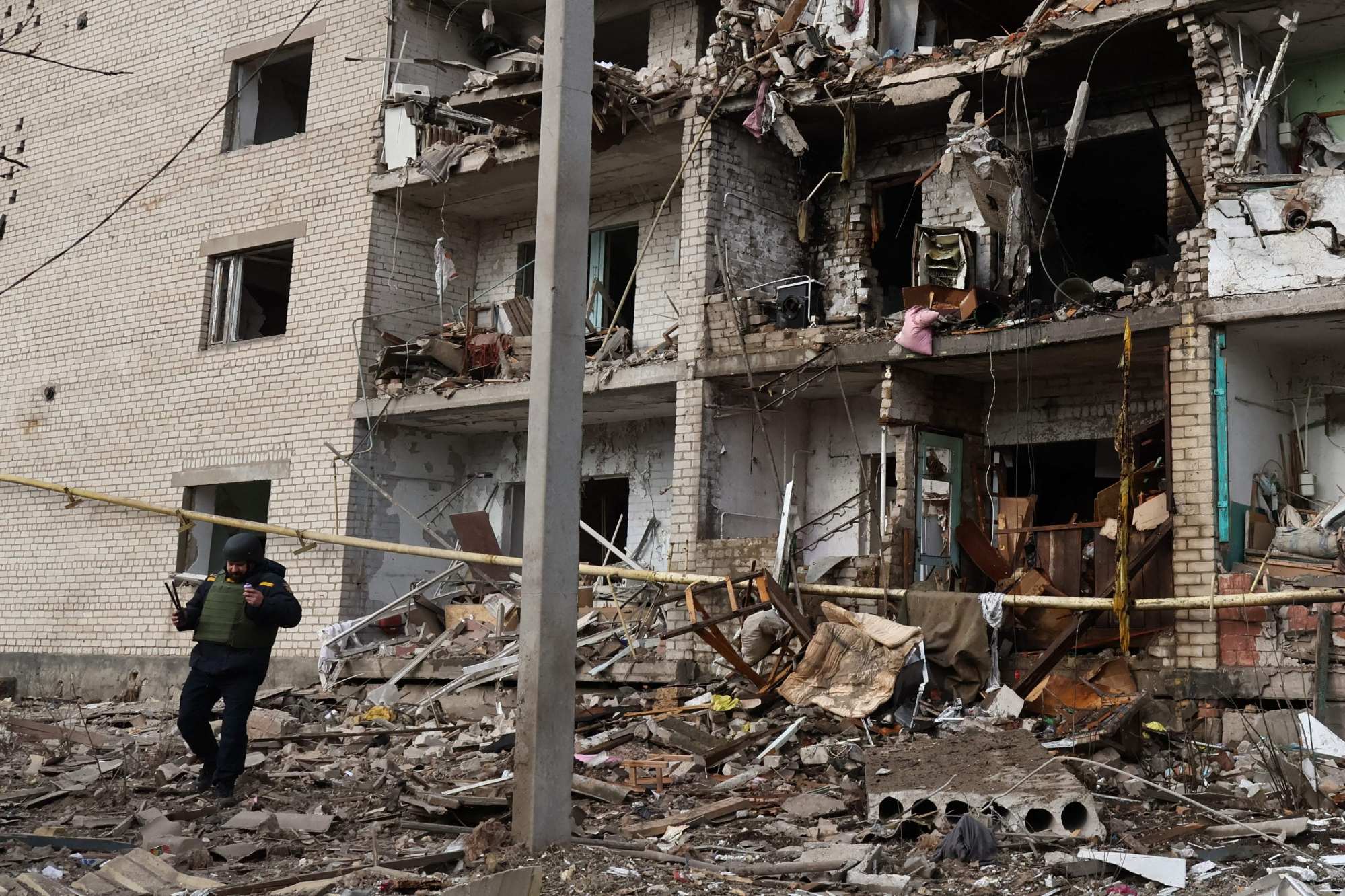
These actions were triggered by a series of events where Europe’s boundaries and airports faced challenges from unauthorized drones. Russia has been accused of some of these incidents but refutes any intentional involvement or part in them.
The UK and our E5 partners are increasing their efforts – jointly investing in the next generation of air defense and autonomous systems to enhanceNato“Her shield,” said Luke Pollard, Britain’s minister for defence readiness and industry.
We possess some of the finest systems available on Earth for intercepting aerial threats. The challenge lies in being effective against relatively inexpensive missiles, drones, and other dangers we face,” he stated. “We must ensure that our defense costs align with the expenses of these threats.
Poland’s Minister of Defence, Władysław Kosiniak-Kamysz, stated that a group of nations has entered into an agreement to collectively invest in the development and acquisition of drone-based attack systems along with affordable drone defense technologies under a program known as Low-Cost Effectors and Autonomous Platforms, or LEAP.
Combat technologies and methods are evolving swiftly — we need to react promptly and effectively,” Kosiniak-Kamysz stated. “We have also entered into a significant agreement concerning the collaborative development of drone-based attack capabilities, cost-effective joint manufacturing, and shared procurement of drone effectors, meaning combat payloads, utilizing artificial intelligence.
In September of last year, when Russian drones infiltrated Polish airspace, Warsaw and its NATO allies deployed high-cost jets to counter drones that were relatively inexpensive and ultimately crashed into the Polish countryside. Affordable kinetic or electronic systems could enable the identification and neutralization of drones at a significantly lower cost.
Europe has hurried to strengthen its arms following intense criticism from US President Donald Trump regarding Nato, European defense expenditures, and previously unbreakable alliances. The EU has increased its spending and is openly challenging more extensive military initiatives.
“The security situation in Europe is more unpredictable than it has been in many years,” stated Kaja Kallas, the EU’s top diplomat on foreign affairs, referencing Russian actions, turmoil in the Middle East, China, and a “revised” partnership with the United States. She noted that the affordable missile defense initiative demonstrated Europe’s dedication to its own safety.
If our goal is to ensure the safety of our nation, we need to enhance our military capabilities. The positive aspect is that we are currently allocating unprecedented amounts to defense. Europe is increasing its efforts, but this isn’t about rivalry with NATO. It’s about reinforcing Europe’s position within NATO. A more robust Europe strengthens the alliance as a whole.
However, the 32-member military alliance has faced challenges under Trump’s second administration. Recently, his repeated warnings to take control of Greenland, a self-governing region of NATO member Denmark, along with critical comments about NATO allies’ forces in Afghanistan, sparked further criticism.
Although conflicts regarding Greenland have eased for the time being, the internal disputes have significantly weakened the world’s largest security alliance’s capacity to prevent threats.
More Articles from SCMP
How Taishan Came to Absorb the World
The China-US Conflict Over Minerals: The Emergence of Pax Sinica and Pax Silica
China’s AI dilemma: three different routes in the competition for leadership
This piece was first published in the South China Morning Post (www.scmp.com), a top news outlet covering China and Asia.
Copyright (c) 2026. South China Morning Post Publishers Ltd. All rights reserved.



 jasdooit
Leave a comment