
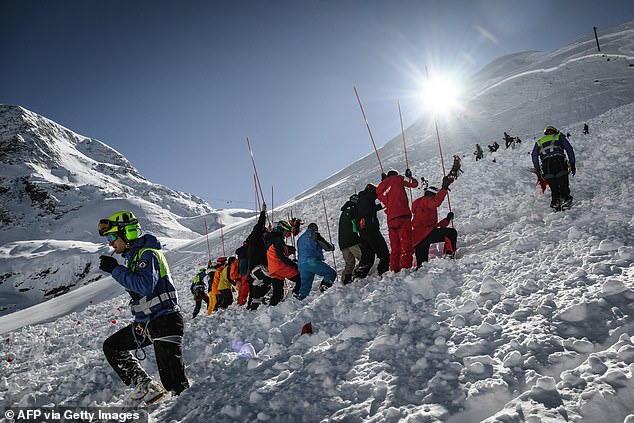
This winter has been labeled as Europe’s most fatal ski season in history, with avalanches resulting in 86 deaths within the first two months of the year.
In the Italian Alps, 13 hikers, climbers, skiers, and snowboarders weremurdered in one week– more than in any other week in history.
Meanwhile, in France, 28 individuals have lost their lives this winter in the well-known Valloire region – among them two British skiers.
So, what’s causing such a high number of snowslides?
Scientists claim that an ideal combination of weather conditions and the growing trend of off-piste skiing is responsible for the recent series of fatal avalanches.
Frederic Jarry, who serves as the project manager for the French National Association dedicated to studying snow and avalanches, stated to the Daily Mail: ‘This winter is different from anything we have seen in recent years.’
Ski enthusiasts are encountering snow conditions where a fragile, crumbly layer lies under a thick, heavy slab, according to specialists.
Underneath this delicate layer, a full winter’s worth of snow is held in place, and even the smallest disruption caused by a skier venturing off the marked trails can trigger a massive slide of snow and ice down the mountain.
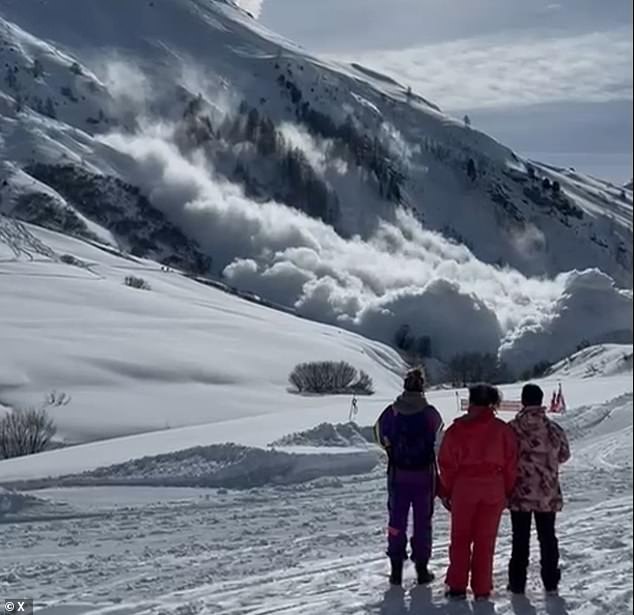
Avalanches that are fully formed can consist of as much as one million tons of snow, ice, and additional materials, moving at speeds reaching 200mph (320 km/h) – which makes them the most dangerous hazard in mountainous regions.
This year, skiers have lost their lives across the Alps, Pyrenees, and Carpathian Mountains – including fatalities in France, Italy, Austria, Switzerland, Spain, Slovenia, and Slovakia, as well as inThe Sierra Nevada Mountains feature Lake Tahoe.
As per the European Avalanche Warning Services, which monitors avalanche-related deaths, approximately 100 individuals lose their lives in European avalanches annually.
However, 77 people lost their lives due to avalanches in the first six weeks of 2026 alone, withthe number of fatalities has reached 86.
France has reported the greatest number of fatalities, with 25 deaths, followed by Italy at 21 and Austria with 14, while Switzerland has recorded nine and Spain eight.
When you observe a layer of white snow spread across the earth, it’s quite natural to perceive it as a single, uniform mass.
However, in truth, the snow found at ski resorts consists of separate layers that have been added during the winter season.
In essence, an avalanche happens when one of these layers begins to slide over the others, forming a powerful flow of snow that cannot be stopped.
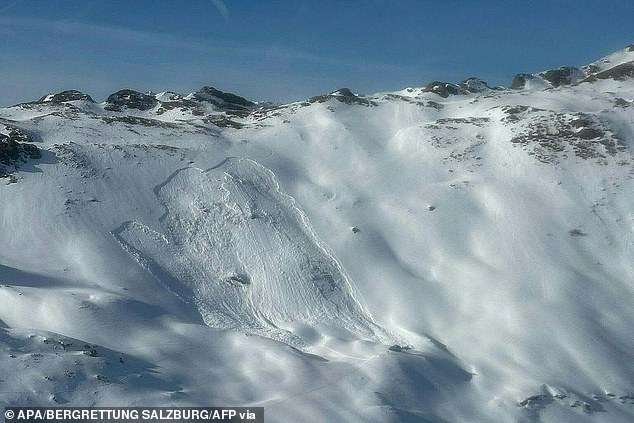
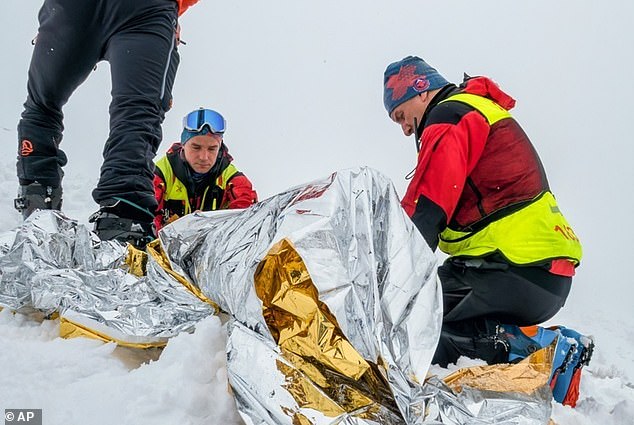
If there is a slope steeper than 30° and the snow has this hazardous layering, avalanches will always pose a risk.
Nevertheless, this year, the weather has created conditions that have made the slopes as hazardous as they can possibly be.
Mr. Jarry states: “The large number of fatal incidents and fatalities is specifically attributed to the season’s distinct snow and weather conditions.”
The winter season started with clear, dry conditions that spread a thin layer of snow across the mountains, soon followed by a sudden drop in temperature.
That period of cold weather turned the small, tightly packed snowflakes into big, hollow grains that move over one another instead of clinging together.
Dr. Jürg Schweizer from the WSL Institute for Snow and Avalanche Research SLF stated to the Daily Mail, “The thin snow cover turned into weak layers made up of loosely connected crystals, resembling a pile of debris, also known as sugary snow.”
Later, in mid-January, we experienced the first snowfall in a while, which covered these fragile base layers. The ideal combination of a slab over a weak layer, essential for dry-snow slab avalanches, which are the most dangerous for skiers.
After being configured, this ongoing weak layer becomes a significant problem as it remains.
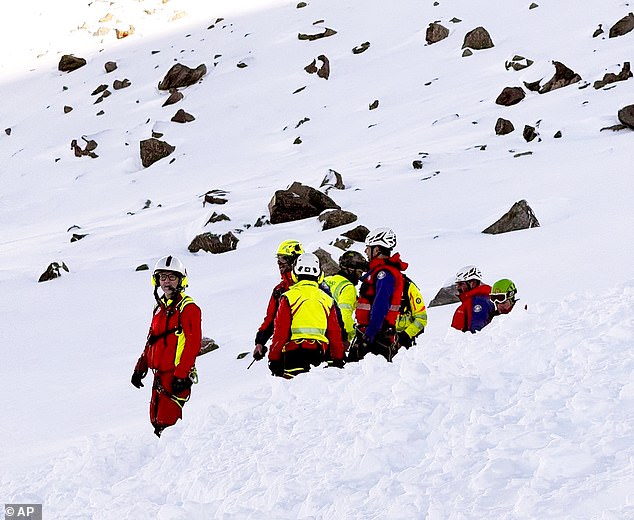
In recent days, heavy snow has once more accumulated on the mountains in France, increasing the likelihood of avalanches considerably.
The layer remains underneath the following layers of snow, awaiting the catalyst that will cause it to collapse abruptly.
Most of the time, the collapse occurs because of natural reasons, but the most hazardous avalanches are those set off by humans.
Skiing, snowboarding, trekking, or rock climbing across a fragile snow layer generates movements that may dislodge the dangerously unstable layer.
Dr. Nicolas Eckert, a specialist in mountain hazards from Grenoble Alpes University, stated to the Daily Mail: ‘The risk of avalanches in the European Alps is currently’primarily for mountain climbers who cause avalanches themselves.
This poses a specific danger for skiers who leave the protected areas of ski resorts in search of secluded paths and untouched snow.
Since the pandemic, this hobby has seen a significant rise in interest, with companies that produce backcountry gear noting a 13 percent growth in involvement from 2022 to 2023.
Nevertheless, skiing outside designated trails also involves a higher chance of causing an avalanche, particularly if there is a long-lasting weak layer present.
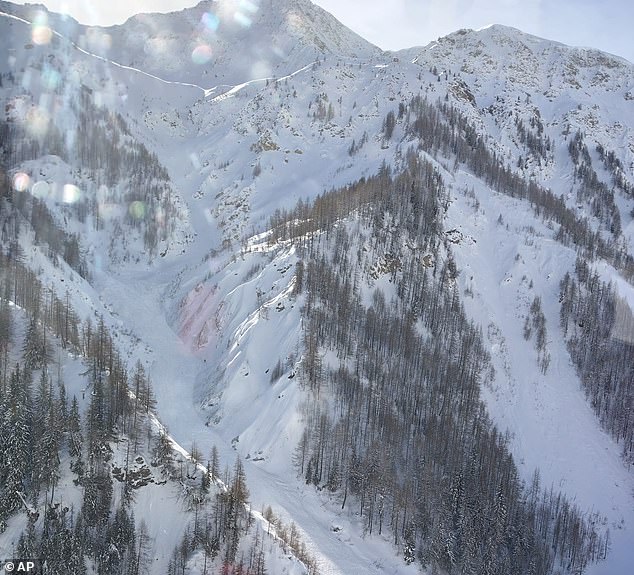
Last Sunday, an avalanche that occurred off the designated trails resulted in the death of two skiers and injured a third.on the Italian portion of the Mont Blanc Massif, close to the French-Swiss border.
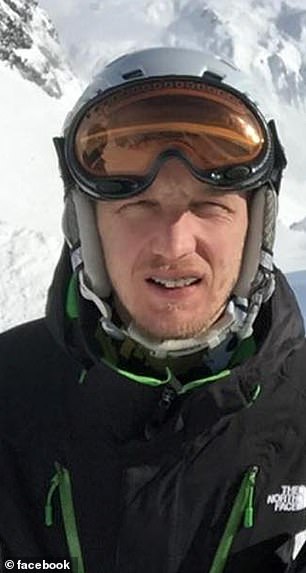
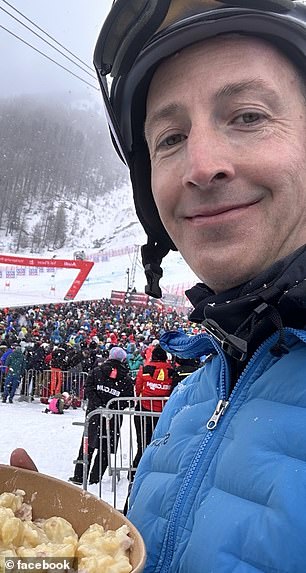
On Monday, British skiers Stuart Leslie, 46, and Shaun Overy, 51,were killed by a snowslide while skiing in unmarked areasunder the guidance of a trainer in the French ski resort of Val d’Isère.
Subsequently, on Tuesday, a group of five skiers was caught in an avalanche while skiing off-piste near the resort town of La Gave.
Two of the skiers lost their lives.A British man of Polish origin residing in Switzerland and a Polish individual.
Dr. Eckert states: “Risk change is primarily influenced by the shift in the number of backcountry skiers and their capacity to manage danger. The rising number of backcountry skiers should directly lead to a higher overall risk.”
This series of backcountry fatalities actually contradicts the recent pattern, which indicated that the activity was typically becoming more secure.
Although the count of backcountry skiers has increased substantially, the death rate from avalanches has decreased over the past decade.
Dr. Eckert states that this is due to the higher risk being offset by improved avalanche alerts, greater utilization of safety gear, and consistent snow conditions.
Nevertheless, the distinctive weather patterns this year have increased the danger to such an extent that even skiers who are typically well-prepared are now being affected by fatal, slow-moving avalanches.
The central issue for numerous avalanche scientists is understanding how global warming will influence these patterns.
At present, the majority of scientists anticipate that climate change may lead to a decrease in the overall number of avalanches annually.
This is simply because the rising temperature results in less snow accumulation on the mountain, making an avalanche significantly less probable.
A new study released before peer review revealed that the average annual number of avalanches has decreased by six percent every decade from 1958 to 2023.
In the future, researchers forecast that there may be a 30 per cent reduction in annual avalanches by 2100 compared to 1990.
The sole exception applies to elevations exceeding 3,000 meters, where snowslides are expected to occur more often because of increasingly severe weather conditions.
Nevertheless, researchers emphasize that this does not automatically indicate a reduction in the danger of perishing in an avalanche.
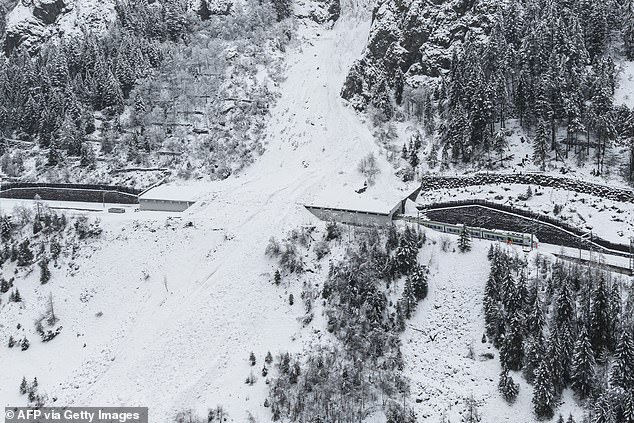
Dr. François Doussot, an expert in snowslides for the French national weather agency Meteo France, stated to the Daily Mail that there is a distinction between ‘snowslide danger’ and ‘snowslide risk’.
Even though the danger, which indicates the probability of an avalanche happening, is decreasing, the real risk is rising.
He states: “The risk is greatly influenced by the exposure, which is certainly evolving more rapidly than the hazard.”
As snow disappears from lower elevations, skiers will continue to look for snow at higher altitudes, where landslides are occurring more often.
These avalanches are expected to include a greater amount of wet snow, which is much heavier and considerably more dangerous.
A research investigation into the impact of global warming on snowslides found that: ‘Increased snow densities within avalanche remnants could potentially hinder the breathing of individuals entirely covered by the snow. Suffocation and physical injury, as factors leading to fatalities in avalanches, might become more prevalent.’
Meanwhile, as total snowfall declines, certain experts have proposed that shallow, long-lasting weak layers may increase in frequency – increasing the risk for backcountry skiers.
Mr. Jarry states: “The mountain, the snow, and the weather conditions are always changing. It’s the participants’ responsibility to adjust their strategy and recognize when to modify their plans, discarding specific routes in favor of more appropriate and engaging alternatives.”




 jasdooit
Leave a comment