
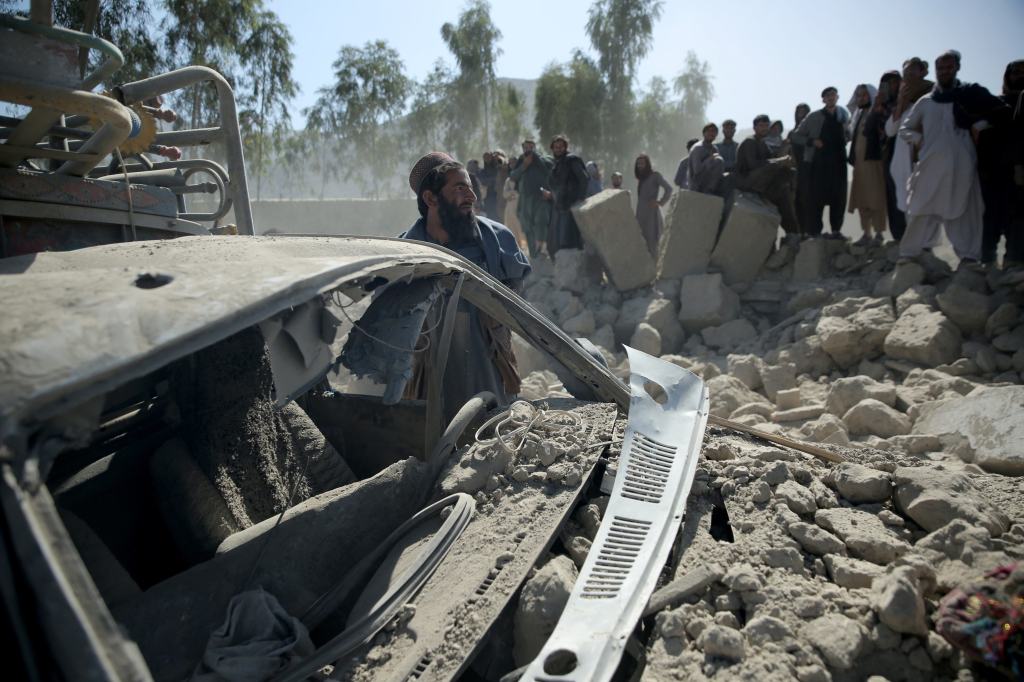
Pakistan conducted air strikes in Afghanistan, resulting in the death of at least 18 locals. This took place even though both nations had kept a truce in effect since the conflicts last year.
As reported by AP News, The Washington Post (WP), and other sources on the 22nd (local time), Pakistan’s Inter-Services Public Relations (ISPR) stated at dawn that the Pakistani military carried out air strikes on seven sites, including bases and shelters of the extremist group Pakistan Taliban (TTP), its associated groups, and the Islamic State (IS) affiliate IS Khorasan (ISIS-K) in border regions of Afghanistan.
The ISPR mentioned that recent attacks, such as suicide bombings in Pakistan, were conducted by armed groups “under the guidance of leadership and planners located in Afghanistan,” and noted that the air strikes were aimed at these groups.
The day prior, in Pakistan’s Bannu area, a suicide attack was conducted by armed forces on a military convoy, resulting in the death of two Pakistani soldiers. In reaction, the Pakistani military stated, “We will show no mercy” and promised to keep pursuing those involved in terrorist activities. Earlier that same day, the 16th, a suicide bombing carried out by an Afghan-linked militant group at a security post in Bajaur district, Khyber Pakhtunkhwa province, led to the deaths of 11 soldiers and one child.
A Pakistani security official informed AFP that the air strikes resulted in the deaths of more than 80 insurgents, with the casualty count anticipated to increase.
On the same day, the Afghan Red Crescent Society in Nangarhar province, located in eastern Afghanistan, informed AP News that 18 individuals were killed and multiple others were injured in the air strikes. Afghan government media also stated that 18 civilians, including children, lost their lives and six others were wounded in Nangarhar province.
Zabihullah Mujahid, a representative of the Taliban government in Afghanistan, said, “Dozens of individuals, including women and children, were killed or injured,” while rejecting Pakistan’s assertion that 70 militants were killed, describing it as “untrue.”
The Taliban’s defense ministry in Afghanistan also stated that the previous night, assaults on homes and Islamic schools in eastern Nangarhar province and southeastern Paktika province resulted in the death or injury of dozens of civilians. It noted that Pakistan’s air strikes constituted a “clear violation of national sovereignty” and an infringement on “international law, principles of good neighborliness, and Islamic values.” It cautioned of a “prompt and proportional response,” asserting that attacks on civilians and religious institutions “reveal the inadequacy of Pakistan’s intelligence and security systems.”
Amin Gul Amin, 37, from the mountainous Bihsud area in Nangarhar province, stated, “The people here are normal. The villagers are like family to us,” and continued, “When the bombing took place, someone who survived cried out for assistance.”
In October of last year, both nations faced their most severe armed confrontation since the Taliban regained control in Afghanistan in August 2021. During that period, Pakistan’s military carried out air strikes in Kabul aimed at TTP leaders, leading to retaliatory assaults by Afghan Taliban forces that resulted in more than 70 casualties on each side. On October 18 of the same year, the two countries reached a ceasefire agreement, which has been subsequently prolonged.




 jasdooit
Leave a comment