
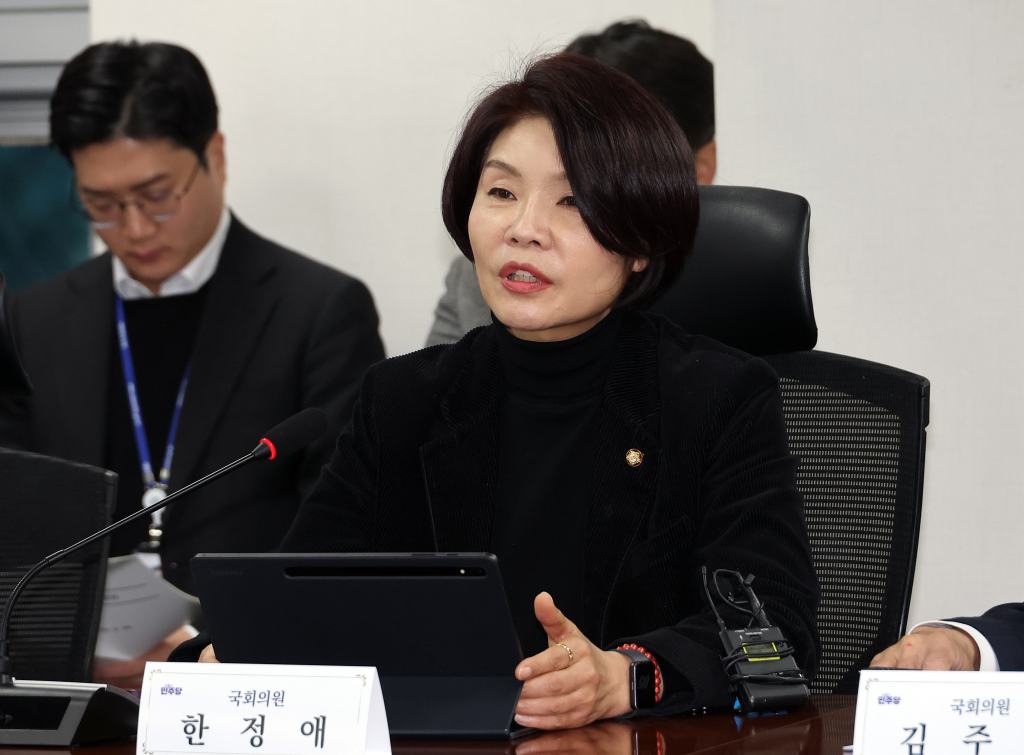
The South Korean Democratic Party and the government announced on the 23rd, before the ‘yellow envelope bill’ (Amendments to Articles 2 and 3 of the Trade Union and Labor Relations Adjustment Act) comes into effect on the 10th of next month, that they will “establish on-site support teams to avoid unnecessary confusion and disputes.” The party and government also expressed their aim to pass legislation within the year that would require retirement pensions for all workplaces, funded similarly to the National Pension Service.
Han Jeong-ae, the policy director of South Korea’s Democratic Party, convened a party-government discussion session at the National Assembly Members’ Office Building that day and stated, “This amended legislation extends beyond simply broadening the definition of employers; it is a law aimed at addressing gaps, creating a pathway for subcontract workers—who have long been in a communication void—to participate in meaningful dialogue with main contractors.”
Representative Han spoke with Minister of Employment and Labor Kim Young-hoon and others, stating, “We hope you will do your utmost to develop enforcement regulations and interpretation guidelines to avoid confusion in the negotiation processes between main contractors and subcontractors during the law’s initial implementation,” and further noted, “Specifically, employer status should be determined in advance to prevent unnecessary legal conflicts.”
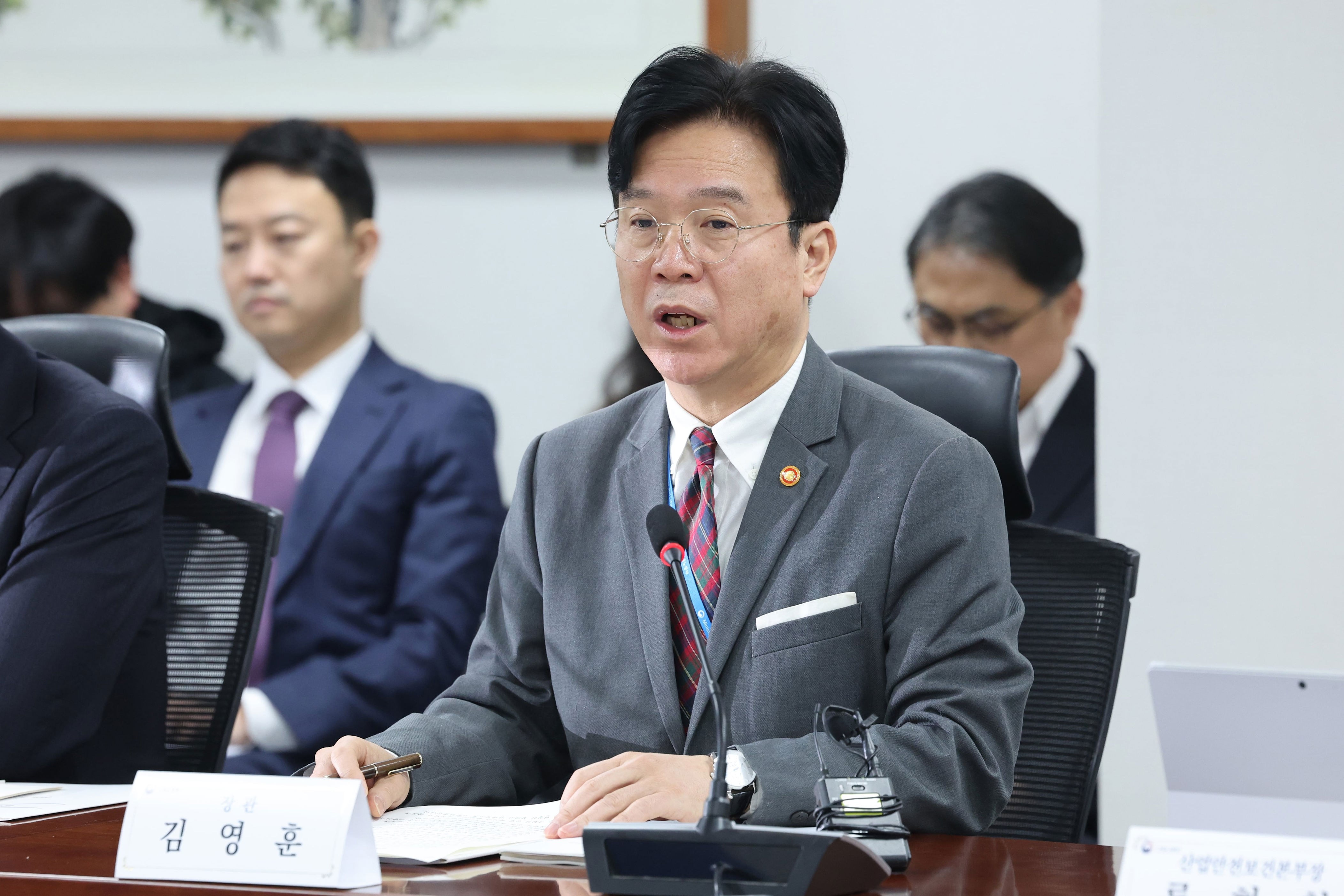
Minister Kim said, “The ‘yellow envelope bill’ is a law that encourages dialogue and resolves differences, breaking the cycle of harm and extreme conflicts where communication has turned illegal,” and mentioned, “We are setting clear guidelines for defining employment relationships and the range of negotiations to ensure the updated labor union law creates a stable framework, and we are working on a coordinated response system with relevant ministries.” He also noted, “The government is deploying on-site support teams to avoid unnecessary confusion and disputes at primary-subcontractor negotiation locations and is creating examples of collaborative negotiations.”
The main aspect of the ‘yellow envelope bill’ states that if a primary contractor has significant control over the working hours, methods, and other aspects of subcontract workers, these workers will be entitled to engage in negotiations with the company (primary contractor). The ‘yellow envelope bill,’ which was approved during the National Assembly plenary session on August 24 last year, is scheduled to take effect on the 10th of next month.
The government and party revealed their strategy to enact legislation this year that would require all businesses to establish retirement pensions, similar to the National Pension Service.
Representative Han stated, “The party and government will closely coordinate to prepare and pass an amendment within the year for the ‘Joint Declaration to Strengthen the Function of Retirement Pensions’ reached by labor, management, and the government on the 6th.” He added, “The tripartite joint declaration represents a highly encouraging accomplishment, as it agreed to introduce fund-based retirement pensions and require external reserves 20 years after the system’s implementation,” and noted, “Amendments to the Workers’ Retirement Benefits Guarantee Act are necessary to carry out the measures outlined in the joint declaration, including the Small and Medium Enterprise Retirement Pension Fund, the gradual expansion of retirement pension funds for workplaces with 300 or fewer employees, and the mandatory external reserve requirement for retirement benefits.”
He further stated, “The government must carefully develop tailored assistance programs through thorough research to ensure that small business owners are not subjected to unexpected pressures caused by modifications in the retirement pension system.”
In reply, Minister Kim stated, “We will develop targeted actions to ensure the fundamental intent of the joint declaration results in meaningful institutional changes and will work closely with the party.”
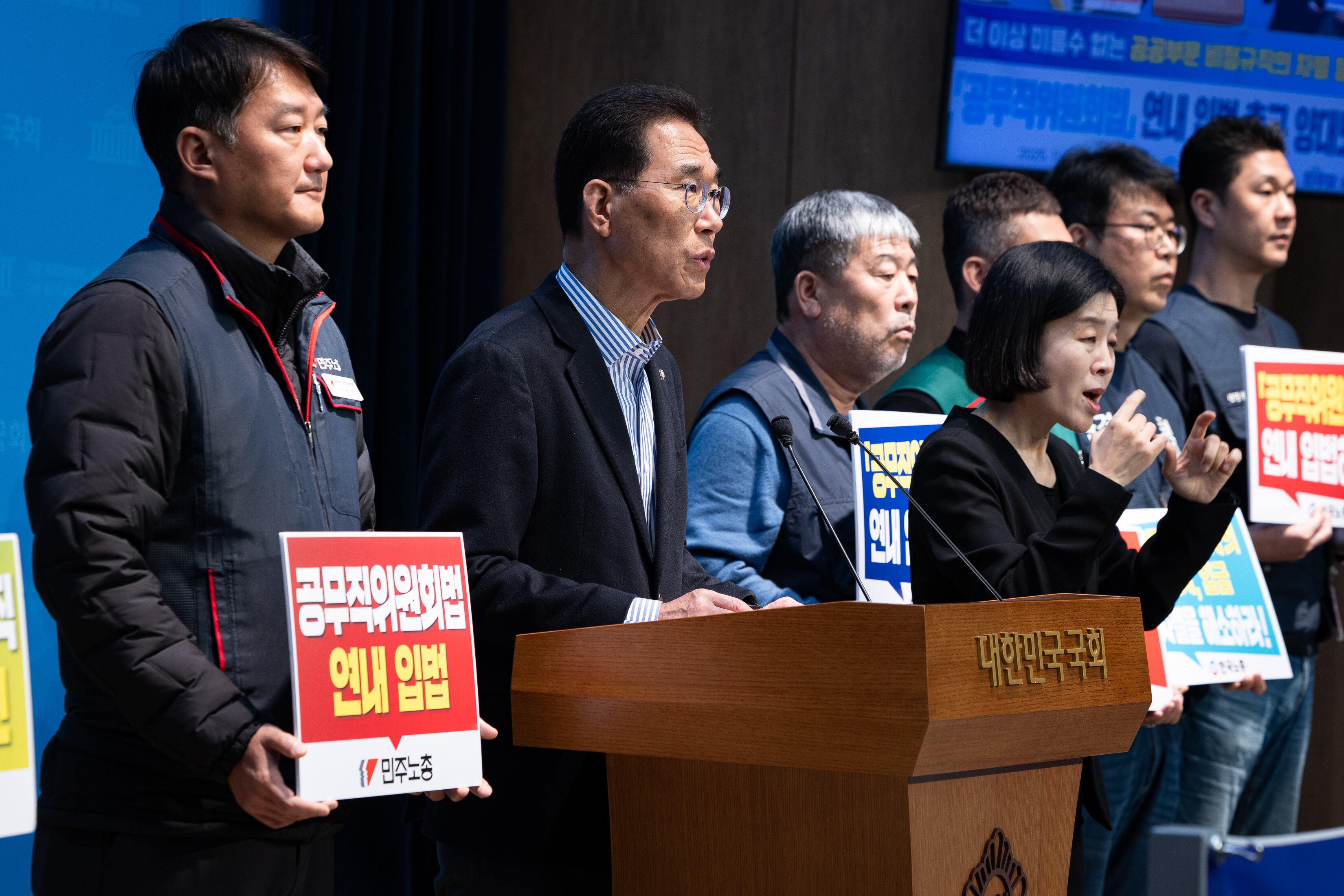
Kim Joo-young, the Democratic Party’s representative in the National Assembly’s Committee on Climate, Energy, Environment, and Labor, mentioned during a press briefing following a meeting with the Ministry of Employment and Labor that talks were held about establishing a working group involving various government departments and labor-management representatives to carry out structural reforms to the retirement pension system.
Previously, the tripartite labor-management-government task force responsible for enhancing retirement pension systems released a joint statement indicating that they will enforce the implementation of retirement pensions (external reservation of retirement benefits) across all workplaces. This will be done in stages, taking into account the size and circumstances of each workplace. They also plan to fully adopt ‘fund-type retirement pensions’ as one approach to improve returns.
Representative Kim stated that to carry out this declaration, “there was a suggestion to establish a working group including the Ministry of Employment and Labor, the Ministry of Economy and Finance, the Financial Services Commission, the Financial Supervisory Service, representative companies from the industry, and labor-management organizations.”
He further mentioned that they chose to examine whether to give precedence to the external allocation of retirement benefits for new public sector workers and to develop assistance programs for small businesses.
He mentioned that conversations also covered upcoming responsibilities, such as conducting fact-gathering surveys among employees with less than a year of experience and workers categorized as special-type who fall into the ‘blind spot’ of the retirement pension system.



 jasdooit
Leave a comment