
Although the human and territorial impacts continue to dominate global awareness, the economic indicators of Russia’s large-scale invasion of Ukraine reveal the significant pressure on the country and its international allies.
Ukraine is confronting an extraordinary two-fold challenge: financing the ongoing, daily military defense against Russian troops and at the same time, getting ready for the priciest national rebuilding initiative in recent European history.
Resisting the Russian military force has demanded a massive and ongoing flow of funds over the last four years.
As per recent data verified by Andriy Hnatov, chief of the Ukrainian Armed Forces’ general staff, a single day of full-scale conflict cost the nation approximately $172 million (€145.7 million) on average in 2025.
In 2024, the average daily expense of waging the conflict was approximately $140 million (€118.5 million), marking a rise of nearly 23%.
The present spending rate of the Ukrainian military indicates that approximately $5 billion (€4.2 billion) is required each month to support troops, acquire ammunition, and implement advanced combat technologies, along with other essential needs.
To sustain this level of defense capability, Ukraine is dedicating more than 30% of its GDP to the military budget. In contrast, most European countries during peaceful times have typically found it difficult to reach the minimum NATO requirement of 2%.
This heavy spending puts the Ukrainian economy under significant strain, functioning almost entirely in a full war mode.
Lieutenant General Hnatov has strongly cautioned that the nation is unable to bear this financial pressure by itself, highlighting that ongoing Western financial assistance is the sole factor stopping the economy from collapsing.
With domestic reserves at their maximum capacity, the financial depletion of the parties involved is quickly turning into a key element on the battlefield.
The reconstruction cost
While Kyiv works to secure its immediate needs, the long-term economic outlook is becoming more defined.
On the night before the fourth anniversary of the conflict, the Ukrainian Government, the World Bank, the European Commission, and the United Nations published their latest combined Rapid Damage and Needs Assessment (RDNA5).
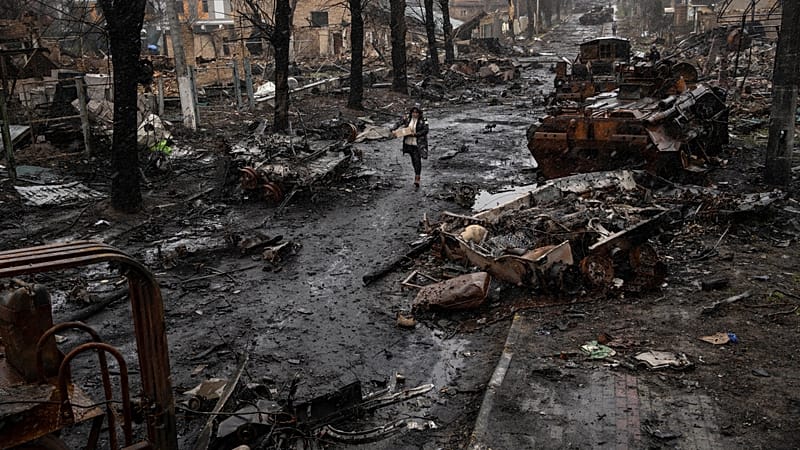
The results reveal a troubling depiction of the destruction.
By the end of December 2025, the projected expense for rebuilding and recovery in Ukraine is nearly $588 billion (€500 billion) over the next ten years.
To put this number into perspective, it is almost three times the nation’s estimated nominal GDP from the previous year.
The direct physical damage has now exceeded $195bn (€165bn). The devastation is primarily found in front-line regions and major urban centers, where homes, transportation, and energy systems have suffered the most.
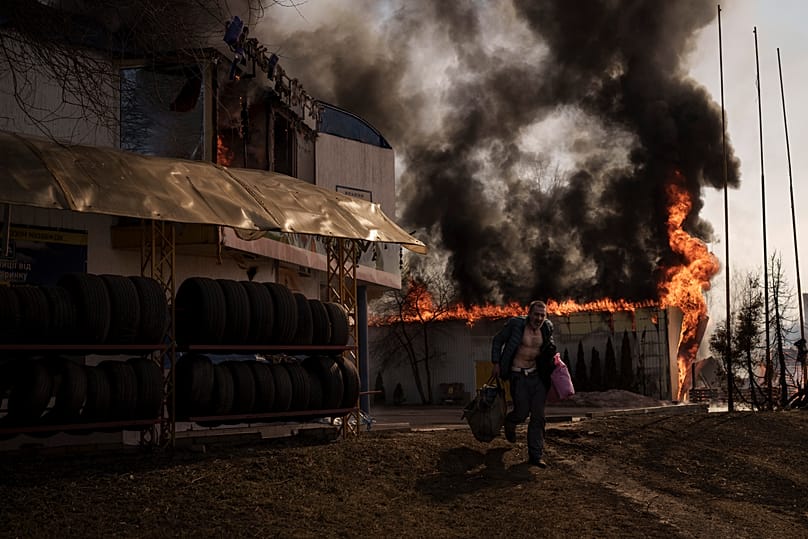
A World Bank study points to a 21% rise in energy infrastructure that has been harmed or completely destroyed within the last year, attributed to more severe Russian attacks during a particularly harsh winter.
In addition, 14% of the total housing across the nation has suffered damage or been destroyed, affecting and displacing more than three million families.
Although the scope of damage continues to grow, Ukrainian officials stay determined.
Following the publication of the report, Prime Minister of Ukraine Yulia Svyrydenko stated, “in the face of extraordinary Russian assaults on energy systems and residences throughout Ukraine this winter, our citizens demonstrate strength, our business owners continue to operate. We are still able to bounce back quickly and continue progressing.”
The route towards a contemporary European nation-state
International organizations are already preparing the foundation to make sure the rebuilding process goes beyond restoring what was lost, and instead upgrades the country.
The private industry is anticipated to have a significant part in accessing the required local and global funding.
The European Union’s Enlargement Commissioner, Marta Kos, reiterated Brussels’ dedication to the recovery initiative after the release of the revised RDNA5.
Russia’s aggressive war has caused destruction not seen in many years,” Kos mentioned, highlighting that the EU’s reaction is evident: “we will rebuild Ukraine as a powerful, modern European Union nation. Using decisive reforms and the Ukraine Investment Framework as our means to attract large-scale investments, we will turn devastation into prosperity.
With the war now in its fifth year, the conflict is not only visible in the muddy trenches of the east but also reflected on global financial statements.
For Ukraine, achieving success will involve withstanding the severe daily expenses of maintaining defense and obtaining the massive half-trillion-dollar funding required to rebuild and recover.




 jasdooit
Leave a comment