
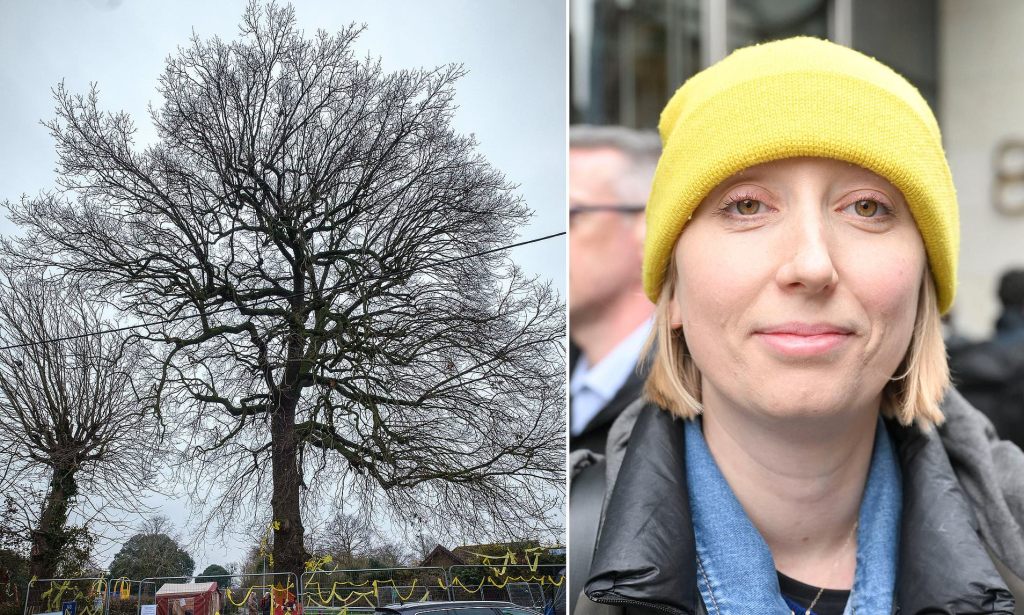
A conflict in a town regarding a 170-year-old oak tree, deemed “diseased,” has led the council to request approval to cut it down, while activists are rejoicing over a recent High Court decision.
A heated argument regarding the future ofthe so-called ‘Old King George’ treestill burns fiercely in Wivenhoe, Essex, as fresh demands emerge for its immediate removal or face the possibility of harming nearby residents’ properties.
Yet activists against the suggested removal of the treehave obtained approval to initiate a legal review challenging Wivenhoe Town Council’s plans, which are supported by the insurance company Aviva.
Locals last year fastened themselves to the ‘majestic’ tree that originated during the Victorian periodIn the town of Wivenhoe, which has a population of 7,600, it continues to stand despite efforts made so far to remove it and another tree nearby.
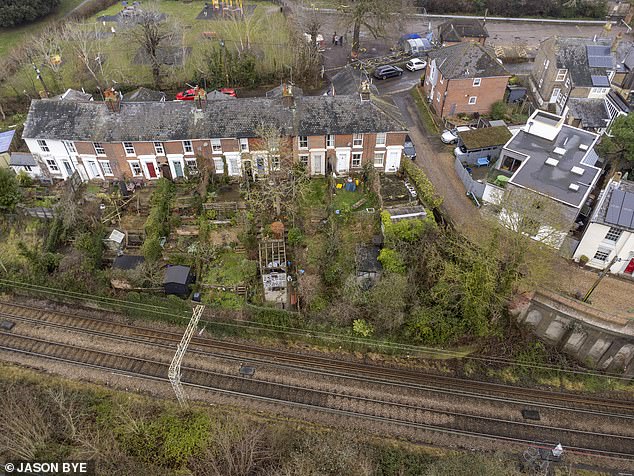
The oak faces the risk of being felled following complaints from neighbors who claim its underground roots are causing structural damage to their houses – and Aviva has stated that the tree must be removed as a consequence.
The felling was put on pause in Februaryin the hope of additional inquiries.
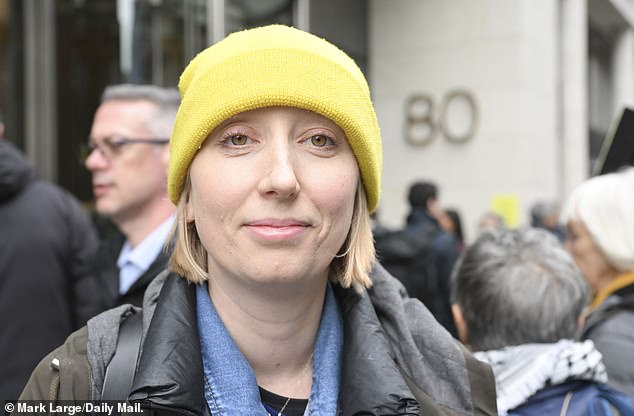
A ‘Stop The Chop’ initiative has been spearheaded by 32-year-old architect and environmental expert Kat Scott, who shared with the Daily Mail today that the court’s ruling is boosting the team’s assurance in continuing their efforts.
The Wivenhoe Town Council has expressed its confidence in two secret reports prepared for the local authority and the insurance company Aviva—and previously stated that the tree must be removed by this month.
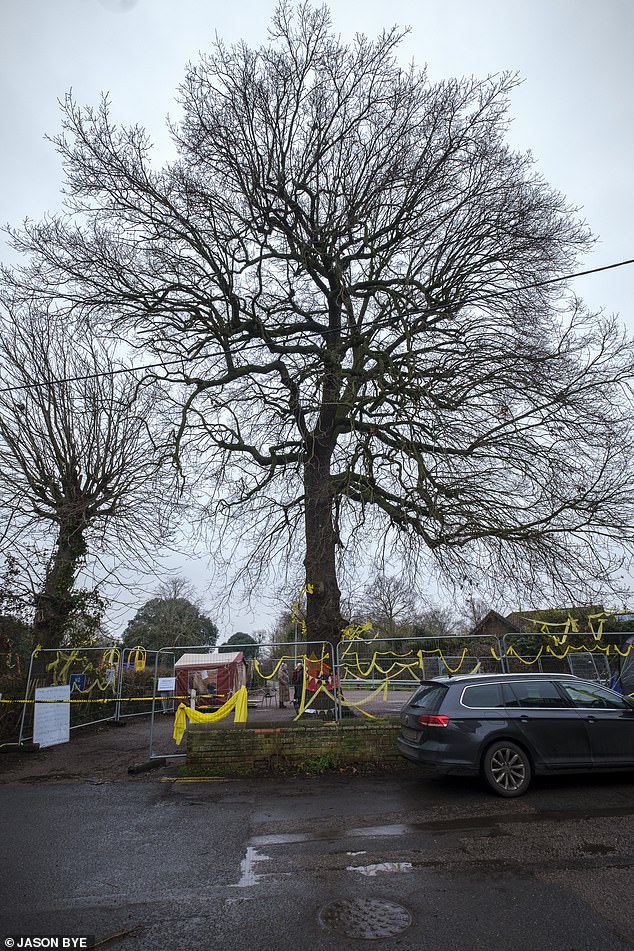
It has been paused due to recent events, although the town council mentioned new analysis regarding the spread of Acute Oak Decline in the tree.
A horse chestnut tree located near the same car park in an Essex town, adjacent to a row of Victorian houses situated next to a railway line, is also facing danger.
Opponents of the decision claim they have not been informed about the exact number of homes that could be impacted, or the manner in which this will occur.
They headed to the street outside Aviva’s London headquartersfollowing a noisy demonstration in December, equipped with megaphones and protest signs, as they called on the insurance company to disclose its reasons for cutting down the trees.
The advocacy group was given documents from the High Court on Monday, which approved their request for a judicial review to proceed, scheduled for a complete hearing.
Activists have been opposing the council’s choice to cut down the trees, while also seeking additional details about the analysis performed and possible alternatives.
The municipal council mentioned in a statement this week that it aims to have the current injunction removed following resurfacing of the parking area, which revealed symptoms of Acute Oak Decline in the tree.
Wivenhoe Town Council stated: ‘AOD is recognized as being common in North Essex, and regrettably, there is currently no known method to treat the illness.’
As a result, both the tree specialist and the arboriculturist from Colchester City Council believe that although the tree’s future structural state cannot be accurately forecasted, the oak tree located in the car park now faces a shorter expected lifespan. The tree might die within three to five years.
The WTC, like all councils across the nation, received a letter this month from DEFRA emphasizing the need for action if there are any trees under our management that could potentially endanger the lives of residents and visitors, following several heartbreaking incidents involving adults and children being injured by falling branches in the last year.
Considering this new situation, we are in contact with the lawyer representing the tree protest group, asking them to revoke the injunction due to the possible danger the oak tree presents to people and property nearby.
However, due to the High Court’s decision allowing the judicial review process to continue, the local authority has been instructed to submit a comprehensive response within 35 days – after which the advocacy group will have an additional 21 days to reply.
The activists, who claim they will “co-operate completely with both the council and the court,” are conducting fundraising efforts to reach a CrowdJustice goal of £20,000 for legal expenses.
Richard Buxton, from Richard Buxton Solicitors, stated: ‘Just as we are obligated to evaluate the strengths of our case, so too must Wivenhoe Town Council, particularly now that permission for a judicial review has been approved.’
Since they have not provided any defense whatsoever, they should reasonably admit defeat.
Ms. Scott stated: “We, along with numerous residents of Wivenhoe, hope the matter can be settled as soon as possible.”
The court’s schedule confirmation offers a distinct route for an unbiased resolution of the matters concerning the trees.
We extend our deepest empathy to the property owners impacted and trust that the legal procedure will provide resolution for everyone involved.
She said to the Daily Mail: “There’s a lot happening — we’ve received approval for the significant judicial review, which is a major development.”
It boosts our assurance as we proceed, toward a complete review.
On the other hand, the council wants to remove the injunction and proceed with cutting down the tree, as they claim it is deteriorating. We are battling on two sides.
I believe it will now take a few months rather than weeks. However, we don’t wish to achieve a legal win in court later on if the tree has already been removed.
Ms. Scott, who initiated a petition to protect the trees that has gathered over 5,000 signatures, shared her worries about her two-year-old daughter, who frequently uses the nearby playground.
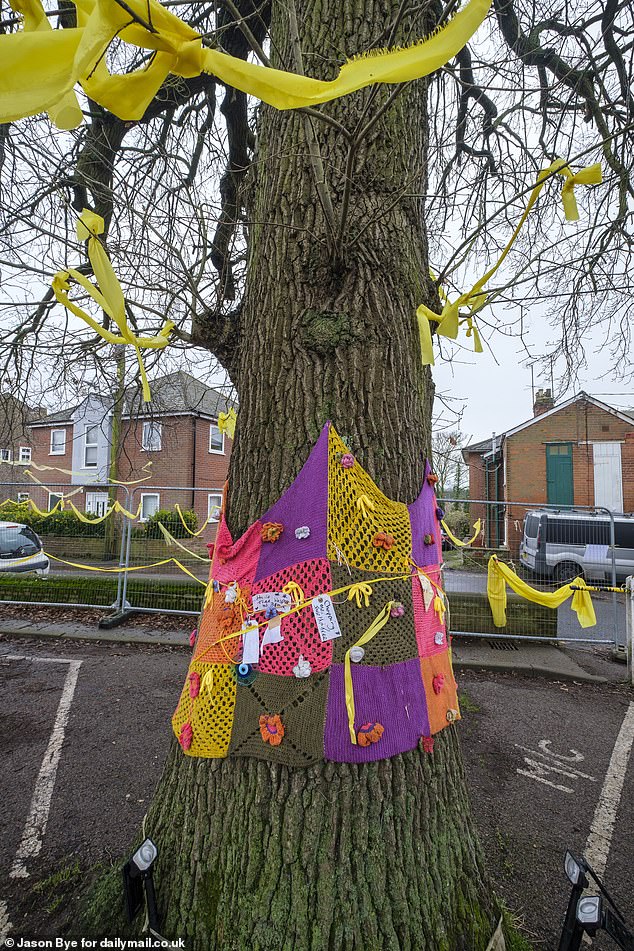
She had previously told the Daily Mail: “I take her to the park, enjoying the shade provided by the oak tree. I would feel extremely guilty if I didn’t help maintain it—and I’d be sad if the tree wasn’t there next summer.”
Activists also claim that the oak and horse chestnut trees offer “substantial environmental and community advantages,” including fostering local wildlife and reducing playground temperatures by as much as 6 to 8 degrees Celsius during the summer.
The so-called ‘King George Oak’ was once thought to be 150 years old, until activists called in specialists who determined it could be as old as 170 years.
Wivenhoe Town Council stated today: ‘Our legal team has been informed about the court’s decision to move forward with a hearing on the judicial review, which was not unexpected.’
After the temporary injunction, the court was always going to set out steps for a final trial.
Our legal team has communicated with the representatives of the protest group over the last week to submit a report outlining the worries regarding the oak tree’s Acute Oak Decline (AOD) and its effect on the tree’s lifespan.
We have requested a reply by the end of this week, and based on that reply, we will consult with our legal advisors regarding the next actions to resolve this matter quickly.
It continues to be our view, supported by the substantial evidence we have, that the removal of the oak and horse chestnut trees is necessary, and we are certain that if this evidence is presented to the court, our stance will be validated.
We argue that a prolonged and costly legal procedure worsens the situation, and considering the process has already lasted four years, the continued suffering of the affected homeowners should be acknowledged.
A report, funded by campaigners and costing £20,000 collected via a crowdfunding campaign, was released earlier this year.
It indicated several possible reasons for ground movement – such as drainage problems, train vibrations, shallow foundations, and soil conditions.
Two distinct analyses that the town council relied on for its perspective are kept secret.
The local council has referenced studies that attribute the tree as a cause of foundation damage to nearby houses.
It also emphasized that additional delays in removing it could result in the authority “facing a financial obligation far exceeding” its available funds.
The three requests raised during the demonstration outside Aviva’s headquarters involve disclosing the complete technical data related to the subsidence allegation.
The remaining options involve “interacting with the community and independent specialists in a substantial way” and considering other methods rather than cutting down the trees as an initial step.
In response to the demonstration outside its headquarters in December, Aviva stated: ‘This is a complicated and delicate issue that we are eager to address in the most appropriate manner for everyone concerned.’
Although we cannot disclose specific information because of policy and customer privacy, we want to assure you that we are striving to offer the best possible solution.




 jasdooit
Leave a comment