
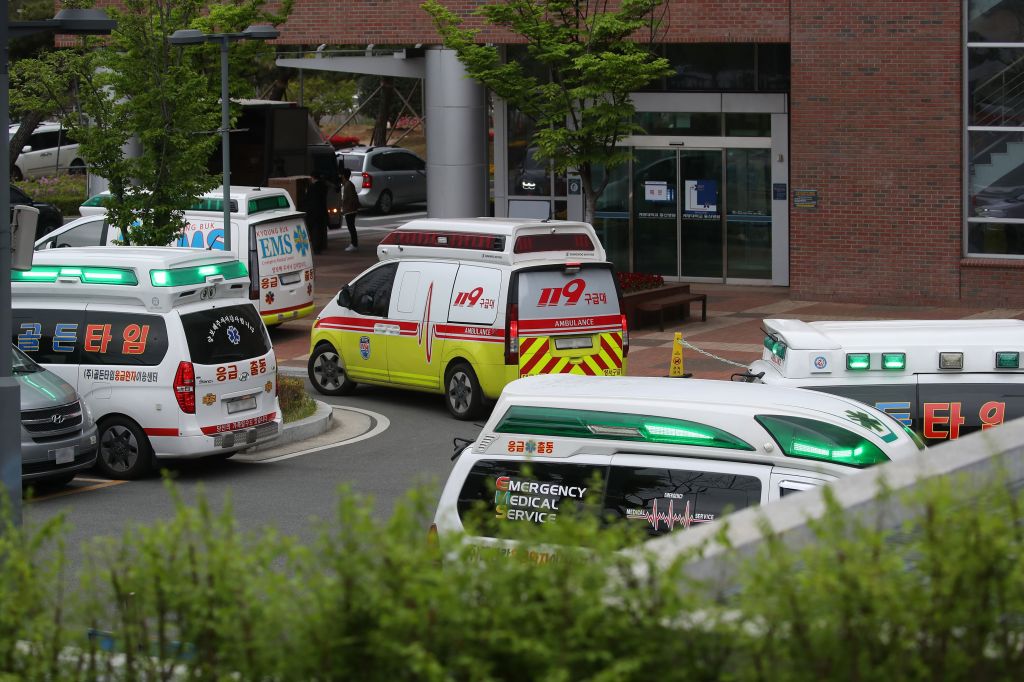
Beginning next month, in the event of a critical emergency patient in the Honam area, the Regional Emergency Medical Situation Room affiliated with the Ministry of Health and Welfare, known as the regional situation room, will determine which hospital to transport the patient to. The government intends to initially implement a three-month pilot program in Gwangju Metropolitan City, South Jeolla Province, and North Jeolla Province, and then extend it nationwide from the second half of this year based on the outcomes.
On the 25th, the Ministry of Health and Welfare and the National Fire Agency introduced the “Pilot Project for Innovating the Emergency Patient Transportation System.” This initiative aims to address the issue known as “emergency room phone roulette,” where 119 emergency teams, after transporting patients from the scene, frequently waste critical time by continuously contacting different hospitals to find one with availability. According to the innovation plan, for patients categorized as grades 1-2 under the “prehospital emergency patient classification (pre-KTAS),” which evaluates the severity of patients, the regional situation room will identify a suitable hospital. Specifically, for the most critical cases, such as cardiac arrest and severe injuries, a hospital for transportation will be pre-selected. However, since there may be situations where the designated hospital cannot immediately perform emergency surgery, the regional situation room will evaluate the circumstances and inform the 119 emergency team whether to proceed with the transport.
For patients with relatively less severe conditions (grades 3-5), the emergency team can transport them to an appropriate medical facility using hospital information. The team only needs to inform the hospital ahead of time before leaving. However, for cases that require specialized care, such as microsurgery or childbirth (grade 3 patients), it is necessary to confirm the availability of treatment prior to departure. A representative from the Ministry of Health and Welfare mentioned, “The Honam region has strong connections between local hospitals and emergency teams,” and added, “This is why the pilot program was initially launched in the Honam region.”
However, it was reported that the innovation plan will be implemented with adjustments based on local conditions within the Honam region. This is because of criticisms highlighting the lack of medical infrastructure in many areas, with hospitals located far apart, resulting in situations where patients cannot receive proper treatment after being transported without discrimination. In North Jeolla Province, the regional situation room will designate hospitals not only for patients classified as grades 1-2 but also for those classified as grade 3. Furthermore, in Gwangju, where communication between local hospitals is efficient, the hospital network will be used when selecting transportation hospitals. The goal is to identify the most appropriate method of handling emergency patients through coordination among hospitals.




 jasdooit
Leave a comment