
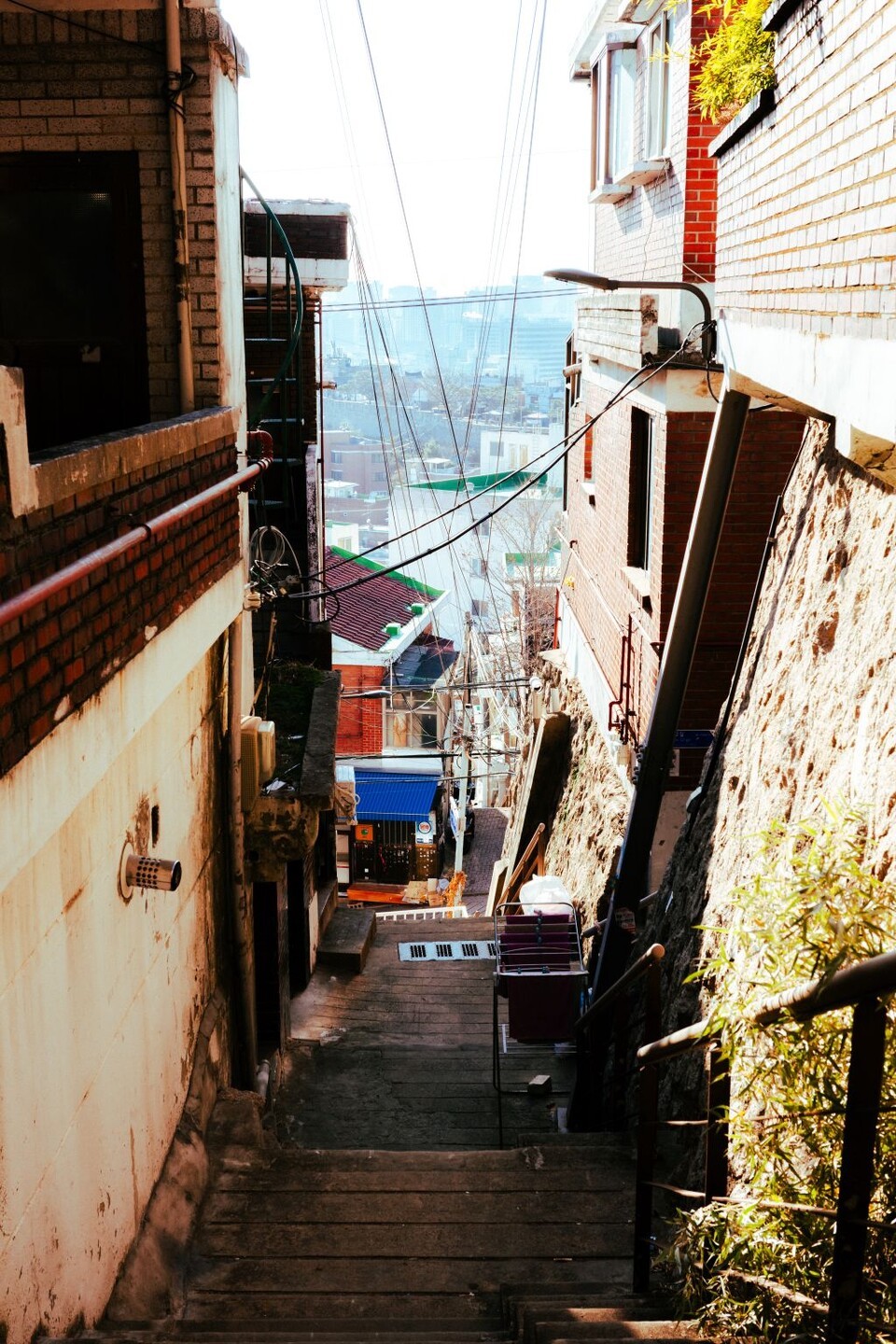
My legs are sore. Cliffs in the center of Seoul were not included in the original plan.
The ground tilts abruptly under my feet, my breath growing shallower with each step. The city I believed I understood vanishes. Instead, a rough silhouette appears—stone split apart, rooftops arranged in layers, life piled upward against a cliff. This is Changsin-dong.
A Community Shaped from Stone
Changsin-dong
Nestled on the hillsides of Naksan in Jongno-gu, Changsin-dong was previously a granite mine. In the era of Japanese rule, the stone mined here formed the foundation of modern Seoul. Pieces chiseled from these cliffs were moved to build structures like the old Seoul Station and Seoul City Hall.
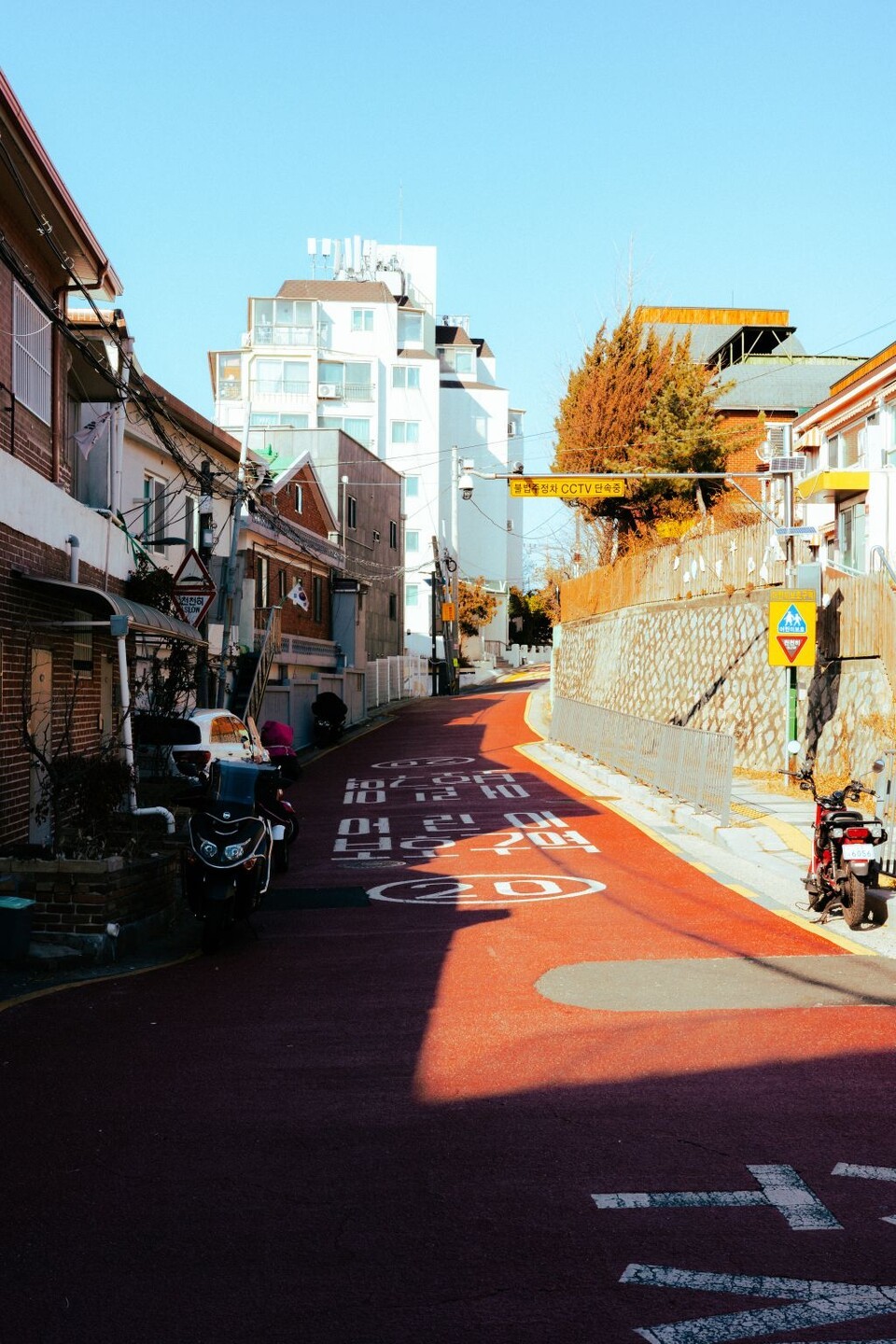
The peak was vacated; the metropolis became firm.
Following the closure of the quarry, residents started to arrive. Since the 1960s, houses have been built both above and below the visible cliff sides, with narrow passages running through the steep slopes. In areas where rock had been taken away, communities took root.
Maybe that’s why Changsin-dong doesn’t seem refined. It gives off a worn-out vibe—like the stone that endures.
Areas with steep terrain often have complex pasts. For many years, Changsin-dong was known as a daldongne, a community built on a hillside due to necessity. Residing here involved continuous climbing and descending. It was not the most convenient option for comfort. People who were pushed out from central areas ended up settling on these slopes instead.
Smoke from cooking filled one alley, while the sound of sewing machines echoed in another. Work and home merged seamlessly; at times, they occupied the same space.
Following the opening of Dongdaemun Pyeonghwa Market in 1962, textile workers started to reside in this area. During the 1970s and 1980s, almost 3,000 garment factories were active in the region, transforming the neighborhood into a highly concentrated industrial environment. Cutting, sewing, pressing, and delivery—this was a district that both accommodated and manufactured.
The beat of South Korea’s fashion industry didn’t begin in high-rise buildings. It developed here, from skilled hands working in small spaces.
The Cliff That Turned Into a Panorama
Ascend the Changsin-dong cliff alley, and Seoul becomes gentler.
Rather than a dazzling skyline, you encounter layered rooftops, humble signs, and staircases that have become smooth from the passage of time. The perspective is not carefully arranged like a viewing platform; it arises naturally because individuals had to reside on an uneven terrain.
Viewed from this elevation, the city seems less impressive and more genuine.
The current focus on Changsin-dong comes from its genuine character. Its charm is not about artificial trends but rather long-lasting appeal. Low fences, sudden staircases, and worn-out wall edges—these irregularities contribute to the area’s harmony.
Amidst this rich terrain, a few newer areas have quietly emerged.
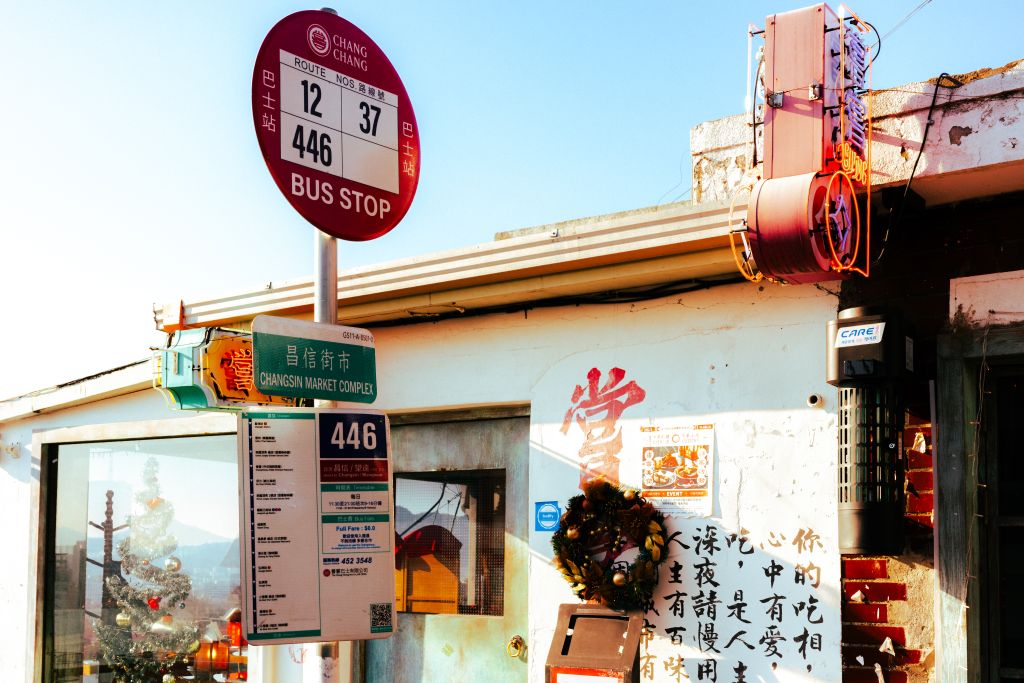
Where Ancient Hills Intersect With Modern Power
ChangChang
A Hong Kong-themed Chinese eatery called ChangChang serves soft guobaorou alongside panoramic views of Naksan Park and the Seoul cityscape. The juxtaposition—crunchy coating, gentle evening illumination—seems intentional yet natural.
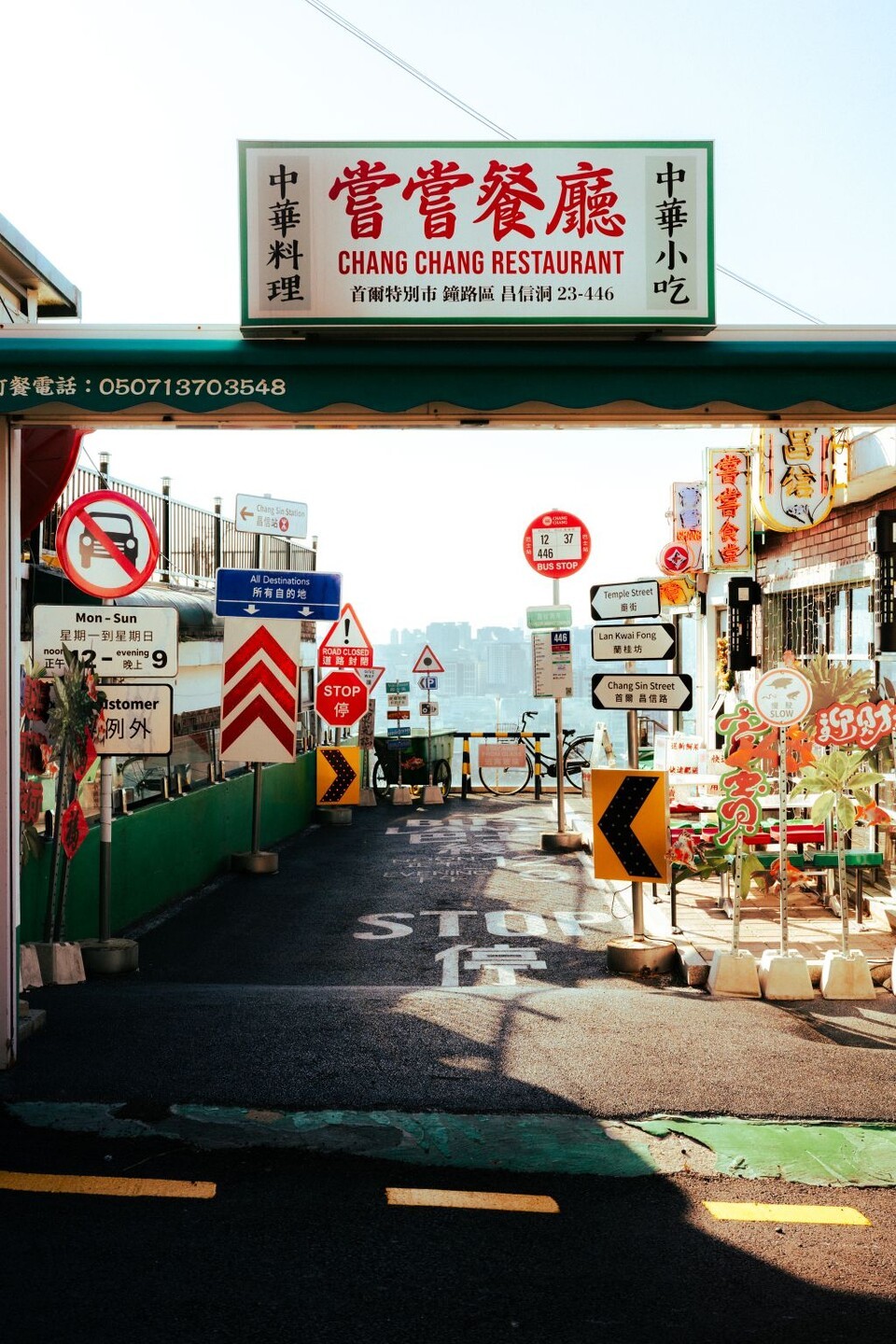
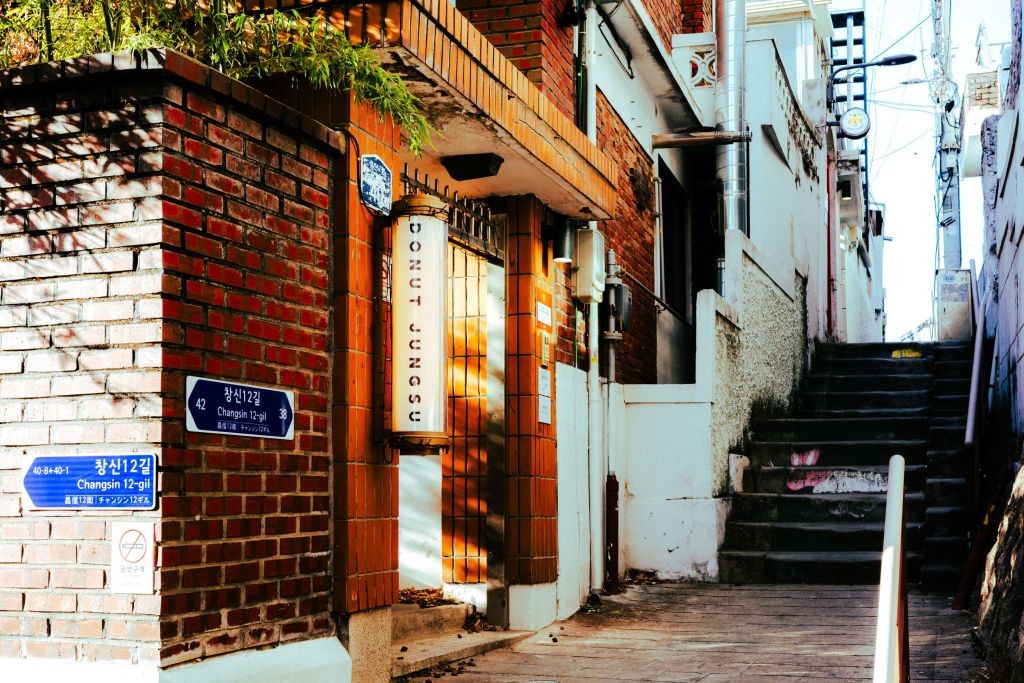
Donut Jeongsu Changsin
At Donut Jeongsu Changsin, handcrafted donuts attract consistent queues on weekends. Basic in idea but meticulous in execution, the store has gained recognition not only for its refined city vistas but also for its sugary pastries.
Location: Changsin-dong, Jongno-gu, Seoul
Specialty: Handmade donuts
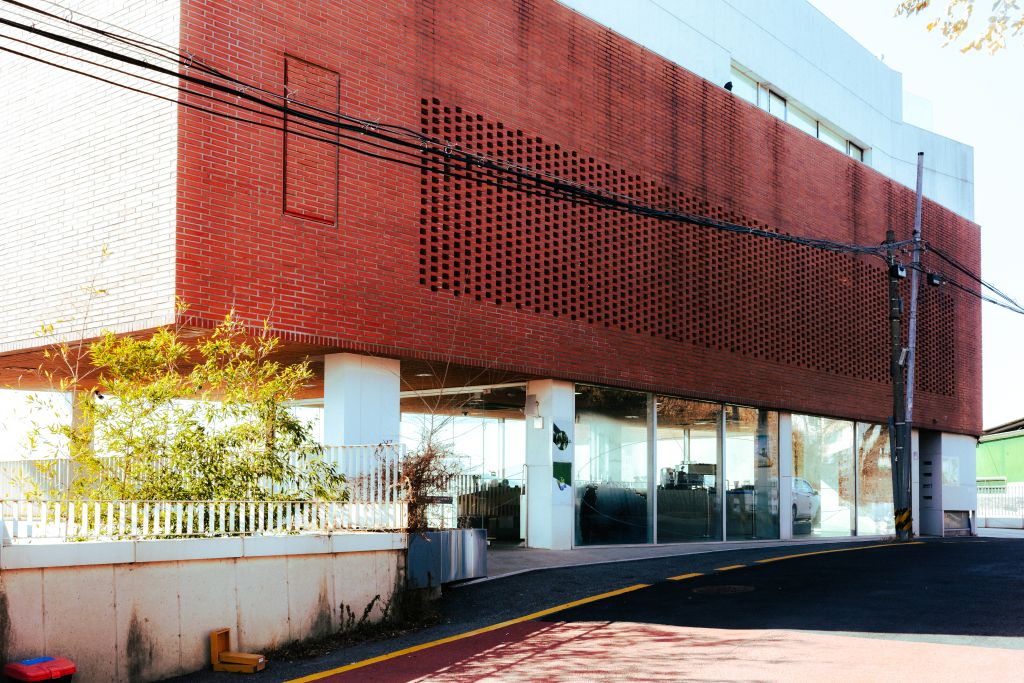
Terteure
Terteure provides a rooftop view that feels personal rather than expansive. From this vantage point, tiled roofs and cliff sides come together in an irregular balance—a reminder that Seoul is more than just towering glass structures, but also composed of layered brick and stone.
• Place: Changsin-dong, Jongno-gu, Seoul
• Feature: Outdoor seating offering a view of the city skyline
Nakta Cafe
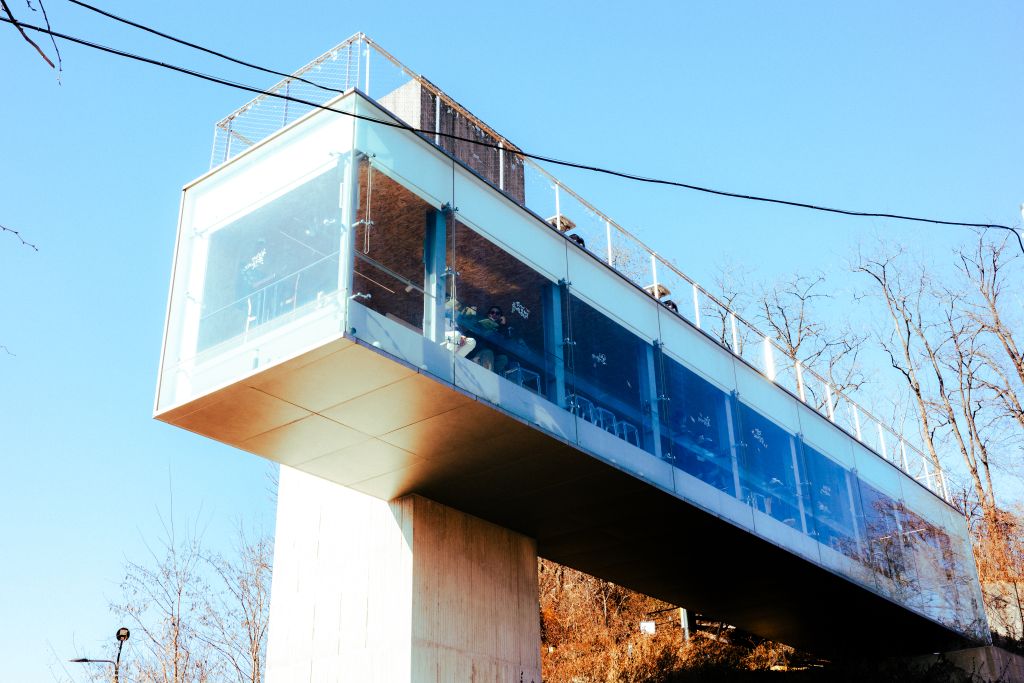
The Nakta Quarry Observatory Café lives up to its name. With large windows, the cliff and city come together in one view—an unique perspective not found anywhere else in Seoul.
• Place: Changsin-dong, Jongno-gu, Seoul
• Emphasis: Overlapping perspective of cliffs and city
Not a Young Community, but a New Perspective
Changsin-dong hasn’t abruptly turned youthful. Instead, younger people have started to appreciate the feel of bygone days. This essence doesn’t vanish like a fleeting fashion. It endures—firm as a slice of stone, evident in every uneven step and weathered doorstep.
At the edge of the cliff, my legs slightly shaking from the ascent, I come to a simple realization: Seoul is not just about what stands tall. It is also about what has been removed. And in Changsin-dong, what was taken has transformed into something that remains.
Location: Changsin-dong, Jongno-gu, Seoul, South Korea
Written and photographed by: Kwak Seo-hee




 jasdooit
Leave a comment