
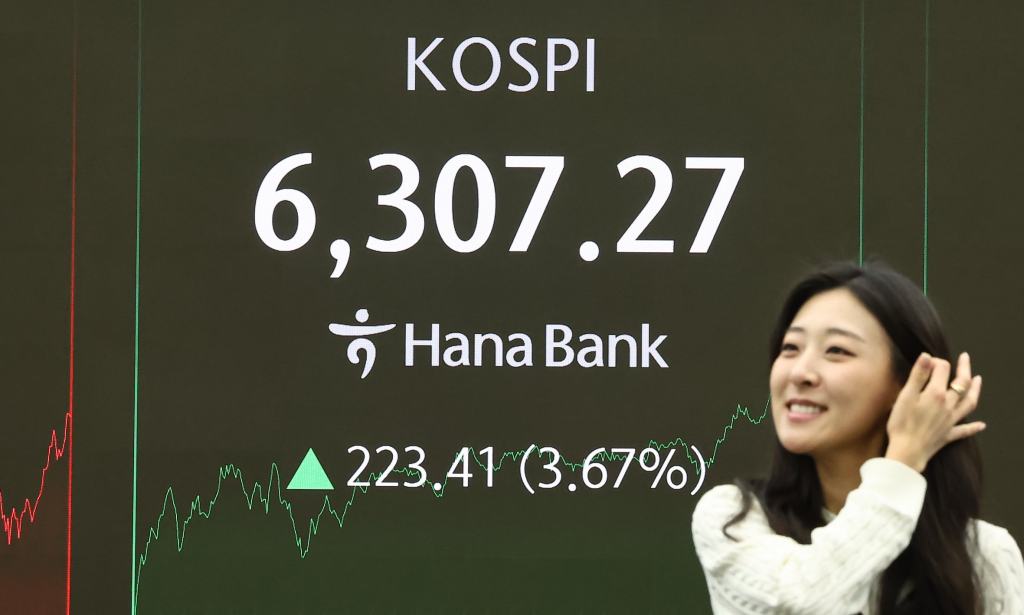
As the KOSPI surpasses the 6,300 level and maintains its historic upward trend, the supply and demand dynamics supporting the local stock market are slowly evolving. In the last month, a significant inflow of 80 trillion Korean won has entered the domestic listed exchange-traded fund (ETF) market, speeding up the “capital movement,” while foreign investors have opted for the opposite approach by engaging in substantial selling on the Korea Exchange. Some analysts view this development as an indication of a new force emerging in the stock market, distinct from previous trends.
◇80 Trillion Won Entering ETFs in a Single Month… “Money Movement” Intensifying
ETFs have become the focal point in our stock market lately. The total net asset value of ETFs listed domestically stands at around 379 trillion Korean won. Following the milestone of exceeding 300 trillion won last month, an extra 80 trillion won has been injected within a little over a month. ETFs now represent more than 40% of the overall stock trading volume, highlighting their dominant position. Once just one of many indirect investment options, ETFs have now evolved into a crucial pillar sustaining the entire market’s supply and demand mechanisms.
The level of participation from individual investors in the market has hit a maximum. Investor deposits, which act as reserve funds for the stock market, have increased to 109.5 trillion South Korean won. Previously, the KOSPI was significantly affected by foreign capital. However, in recent times, the buying power coming from financial investments, particularly ETFs that focus on individual investor funds, has been driving the market, exceeding the impact of foreign investors. The strong investment enthusiasm for top stocks like semiconductors and artificial intelligence (AI) is effectively supporting the market’s downward trend.

This trend is anticipated to gain more strength in the near term. Domestic funds, which had previously been focused on Korea-related ETFs listed in the U.S. or leveraged products tied to Samsung Electronics and SK Hynix in the Hong Kong market, are beginning to show signs of shifting back to the local stock market. Moreover, with regulatory approval for individual stock leveraged ETFs, the introduction of such products is expected to bring in significant liquidity. Additionally, the KOSDAQ market is looking forward to the launch of active ETFs and the adoption of Business Development Companies (BDCs), fueling expectations that capital will flow into smaller and mid-sized stocks with a market value of 200 billion Korean won or less.
◇Foreign Investors Sell 7.564 Trillion Won in Seven Days… “Rebalancing, Not ‘Selling Korea’”
On the other hand, foreign investors have significantly tightened their spending. In recent days, foreigners have registered net selling for seven straight trading sessions on the Korea Exchange. Over this time, they sold a total of 7.564 trillion Korean won in KOSPI stocks. On some days, they offloaded 2.3425 trillion Korean won worth of shares in a single day. Based solely on these figures, the magnitude is strong enough to conjure the image of a “Sell Korea” situation, where capital flows out like a retreating tide.
However, the securities sector is not transforming this into a structural capital outflow. The analysis indicates that the main factors are natural profit-taking following the significant increase in indices and the desire to rebalance portfolio allocations. A representative from the securities industry stated, “With the KOSPI rising sharply over a short period, the share of Korean investments in foreign investors’ total portfolios increased. This resulted in automated selling to return to their initial target ratios.”


 jasdooit
Leave a comment