
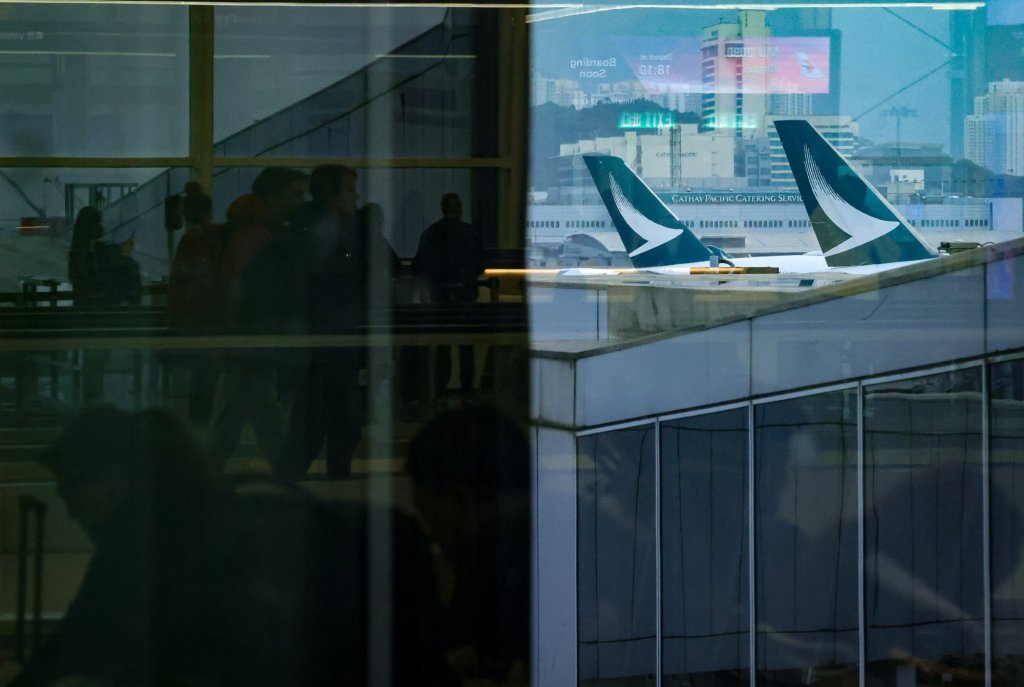
Flag carrier also suspends the Riyadh route until Tuesday, with at least 37 Hong Kong-Middle East flights having been canceled so far.
US-Israeli attacks on Iran have caused the cancellation of at least 37 flights connecting Hong Kong with the Middle East, as the national airline Cathay Pacific has halted its Dubai operations until Thursday.
Cathay also stated on Monday that it would halt its flights to Riyadh until Tuesday due to the ongoing developments in the area.
The airline mentioned that passengers scheduled to fly between Hong Kong and Dubai or Riyadh would receive greater flexibility to reschedule, change their route, or get a refund, with standard charges being waived until Saturday.
Are you curious about the most significant issues and developments happening globally? Find the solutions withSCMP Knowledge, our latest platform offering carefully selected content including explainers, FAQs, analyses, and infographics, presented by our acclaimed team.
“We are keeping a close watch on the situation. Additional adjustments to our flight schedule could be necessary in the next few days, with the safety of our customers and staff remaining our top concern,” the airline stated.
A review by the South China Morning Post of the Hong Kong airport’s website revealed that flights connecting the city with Dubai in the United Arab Emirates (UAE) experienced the highest impact, with five passenger and 12 cargo flights canceled and a further one delayed.
Five passenger and 13 freight flights operating between Hong Kong and Doha, Qatar, have been canceled.
A flight heading to Riyadh was also canceled.
Travelers found themselves stuck across the globe as airlines rerouted to bypass the Middle East, where nearly all nations shut down their air corridors following Iran’s retaliatory attacks on Gulf cities.
Iran, Iraq, Israel, Syria, Kuwait, Qatar, and the United Arab Emirates have all declared at least partial restrictions on their airspace.
Yuen Chun-ning, the chief executive of travel company WWPKG, mentioned that two of their tour groups became stuck in Dubai, with over 20 tourists who departed on Friday and were set to return to Hong Kong on Wednesday.
“We are coordinating with the hotel to prolong their stay since their return flights have been canceled,” he stated, mentioning that the agency might look into organizing their return through Turkey if required.
Yuen mentioned that the tour participants had been told to focus on their safety by staying within the hotel, and noted that any injuries incurred would not be covered by insurance due to the ongoing conflict.
He mentioned that all group tours had been suspended until next Tuesday, with travelers set to get complete refunds.
Chief of Finance Paul Chan Mo-po cautioned that financial markets would certainly face substantial fluctuations, as the regional conflict remained in its initial phase.
“For us, the unrestricted movement of capital in and out of Hong Kong is among our key strengths. Moreover, as the Hong Kong dollar is tied to the US dollar, the exchange rate stays fairly stable,” he mentioned during a radio interview.
Previously, during times of unrest, we have consistently served as one of the ‘safe havens’ with funds flowing in.
More Articles from SCMP
5 key lessons from the first 2 days of the US-Israel conflict with Iran
Ex- Hong Kong basketball player involved in training the upcoming athletes
Weekly Feature: Short story ‘Stormy Day Adventure’ by Nathan Chiu Yik-sum
Hong Kong is unable to increase its birth rate unless it reduces the pressure on education.
This piece was first published in the South China Morning Post (www.scmp.com), a top news outlet covering China and Asia.
Copyright (c) 2026. South China Morning Post Publishers Ltd. All rights reserved.



 jasdooit
Leave a comment