
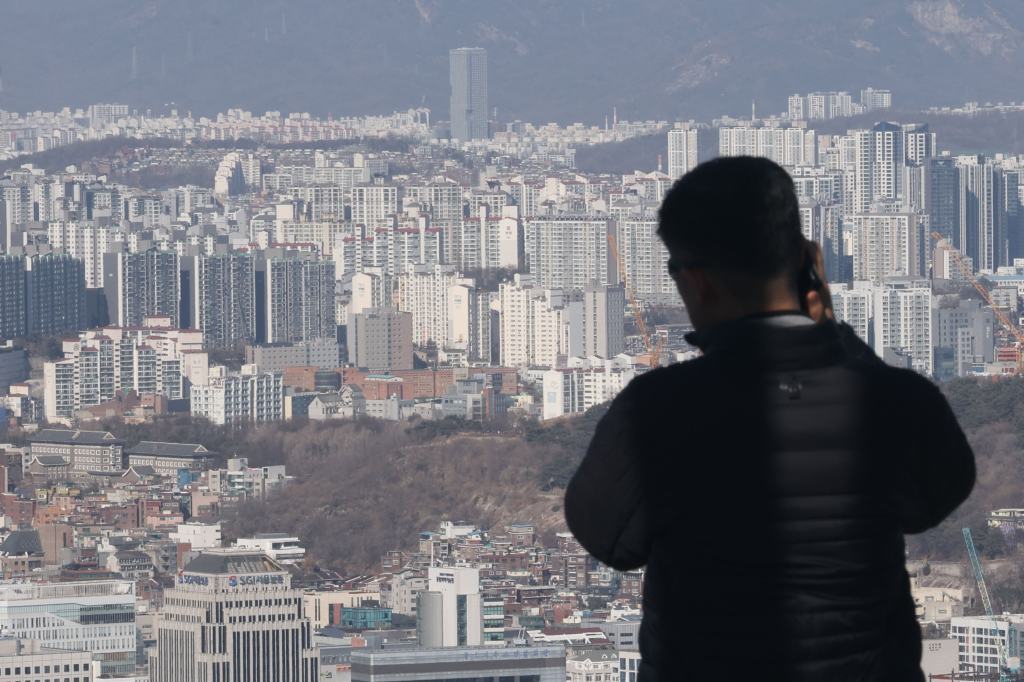
According to international organization data, real home prices in South Korea have kept falling. Real home prices, which account for inflation, show that price increases have outpaced the actual value of housing.
As per data from the Bank for International Settlements (BIS) and the Bank of Korea on the 2nd, South Korea’s actual housing prices dropped by 1.6% compared to the previous year in the third quarter of last year. Following an increase of 3.8% in the second quarter of 2022, prices turned downward with a 0.5% decrease in the third quarter of that year, resulting in 13 straight quarters of decline up to the third quarter of last year.
In the third quarter of the previous year, South Korea was positioned 47th among 56 nations according to BIS data, indicating limited growth in actual prices. The position showed a minor improvement from 50th place (-2.2%) in the first quarter and 51st place (-1.9%) in the second quarter of the same year.
The drop was more severe compared to both the average for developed economies (0.3%) and the worldwide average (-0.7%). The BIS reclassified South Korea as a developed economy beginning with data published in January of this year.
North Macedonia experienced the greatest increase in real housing prices, rising by 19.8% in the third quarter of the previous year, with Hungary coming in second at 16.1%, followed by Portugal at 14.7%, Spain at 9.8%, and Bulgaria at 9.5%.
On the other hand, China experienced the biggest drop of -5.3%, placing it at the bottom out of the 56 nations, trailed by Canada (-5.1%), Finland (-3.5%), New Zealand (-3.5%), and Romania (-2.6%).
A report published on the 19th of the previous month indicated that the BIS noted, “Global real estate prices decreased by 0.7% compared to the same period last year in the third quarter, matching the 0.8% drop seen in the prior quarter,” and it also mentioned, “Although nominal property prices increased by about 2%, real values went down.”
It also stated, “Price changes were typically quiet across all developed economies,” including South Korea along with the U.S. (-1.6%) and the U.K. (-1.2%).
The drop in real prices seems to indicate the division in housing costs between Seoul and areas outside the capital. In its financial stability report published at the end of last year, the Bank of Korea noted, “From 2024 onwards, housing transaction prices in the capital area have kept increasing, while non-capital regions have mostly seen a decrease, pointing to persistent regional differences in the real estate market.”
Throughout the past year, Seoul’s apartment transaction prices rose by 13.5%, marking the largest yearly growth since 2020, when property values skyrocketed.
A representative from a commercial bank stated, “Since movements in nominal housing prices, which do not consider inflation, are more commonly known, attention often focuses on rising prices in Seoul, making the drop in real housing prices seem less familiar.”




 jasdooit
Leave a comment