
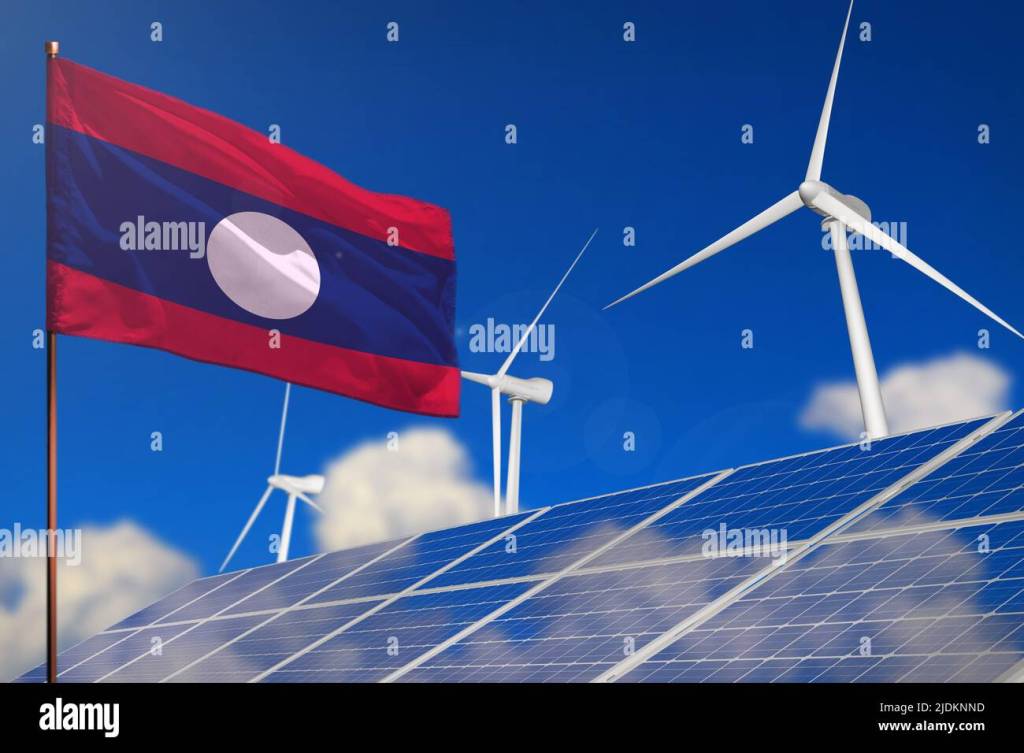
Lagos — Laos aims to shift from coal-powered electricity production, emphasizing the growth of renewable energy sources, particularly onshore wind and solar photovoltaic systems. The southern part of the nation, including the provinces of Sekong, Attapeu, and Champasak, has considerable wind energy capacity.
The solar potential is estimated to be 4.4 kWh per square meter daily, equivalent to about 1,800 to 2,000 hours of sunlight each year. In this context, onshore wind energy and solar photovoltaic systems are anticipated to fuel the expansion of Laos’ renewable energy capacity, projected to reach 9.8GW by 2035 with a compound annual growth rate (CAGR) of 17.1% between 2025 and 2035, as reported by GlobalData, a prominent intelligence and productivity platform.
According to GlobalData’s newest report titled “Laos Power Market Trends and Analysis by Capacity, Generation, Transmission, Distribution, Regulations, Key Players and Forecast to 2035,” in 2025, onshore wind made up almost 74.3% of Laos’ overall renewable energy capacity, with solar PV contributing 12.8%. The onshore wind capacity is anticipated to rise from 1.5GW in 2025 to 5.1GW by 2035, while solar PV is expected to grow from 0.3GW in 2025 to 4GW in 2035.
Attaurrahman Ojindaram Saibasan, a Power Analyst at GlobalData, states: “Onshore wind will be crucial for the nation’s renewable energy growth. After introducing onshore wind into Laos’ energy mix in 2025, with the opening of three wind farms, the proportion of renewable sources rose from 2.6% in 2024 to 14.1% in 2025. Nevertheless, hydropower is anticipated to remain a significant component of the country’s electricity generation.”
Although there is potential for solar energy development, the geography of Laos presents difficulties for large-scale, ground-based solar projects because of limited space. Nevertheless, constructing floating solar systems on reservoirs used for hydropower offers a chance to increase solar power capacity.
Saibasan states: “Laos seeks to have 75% of its energy come from hydropower and 11% from variable renewables, namely solar and wind, by 2030. The nation intends to add another 13GW of hydropower capacity by 2030 and has established a conditional goal of reaching 1GW in total solar and wind power, along with 300MW of biopower capacity by that year. These objectives are anticipated to support the expansion of renewable energy.”
Provided by SyndiGate Media Inc.Syndigate.info).




 jasdooit
Leave a comment