
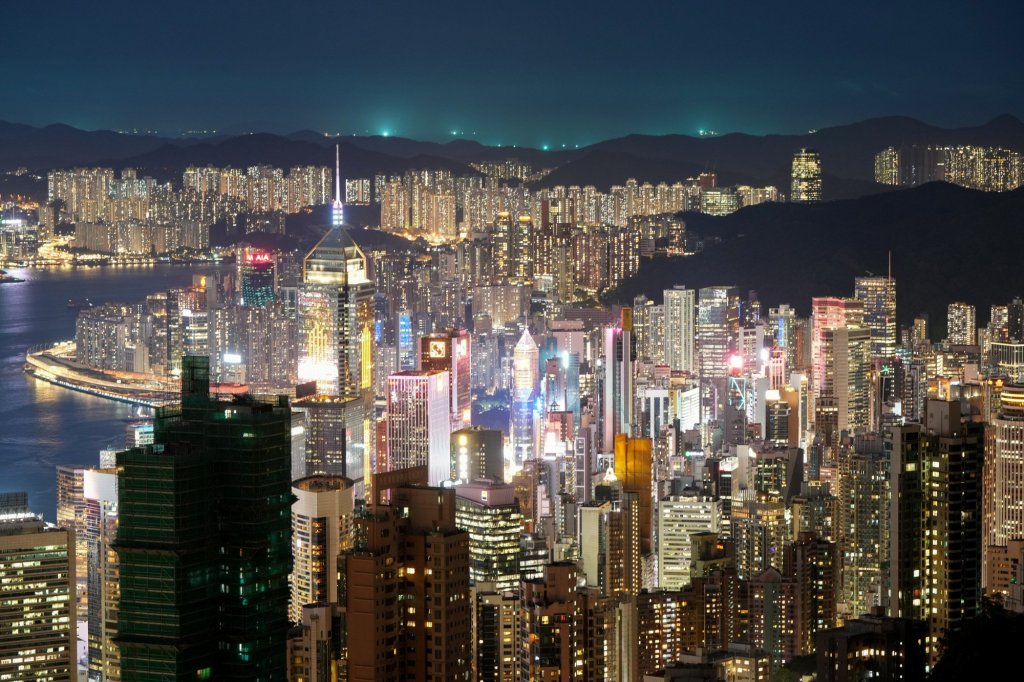
Residents could encounter increased expenses for electricity and meals as experts highlight that the city cannot escape the impact of rising oil prices.
Residents of Hong Kong may start to experience the effects of the growing situationconflict in the Middle Eastin the next few months, as increasing worldwide oil prices are anticipated to raise utility expenses and food costs, as per specialists.
Experts noted that the strikes against Iran by the United States and Israel, along with the following regional responses, were expected to reduce the speed of U.S. interest rate reductions and limit the increase in Hong Kong property values.
As military actions in the Middle East reached their fourth day, global oil prices kept increasing on Tuesday, leading several major financial institutions to update their predictions. Goldman Sachs and Barclays both suggested that Brent crude might hit the US$100-per-barrel level if hostilities intensified further.
Are you curious about the most significant issues and developments from across the globe? Find the solutions withSCMP Knowledge, our latest platform offering carefully selected content including explainers, FAQs, analyses, and infographics, presented by our acclaimed team.
Although there is fluctuation in global energy markets, specialists indicated that the impact on Hong Kong’s Consumer Price Index (CPI) could stay limited in the short run, although expenses for utilities and dining out were experiencing greater strain.
Billy Mak Sui-choi, an associate professor in the department of accountancy, economics, and finance at Baptist University, stated that it is still premature to forecast a major increase in local inflation.
He pointed out that the main elements of Hong Kong’s CPI—private housing rents and food expenses—were not closely related to crude oil.
Nevertheless, Mak, a previous member of the Energy Advisory Committee, cautioned that Hong Kong might not be completely insulated.
“If worldwide inflation increases, Hong Kong will not be able to manage on its own,” he stated.
Speaking about the Russia-Ukraine conflict, there has been a notable increase in natural gas prices. For a location like Hong Kong, which depends on imported energy, the effect is considerable. Should oil and gas prices keep climbing, the fuel surcharge on residents’ electricity bills is expected to go up within the next three months.
Mak anticipated that HK Electric – which provides power to Hong Kong Island and various nearby islands – would charge more than CLP Power, which operates in Kowloon, the New Territories, and Lantau Island.
“Since HK Electric’s power generation relies more on natural gas compared to CLP, it is anticipated that their customers might face increased expenses,” he stated.
The food service sector is also preparing for the consequences. Simon Wong Kit-lung, chairman of the Energy Advisory Committee and executive director of LH Group, mentioned that although oil prices surged right after the conflict started on Saturday, they have since started to level off.
“If the rise is minimal, the real effect might not be significant. I think most restaurants don’t need to think about increasing prices right now,” he mentioned.
Nevertheless, he mentioned that if the circumstances worsened to a level impacting everyday life, “the electricity providers and the authorities might have to introduce additional actions to assist the sector”.
Mak remembered that during the Russia-Ukraine conflict, local eateries usually increased prices by HK$1 to HK$3 (12 to 38 US cents) to counter rising energy expenses.
He mentioned that although energy costs were not the biggest expense for most catering businesses, places with high usage, like Chinese banquet halls, would experience the effects more severely compared to smaller restaurants.
Nevertheless, Mak mentioned that oil prices went beyond $140 per barrel in 2022, during Russia’s invasion of Ukraine — twice the present value of approximately $70.
“Even if oil prices hit US$100, they are still well below the historical high. I don’t believe we should be so negative as to claim it’s entirely unmanageable,” he stated.
Both CLP Power and HK Electric declared price cuts in November, which took effect at the beginning of this year. CLP decreased its net tariff by 2.6 percent, whereas HK Electric lowered its rate by 2.2 percent.
CLP Power stated that its varied energy sources, including nuclear power provided from mainland China, would act as a safeguard.
HK Electric stated that it would guarantee a steady fuel supply for electricity production by making careful fuel purchases, as global fuel costs were expected to stay volatile while political conflicts continue.
The Hong Kong and China Gas Company stated that its dependence on natural gas and naphtha primarily obtained from Australia and Southeast Asia resulted in its supply chain being “generally less vulnerable to the immediate effects of regional conflicts in the Middle East.”
The energy shock is also anticipated to add complexity to the global interest rate outlook. According to market data from the CME FedWatch tool, expectations for a rate reduction in March have vanished, with the US federal funds rate projected to remain unchanged at 3.5 to 3.75 percent.
Raymond Yeung, the top economist for Greater China at ANZ, stated that the US Federal Reserve would focus on controlling inflation rather than lowering interest rates.
“I don’t believe the US President is eager for interest rates to increase at this moment… As long as inflation does not return to 4 percent or 5 percent, the Fed will not contemplate changing its approach to raise rates,” he stated.
Martin Wong, a senior director at Knight Frank, mentioned that conflicts in the Middle East might affect the property market psychologically, especially within the secondary sector.
Nevertheless, he proposed that “speculative funds looking for a secure location” might enter Hong Kong, contributing to price stability.
In the meantime, Derek Chan Hoi-chiu, the head of research at Ricacorp, revised his previous optimistic forecast.
“Without the war, home prices might have increased by 15 percent this year. Due to the conflict, the increase could be restricted to 10 percent,” he stated.
More Articles from SCMP
Hong Kong billionaires minimize the effect of the Middle East conflict on the city’s prospects
China, Trump’s visit, and the focus of this year’s ‘two sessions’
This piece was first published in the South China Morning Post (www.scmp.com), a top news outlet covering China and Asia.
Copyright (c) 2026. South China Morning Post Publishers Ltd. All rights reserved.



 jasdooit
Leave a comment