
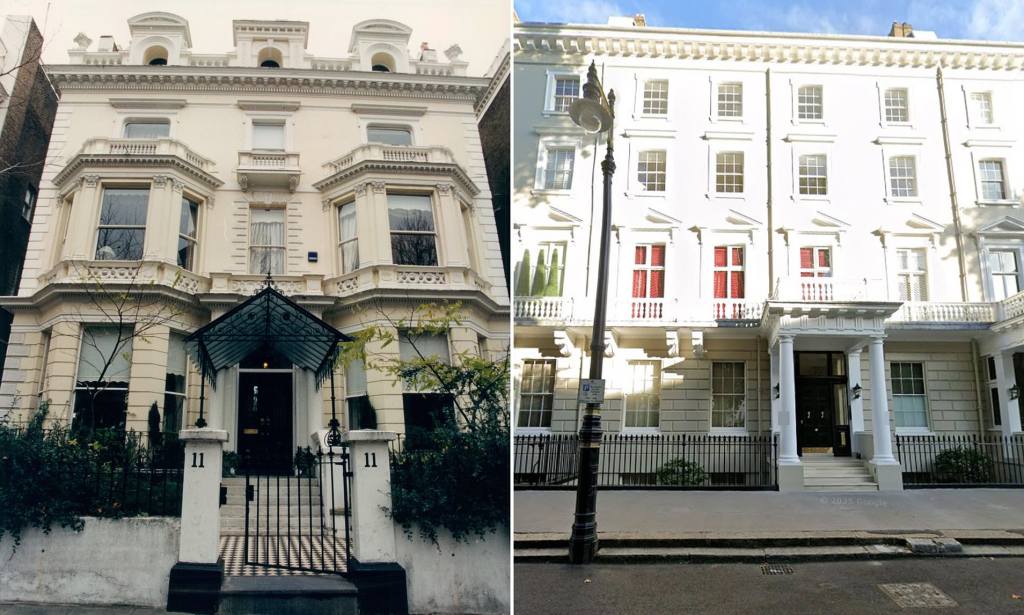
The actual owners of almost 45,000 UK properties valued at £190 billion are being concealed from the public, according to experts who see this as a widespread breach of recent regulations.anti-money laundering rules.
As per the Economic Crime Act, which became law in March 2022 following Russia’s invasion of Ukraine, foreign property owners in the UK were required to identify the ‘beneficial owner’ of their properties by January 31, 2023.
This phrase was described as any individual who owns or manages a foreign company that possesses real estate in the United Kingdom.
Officials are facing calls to strengthen regulations in order to prevent foreign offenders or people subject to sanctions from using London as a place to store their assets.
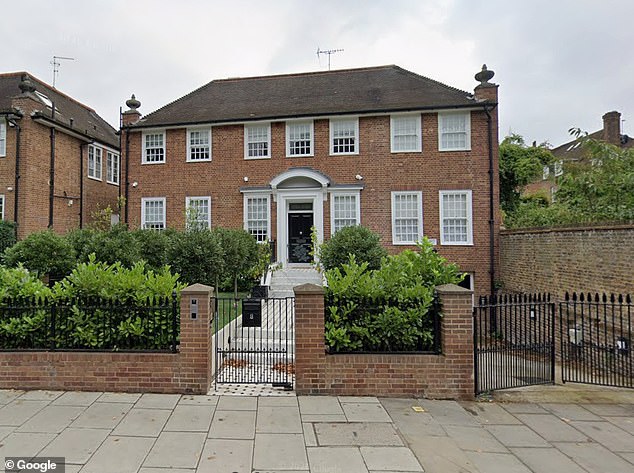
Last year, it was revealed that 56-year-old Ali Ansar, an Iranian entrepreneur who faced sanctions for allegedly supporting the Islamic Revolutionary Guards Corps, managed to acquire a series of high-end properties throughout Europe – such as a mansion in London.
The Islamic Revolutionary Guard Corps has been leading the forceful suppression of demonstrations opposing the government and is facing significant attacks in the ongoing American and Israeli strikes within the nation.
By requiring foreign property owners to reveal their names, the law aimed to increase difficulty in purchasing homes or commercial buildings within the country for money laundering or storing illegally obtained funds.
Although the law was supported by the possibility of fines and criminal charges, studies indicate there is proof that it is being ignored.
A study by Tax Policy Associates reviewed a Land Registry database containing 97,978 properties owned by offshore companies in England and Wales, then verified how many had revealed their true beneficial owners to Companies House – as mandated by law.
The research group determined that identifying the beneficial owner of 43,401 properties was not possible, representing approximately 44 percent.
To locate properties with enigmatic offshore owners in your area, enter your postcode in the field below –


In such instances, the property owners either failed to register altogether, registered the property but stated there was no beneficial owner, or listed the owner as a different offshore company or a trust.
No recommendation is made in every case as a breach of the law, since some companies genuinely do not have a single beneficial owner.
Nevertheless, Dan Neidle, a former tax attorney who leads the research institute, thinks that certain property owners are intentionally hiding their ownership.
“Some of it may occur by chance, but the data indicates that a large part is deliberate,” he writes.
Some individuals are simply not being accounted for. Others are establishing offshore companies as the beneficial owners, instead of the actual people who manage the property.
And more than one in five properties are owned by trusts that do not reveal the actual owner.
Mr. Neidle thinks certain assets might be utilized for money laundering or circumventing sanctions.
Some owners might be neglecting to register their properties in order to evade capital gains tax upon sale, according to him.
The tax expert adds, ‘It’s crucial that we address this issue, not only from the standpoint of tax evasion but also the more apparent aspects of sanctions violations and money laundering.’
The most frequent place for offshore entities owning property in England and Wales is Jersey, a self-ruling territory with minimal taxation.
A total of 3,234 properties associated with the Channel Islands are listed as having no identified beneficial owner, followed by 1,165 in the British Virgin Islands, 753 in the Isle of Man, and 685 in Guernsey.
The country having the largest percentage of unregistered property owners is Saudi Arabia, where 234 out of 252 properties (92.9 percent) are not recorded.
Most assets without an international beneficial owner are located inLondon, with the capital representing£107 billion of the £188 billion in property across England and Wales where owners have not been correctly identified.
Numerous properties are residential and held by trusts.
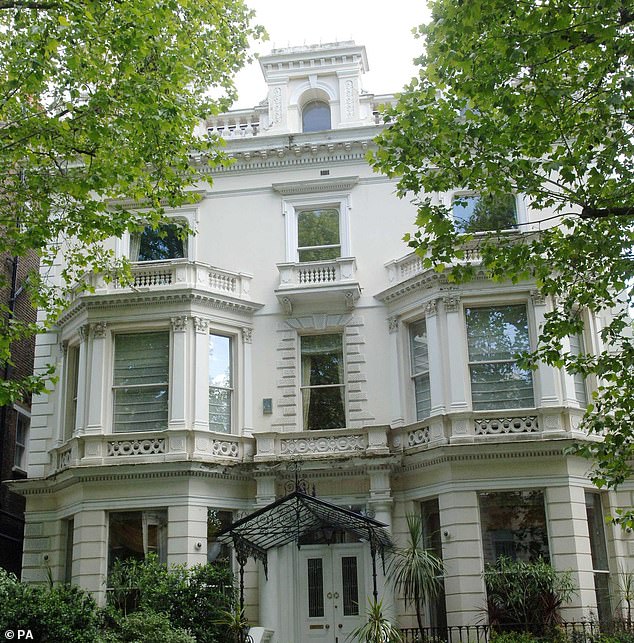
The priciest property listed on the overseas owners register is Richard Branson’s former residence in Holland Park, purchased for £53 million in 2016 by a company based in the British Virgin Islands.
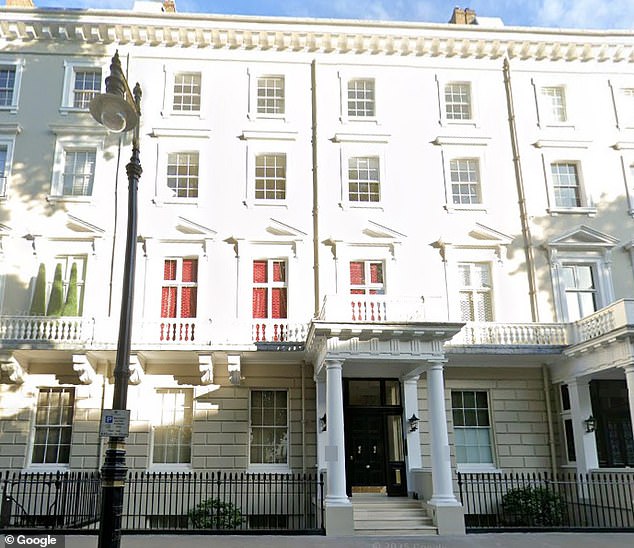
The second is just around the corner, was purchased for £21 million in 2016 by a company based in the Bahamas, with the beneficiary named as a trustee from the Cayman Islands.
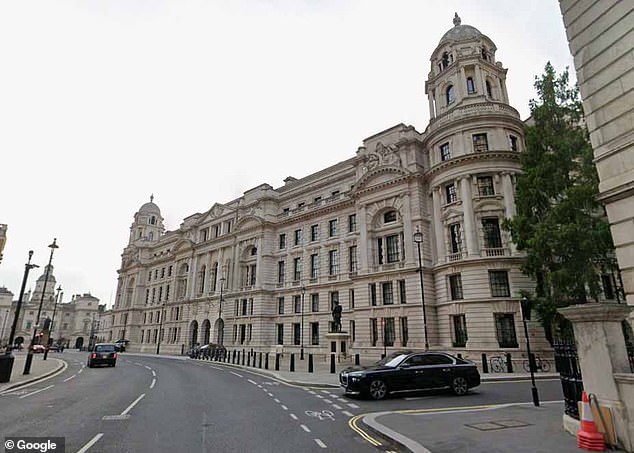
A residence located on Horse Guards Avenue was purchased by a Cypriot firm for £21 million in 2023.The recipients are two people employed by Cypriot companies, acting on behalf of an unidentified individual.
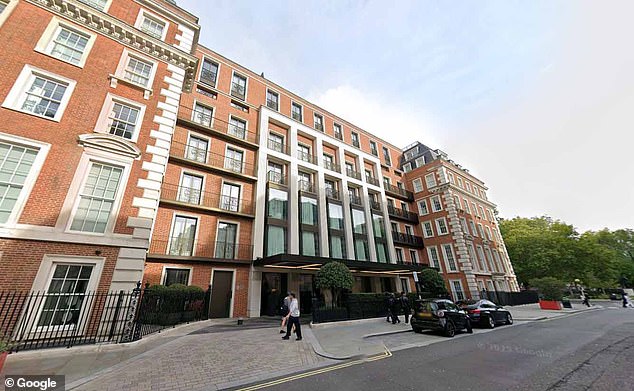
A second residence, located in Mayfair,purchased for £20 million in 2021 by a company based on the Isle of Man, with the beneficiary identified as an Isle of Man trust company.
A third property, located in Belgravia, was purchased for £16 million in 2017 by a company based in the British Virgin Islands. The registered owner is a corporate trustee from Singapore.
No indication of misconduct concerning any of the properties mentioned above.
A government representative stated, “We will review this report thoroughly as part of our dedication to combating unlawful financial practices via the Register of Overseas Entities.”
Companies House has the authority to issue warning notices and levy financial fines against foreign companies that do not register or meet continuous obligations, and such entities are barred from selling, renting, or securing financing for their property until they adhere to the regulations.



 jasdooit
Leave a comment