
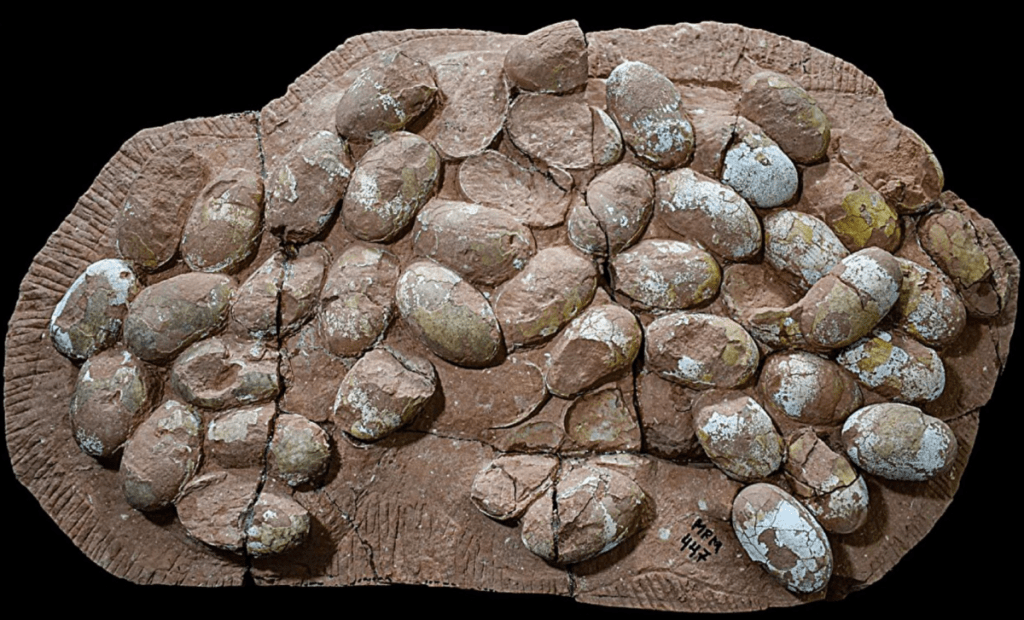
Beneath the fossil layers of Brazil, a remarkable find has provided insights into the enigmatic reproductive habits of prehistoric reptiles.A group of 47 crocodyliform eggs, relatives of modern crocodiles, have been discovered, providing a rare look into history. Published in theJournal of Vertebrate Paleontology, this pioneering study, headed by Dr. Giovanna M. X. Paixão, offers fresh perspectives on the evolutionary tactics and actions of Mesozoic crocodyliforms, altering our perception of these prehistoric animals.
Revealing the Biggest Egg Nest of Mesozoic Crocodile Relatives
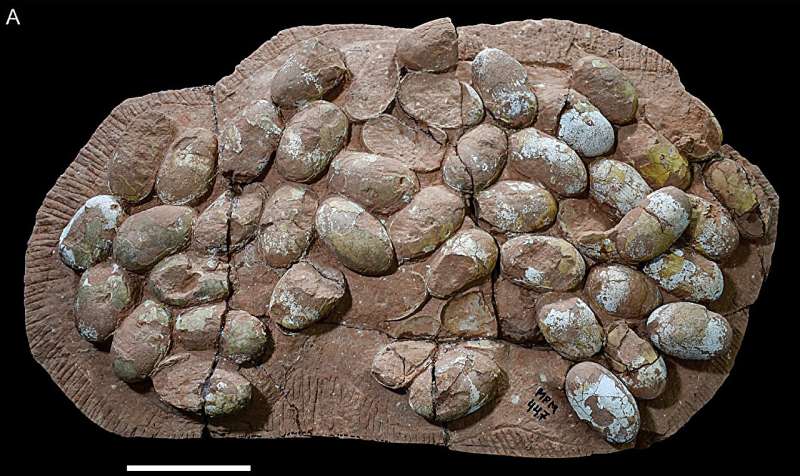
The discovery of the largest discovered Mesozoic crocodile-like egg cluster, with 47 eggs, has drawn the attention of the scientific community. Discovered in the Upper Cretaceous layers of the Bauru Group in Brazil, this group offers researchers important insights into the reproductive methods of crocodyliforms. These ancient beings, which encompass crocodiles and their far-off relatives, lived in a variety of habitats during the Mesozoic era. The fossilized eggs were found in 2020, but the digging process lasted three years, from 2021 to 2023. The eggs were kept in an extraordinary condition, providing an unmatched look into the life cycle of these creatures.
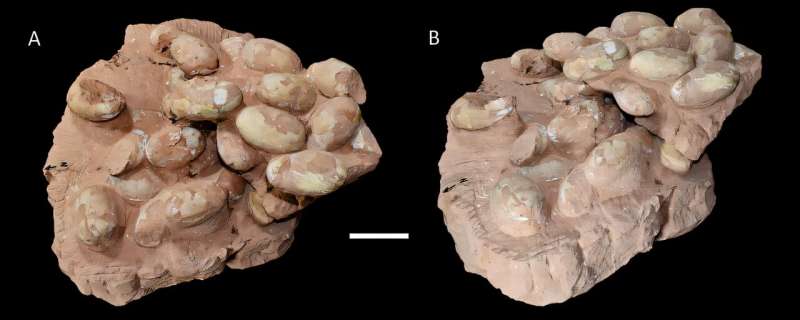
This handbag, known asMPM 447, is significant not only due to its scale but also because it underscores the intricate reproductive methods of crocodyliforms. Dr. Paixão states that
The variation in clutch size indicates species-specific adaptations, as the three clutches also vary in their condition of preservation. This discovery enhances our knowledge of reproductive methods within the group, including nesting habits and parental involvement.
The research, released in the Journal of Vertebrate Paleontology, indicates that the large number of eggs in MPM 447 is an exception compared to the usual smaller clutches seen in crocodyliforms from that era, making this finding even more significant.
Understanding of Early Reproductive Practices and Nesting Techniques
The fossilized eggsFound within the Bauru Group, these eggs are shaped like ellipses, featuring rounded ends and thin walls. These traits, combined with their trapezoid-like shell structures, align with the attributes of crocodyliform eggs. The high porosity and thickness of the eggs indicate they were deposited in a moist setting, differing from the eggs of other crocodyliforms in the same region that are suited for drier climates. This difference implies that the species laying these eggs might have had distinct environmental needs, possibly flourishing in semi-aquatic habitats.
Dr. Paixão provides additional insight into the importance of these results:
The positioning of the nests indicates not only a colonial nesting area for crocodylomorphs, but also a larger nesting location that could have facilitated interactions between various species.
This finding suggests that crocodyliforms might have practiced communal nesting, with several individuals or even different species using the same location to lay their eggs. The presence of additional fossils in the area, including theropod dinosaurs, supports this theory, indicating that this location could have been a gathering place for different reptiles.
A Comprehensive Examination of the Bauru Group Fossils
The Bauru Formation, found in Brazil, is a rich source of well-preserved fossils from thelate Mesozoic era. It has produced a diverse array of fossils, such as titanosaurs, theropods, turtles, and snakes, along with crocodyliforms. The fossilized eggshere are some of the most well-preserved examples from this era, enabling researchers to examine their characteristics thoroughly. These discoveries give insight into the reproductive habits of early reptiles and enhance knowledge about the environments they inhabited.
The Bauru Group is especially recognized for its wide range of crocodyliform species, spanning from land-based hunters to partially water-dwelling creatures. The finding of several egg groups from various species presents a unique chance to examine and compare the reproductive methods of these animals. Although the particular species that laid the eggs in the MPM clutches has not been clearly determined, the excellent state of preservation enables continued study that could ultimately result in more precise findings.
Directions for Future Study and Current Studies
Dr. Paixão and her group keep examining additional egg clusters from the same area. Future research will concentrate on fossil egg clutches linked to theropod dinosaurs, such as birds. These investigations are crucial for grasping the overall significance of the site and its importance in the reproductive habits of different ancient creatures. As Dr. Paixão points out,
Currently, we are conducting additional analyses on other clutches found at the site linked to theropod dinosaurs, including birds. These investigations still need to be connected to the previously published article, as all nests are located within the same stratigraphic layer and geological setting.
The outcomes of these continuous studies might uncover further insights into the intricate relationships between various species at this ancient breeding location. Scientists are also striving to find out if the crocodyliforms displayed parental involvement, similar to what is observed in today’s crocodiles. Data obtained from this site has the potential to greatly enhance our knowledge of the social behaviors and reproductive methods of ancient reptiles.
Enjoyed this article? Sign up for our free Newsletterfor compelling narratives, unique material, and up-to-date information.




 jasdooit
Leave a comment