
Legal protections respond to Xi Jinping’s initiative to promote a ‘shared spiritual home,’ aiming to prevent ‘domestic tensions,’ according to experts.
China has enacted a new regulation concerning ethnic unity, establishing a legal structure that experts claim aims to resist Western ideological impact and offer a formal basis for integrating the nation’s minority populations.
The Act for Advancing Ethnic Harmony and Development was officially approved by theNational People’s Congress (NPC), China’s highest legislative body, at the end of the annual“two sessions” on Thursday.
The legislation was passed with a vote of 2,756 in favor, only three opposed, and three members choosing to abstain.
Are you curious about the most significant issues and developments happening globally? Find the solutions withSCMP Knowledge, our latest platform offering carefully selected content including explainers, FAQs, analyses, and infographics, presented by our acclaimed team.
The NPC also endorsed additional significant bills and resolutions with strong backing.
The Environmental and Ecological Code garnered just seven votes in opposition and three abstentions. The outline of the15th five-year planThe national economic and social development plan (2026-2030) was approved by one vote in favor, with two members abstaining.
The proposal regarding the 2026 central and local budgets, which emphasizes funding for scientific advancement, foreign relations, and national security, was also approved with strong backing, garnering 11 votes in opposition and six members choosing to abstain.
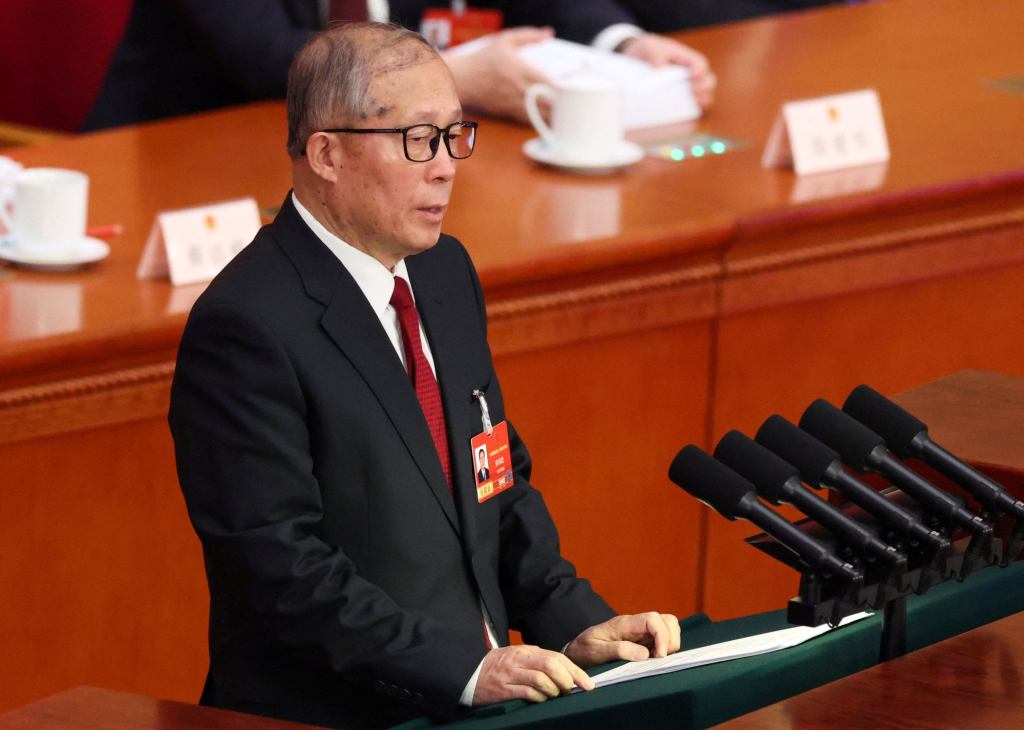
Li Hongzhong, the vice-chair of the NPC Standing Committee, informed legislators last Thursday that the legislation aims to convert the concepts and achievements in promoting ethnic unity and progress since 2012 into legal frameworks, employing legal actions to prevent and address “major risks and underlying dangers” associated with ethnic matters.
Its arrival aligns with the implementation of China’s 15th Five-Year Plan, which emphasizes “promoting high-quality development in ethnic areas” and “strengthening the sense of community among the Chinese nation.”
Including a preface and over 60 articles spread across seven sections, the legislation formalizes the PresidentXi JinpingGuidance on ethnic unity. It outlines fundamental principles, legal protections, and cultural bases aimed at creating a “common spiritual sanctuary” and encouraging cohesion among the Chinese nation, as stated in the final draft published on March 4.
The finalized version of the law had not been made public by the end of Thursday. It is set to come into force in July.
It connects ethnic affairs policies with an “overall national security viewpoint” and includes clauses to “safeguard the dignity of national symbols,” such as the national flag, anthem, and emblem, while also highlighting the importance of patriotic education.
As per experts, Beijing has positioned ethnic governance within a larger ideological conflict with the West, employing laws to address internal threats and oppose outside efforts to turn its policies into political issues.
Beijing remains under global examination regarding its treatment of China’s ethnic minority groups, particularly in theTibet autonomous region and the Xinjiang Uygur autonomous region.
An editorial in Qiushi, the ruling Communist Partythe top theoretical journal, on Tuesday stated that the party’s efforts in this area still encountered challenges including regional development disparities, intricate ethnic interactions andexternal interference.
“While a Chinese national community is becoming more established, ideological conflicts within the ethnic sphere continue to be intricate and severe, and the threat of foreign powers interfering with and destabilizing China’s ethnic harmony should not be overlooked,” it stated.
Jinghao Zhou, an associate professor in Asian studies at Hobart and William Smith Colleges, stated that China is enhancing its “key strengths” in global competition by transforming the objective of national unity from a concept into a legal obligation.
The “foundation” of China’s strength was national unity, which allowed for “effortless mobilization of resources and public backing,” he stated, noting that Beijing would be unable to exert global influence if it were “hindered by internal conflicts.”
Zhou stated that the law would “further advance a unified multi-ethnic nation as a strategic alternative to the fragmented, dysfunctional democratic societies in the West, where political division and cultural splits frequently lead to legislative standstills and unstable foreign policy.”
Peter T.C. Chang, a visiting senior fellow at the ISEAS – Yusof Ishak Institute in Singapore, stated that the law was being approved against the backdrop of “rising geopolitical tensions”.
Chang stated that the law was not only considered a domestic issue but also “demonstrates a strategic change, moving from responding to international criticism to a more active legal justification of China’s methods of ethnic management.”
As stated by Barry Sautman, an expert on China’s ethnic groups and a retired professor from the Hong Kong University of Science and Technology, Beijing could grow “more determined to put an end to Western claims of genocide, crimes against humanity, forced labor, forced marriage, arbitrary detention,” and similar allegations.
Sautman proposed that China’s delegates could potentially mobilize other nations to come together in opposition to Western critiques within global conferences.
A significant provision in the new law involved the implementation of public interest litigation focused on ethnic unity, a measure strongly supported by the Supreme People’s Procuratorate, according to Yang Jianbo, who leads the legal and policy research department, on Saturday.
Article 54 states that if actions “undermine national unity and development, or harm the nation’s interests or the public good,” prosecutors have the authority to make suggestions or initiate a case of public interest.
Once utilized in matters related to environmental conservation or consumer protection, this extension allows prosecutors to legally participate when they believe ethnic harmony has been violated.
Sautman mentioned that potential cases might involve Tibet, where authorities could take legal action against parents who urge their son to drop out of school and enter a monastery, and in Xinjiang, which offers 15 years of mandatory education.
He mentioned that, according to the new law, legal measures could be initiated against parents who encouraged their children to leave school after middle school, as the state aimed to ensure universal attendance in senior high school.
Sautman stated that the enactment of the law mirrored China’s prior experiences in Xinjiang. He pointed out that the region’s challenges related to terrorism and religious extremism were mainly resolved through both security efforts and swift economic development in the latter part of the decade.
In Tibet, “significant rises” in development standards and “youth bilingualism” have resulted in a reduction of disturbances and self-immolations that once captured global attention, he mentioned.
However, critics caution that the strong advocacy of the national standard language in regions inhabited by ethnic minorities poses a risk of diminishing local languages and cultural identities.
In recent years, contentious measures have been implementedIn the Inner Mongolia autonomous region, for instance, Chinese has become the primary language of instruction for core subjects, there is increased monitoring of Mongolian cultural and artistic activities, and local laws that conflict with the ethnic affairs policy have been abolished.
Beijing has justified its method, stating that it aims tomaintain the protection of minority culture while promoting unity within the nationto guarantee stability, a statement was reinforced by the new ethnic unity law.
Contrasts between the law’s original version from September of last year and this month’s final edition showed a more stringent approach on various matters.
In Article 15, for example, a new statement suggests that schools and educational organizations should adopt standard Chinese as the primary language for instruction, referring to standard Chinese as the nation’s “official national language”.
In the meantime, public organizations that must employ both the national standard language and minority languages during official events are required to prioritize the former in terms of placement and sequence.
This occurred just a few months following the initial changes in 25 years to the Law on the Standard Spoken and Written Chinese Languagetook effect on New Year’s Day.
As per Chang, the new legislation aimed at fostering ethnic unity continues to support the preservation of minority languages and cultures, yet it assigns them a “secondary position” in comparison to the national standard language.
Like many multi-ethnic and multicultural nations, such as Malaysia, China’s focus on a primary language of instruction demonstrated Beijing’s belief that “a common national language was crucial for economic advancement, administrative unity, and social harmony,” according to Chang, a former deputy director of the Institute of China Studies at the University of Malaya.
The system encouraged functional bilingualism—using Chinese for education and public matters, and minority languages for cultural conservation—although the long-term equilibrium would rely on how local authorities carried it out, he noted.
Fei-Ling Wang, a professor at the Sam Nunn School of International Affairs at the Georgia Institute of Technology, stated that the law established a shift from a Soviet-style approach to symbolic ethnic autonomy toward a system that emphasized national unity, solidarity, and “assimilation.”
Wang mentioned that China’s current policy was significantly shaped by the experiences gained from the Soviet Union’s downfall, prompting Beijing to emphasize a unified national identity rather than formally acknowledging distinct ethnic nationalisms in order to avoid disintegration.
Beijing has increasingly focused on assimilation rather than pluralist approaches,” he stated. “Yet ironically, by clearly defining assimilationist policies, the law might actually increase foreign criticism, particularly among governments and individuals who view it as further limiting minority rights, cultural diversity, and religious freedom.
Further reporting by Jane Cai
More Articles from SCMP
During the OpenClaw hype, China’s central bank issues further cybersecurity alerts
Get to know Carolyn Bessette’s quiet parents, Ann Messina and William Bessette
This piece was first published in the South China Morning Post (www.scmp.com), a top news outlet covering China and Asia.
Copyright (c) 2026. South China Morning Post Publishers Ltd. All rights reserved.


 jasdooit
Leave a comment