
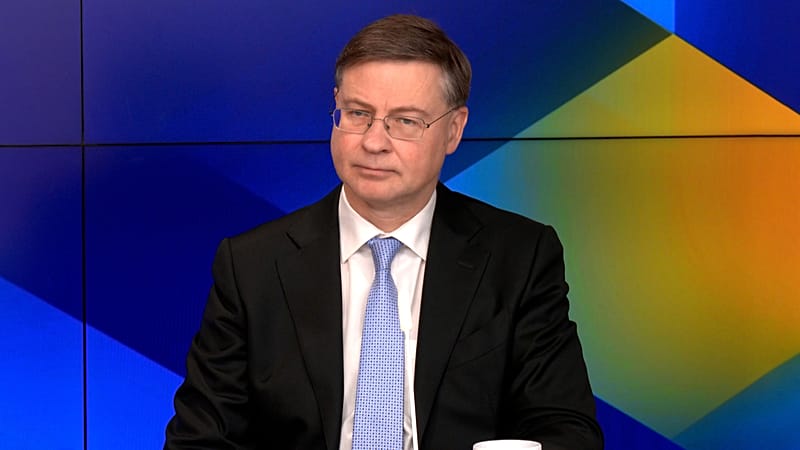
An increased tension in the Middle East might result in a “stagflation shock” for the European economy, according to the EU Commissioner. Valdis Dombrovskis mentioned to Euronews during an interview as the union considers actions to mitigate the effects of increased energy costs.



Tensions escalated as Iranian attacks on Gulf nations, along with a restriction on the Strait of Hormuz, unsettled international energy markets, causing oil prices to rise past $100 per barrel. Ambiguity regarding the US-Israeli operation, including its objectives and schedule, has increased price fluctuations, with President Donald Trump describing the assault as both a war and an adventure.
“The financial consequences will vary based on the duration of the conflict and the extent to which it escalates,” Dombrovskis said during Euronews’ morning program Europe Today.
“If the situation continues for a long time, causing further interruptions in oil and gas shipments, it might lead to a stagflationary impact on the European economy” as prices rise and growth slows.
On Wednesday, a coalition of 32 nations, comprising the United States and G7 countries such as Germany and France, reached an agreement to release 400 million barrels of strategic oil reserves. This move aims to address what the International Energy Agency has termed “unprecedented in scale” challenges within the global oil market.
Dombrovskis expressed approval of the development, stating that the action will bring “significant quantities” to the market during a critical period for global stability. Nevertheless, despite the IAE’s agreement to its largest reserve release ever, oil prices exceeded $100 per barrel for the second time this week on Thursday, as Iran kept targeting key energy infrastructure in the region.
“Iran struck a significant oil storage facility in Oman during the night. It remains focused on attacking energy infrastructure. Additionally, oil reserve quantities have not yet entered the market,” he stated.
Undoubtedly, this is connected to the volatility.
When questioned about whether the US has a strategy for the subsequent phases of the conflict, Dombrovskis mentioned that Europe has not been briefed but is concentrating on local de-escalation.
“There had been no previous discussion (before the attack), but what matters most at this moment is to strive for a rapid reduction in tensions. And from our perspective, we are also working with regional countries to achieve this,” he added.
Following a G7 meeting on Wednesday chaired by French President Emmanuel Macron, the group reaffirmed their security pledges to the Gulf nations, which have been significantly affected by Iranian attacks aimed at US facilities in the area, as well as civilian structures, airports, and hotel sites intended to maximize economic damage.


 jasdooit
Leave a comment