

The Moroccan Ministry of Justice introduced an online platform for handling cases in absentia, leading to debate regarding possible violations of personal data protection regulations and the principle of innocent until proven guilty, as it discloses confidential details about people accused of crimes.
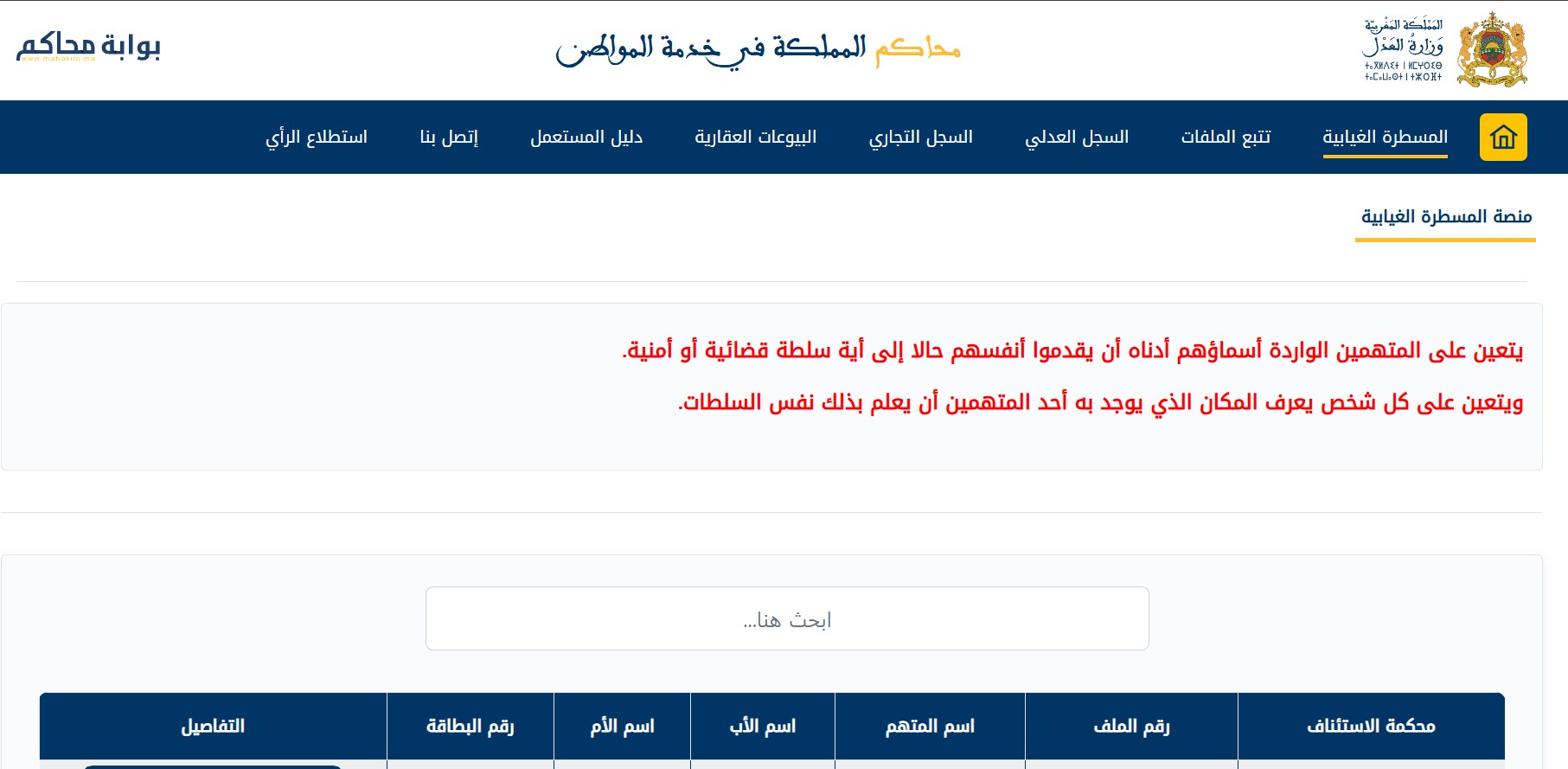
The Department of Justice has introduced a digital platform focused on trials conducted in the absence of the defendant, designed to display the names and lists of people sought by the legal system in criminal cases where the accused are being tried while remaining at large. This effort is part of the execution of the updated provisions of Criminal Procedure Law No. 03.23, which became effective in January 2026.
As per information available on the digital platform incorporated within the «Courts» portal, the count of people involved in proceedings in their absence has surpassed 625. All these cases pertain to criminal trials and exclude minor offenses. Officials have encouraged those affected to promptly approach any judicial or security authority to address their legal matters. They also requested anyone possessing information regarding the location of any of the wanted individuals to notify the relevant authorities.
The allegations filed against the defendants encompass a broad array of violations, such as embezzlement and misuse of public funds, severe theft, fraud and the utilization of falsified official papers, assault resulting in lasting harm, establishing a criminal organization, blocking public thoroughfares and causing traffic disturbances, and being intoxicated in public. The list also features grave offenses like abducting individuals, sexual assault, and holding explosive substances in breach of relevant regulations.
Does it violate the principle of innocent until proven guilty?
The website shares various types of personal information about the individuals involved, such as national ID numbers, addresses, parents’ names, and details of the accusations they face. This data is considered personal information safeguarded by Law No. 09.08 concerning the protection of individuals in relation to the handling of personal data.
This legislation provides the National Commission for the Control of Personal Data Protection (CNDP) with authority and regulatory responsibilities, as it is tasked with monitoring the legality of personal data handling and verifying adherence to necessary legal protections.
The importance of the data is increased because it involves people who are still in the process of legal trials, where the principle of innocent until proven guilty is a key constitutional value that needs to be upheld.
has become aware that the new platform has not received previous approval from the National Commission for Personal Data Protection. The commission’s president stated that “the Commission is informed about the issue and is in communication with the entity that launched the platform” to make a decision regarding the matter.




 jasdooit
Leave a comment