
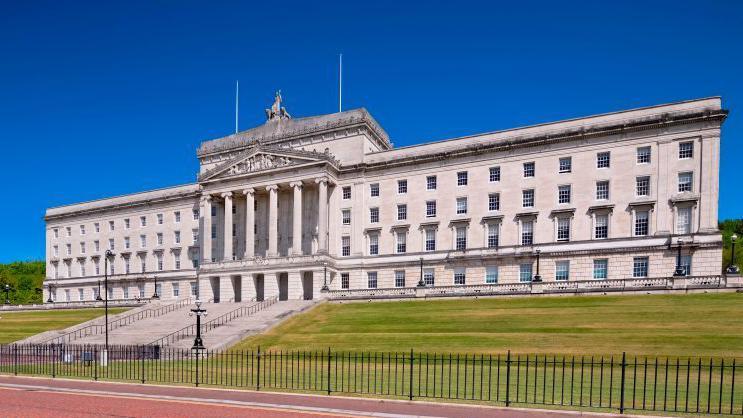
A suggested salary increase of over £14,000 for Stormont assembly members (MLAs) will proceed, according to the committee responsible for determining their pay.
Members of the Legislative Assembly currently receive an annual salary of £53,000, which is lower than that of their peers in the devolved parliaments of Scotland and Wales.
The salary increase will raise their annual earnings to £67,200 starting from April this year.
The independent remuneration board revealed the suggestions a month agoand mentioned that it would gather opinions and input on its proposed decision from MLAs, the Assembly Commission, and the Assembly Members’ Pension Trustees.
The board has the authority to set the compensation and retirement benefits for members of the legislative assembly.
It has also verified the implementation of new financial penalties that will take effect if an executive is not established following the next assembly election, or if the positions of first and deputy first minister become empty at any time.
MLA pay would decrease by 10% following the sixth week, an additional 10% after the twelfth week, and another 10% after the eighteenth week, if the government is not formed within the six-month legal timeframe.
The committee was established last year.backed by the major Stormont parties but drew criticism from the TUV and People Before Profit, who argued it would result in substantial increases in MPs’ salaries.
Alan Lowry, head of the board, stated: “The board must consider various factors – the significance and intricacy of an MLA’s position, the financial sustainability of a political career, and the salary levels for political representatives in peer parliaments.”
He stated that the board is “confident” that the evidence supporting the draft decision “continues to be valid.”
Lowry mentioned that the board had “considered” the public’s response to the draft announcement, which was “largely negative.”
“It is evident that the public has grown frustrated with the ‘stop-start’ approach of the government, which has affected political institutions in recent years,” he stated.
That is why we are also verifying our suggestions for applying financial penalties if the institutions stop operating as usual.
What is their income in other places?
Scottish Parliament members are paid £74,507, whereas Welsh Parliament members receive £76,380.
At Westminster, members of parliament receive £93,904 annually, whereas members of the Dáil (the lower house of the Irish parliament)earn €118,284 (£103,416),
Analysis
There is no favorable moment to grant a politician a 27% salary increase, especially not at this time.
It’s not a positive image when families, already facing financial difficulties, find it hard to afford their heating oil costs.
However, MLAs will argue, similar to the salary increase, the timing was outside their control.
What was under their control was the framework established for the independent board to determine any salary increase.
They chose to compare their salaries with those of their political counterparts in various regions across the U.K. and Ireland.
This indicated that a substantial increase was more probable than not, considering the wide difference in wages.
The negative reaction has already begun and is expected to resurface whenever there is a disagreement over public sector wages.
However, for those within, it was a thorn that had to be tackled to guarantee wage equality isn’t limited to educators and caregivers.



 jasdooit
Leave a comment