
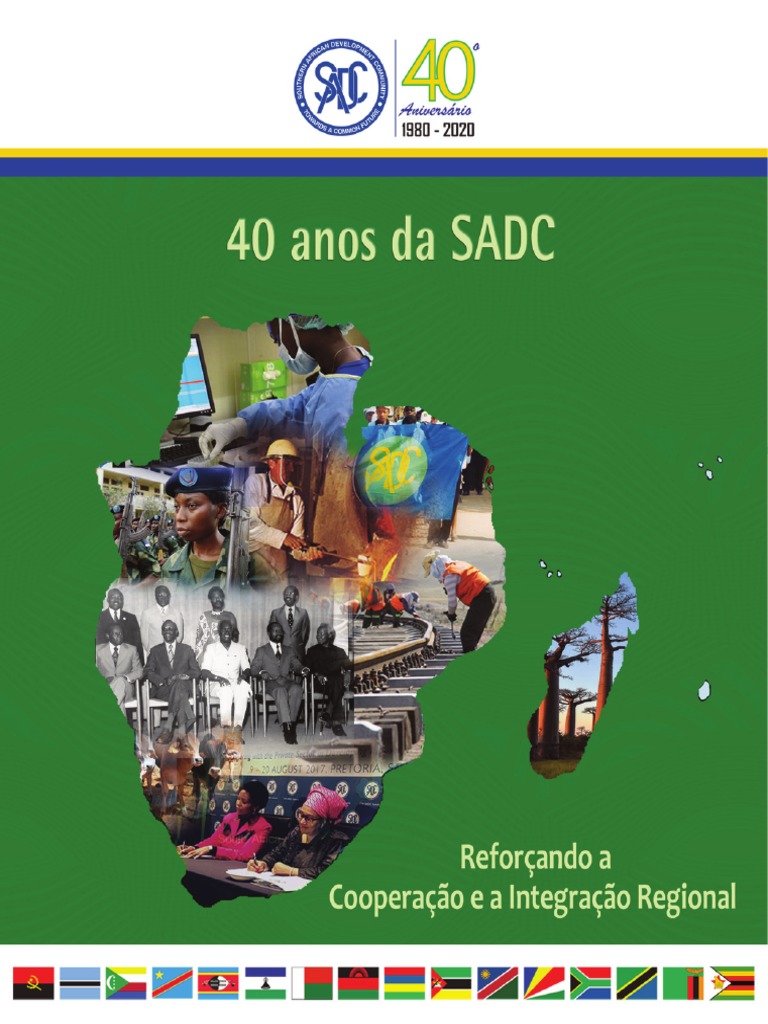
Regional collaboration needs to be enhanced by SADC in the face of global challenges
Southern African nations need to enhance regional collaboration to protect their economies from increasing global political and economic disruptions, said Minister of International Relations and Cooperation Ronald Lamola on Thursday.
Lamola spoke during the opening of the Southern African Development Community (SADC) Council of Ministers meeting in Pretoria.
He cautioned that growing geopolitical conflicts, economic instability, and interruptions in global supply networks are progressively impacting nations within the area.
“The global order is characterized by increased political tensions, financial instability, climate-related disturbances, and interruptions in worldwide supply networks,” Lamola stated.
As stated by the Minister, the present global situation highlights the importance of enhancing regional collaboration and integration to safeguard the region’s economies and its population.
“These circumstances highlight the growing necessity for regional collaboration and integration. They also emphasize the importance of fulfilling the pledges made under the SADC Vision 2050, which aims to create a peaceful, inclusive, competitive, and high-income industrialized region where people experience sustainable economic prosperity, justice, and freedom,” he stated.
Worldwide disputes pose risks to food and energy stability
Lamola stated that continuous global conflicts are already causing widespread impacts on economies in Southern Africa.
He pointed out that conflicts between the United States, Israel, and Iran have led to higher oil prices and might cause an increase in fertiliser costs, which could subsequently raise food prices throughout the area.
“As a community, we will not come out of this without damage. Our public finances are expected to face even more pressure, and it will be our people who end up paying the price,” he stated.
The official also cautioned that Gulf nations might reconsider their foreign investments as security issues increase, which could impact projects related to infrastructure, energy, and mining in the area.
“This might have implications for investment movements, economic growth potential, and development funding throughout our region,” he stated.
Lamola mentioned that these outside influences are being experienced at a moment when numerous African nations are already dealing with significant debt issues.
Referencing the African Leaders’ Debt Relief Initiative, he mentioned that the continent is experiencing its most severe debt crisis in eight decades.
“Over 750 million Africans reside in nations that allocate more funds to debt repayment than to healthcare or education,” Lamola stated.
In numerous instances, he mentioned, governments are allocating more funds toward interest payments than to schools, healthcare facilities, and other social concerns.
The region needs to utilize essential minerals
Although there are obstacles, Lamola mentioned that Southern Africa also presents major opportunities, especially through its large reserves of essential minerals required for the global shift to renewable energy.
He pointed out that the area contains approximately 90% of the global reserves of platinum group metals, over half of the world’s cobalt reserves, and also has substantial deposits of graphite and copper.
The need for these minerals is anticipated to increase substantially as nations shift towards more sustainable energy solutions.
“The decision before us is evident: we can either interact with the world from a stance of unity and power or from a position of separation and reliance,” Lamola stated.
Emphasize the process of industrialization and local development
Lamola mentioned that the meeting would review advancements in executing the SADC Regional Indicative Strategic Development Plan (RISDP) for 2020–2030 and explore methods to enhance economic integration.
He pointed out that trade within the region inside the bloc is still fairly low, around 22%, while food insecurity and joblessness among young people continue to be significant issues.
Nevertheless, the area has also made advancements in fields like digital growth and power production.
The proportion of the population with internet access in the area has risen to 54%, alongside the addition of over 14,000 megawatts of new power generation capacity in recent years.
The official stated that the council will concentrate on making sure that regional integration leads to real advantages for the people.
“The task ahead of us over the next two days is truly significant. Its success will not be judged merely by the quantity of decisions we approve, but by the advancements we achieve in reshaping our economies and enhancing the quality of life for our citizens,” he stated.
He further highlighted that regular people throughout the area anticipate collaboration between governments to create tangible economic prospects.
The young business owner in Lusaka, the farmer in Lilongwe, the miner in Lubumbashi, the merchant in Gaborone, and the employee in Johannesburg are not mainly focused on implementing frameworks or strategies.
Their focus is on whether regional integration creates genuine economic opportunities and enhances their chances for a more promising future.
“If integration continues to be just talk, trust in our shared goals will decrease. However, if we take strong action and properly carry out the commitments we’ve made, our region has the potential to become a powerful driver of industrial progress, innovation, and sustainable development,” Lamola stated.– SAnews.gov.za
DikelediMThu, 03/12/2026 – 11:58
Provided by SyndiGate Media Inc.Syndigate.info).



 jasdooit
Leave a comment