
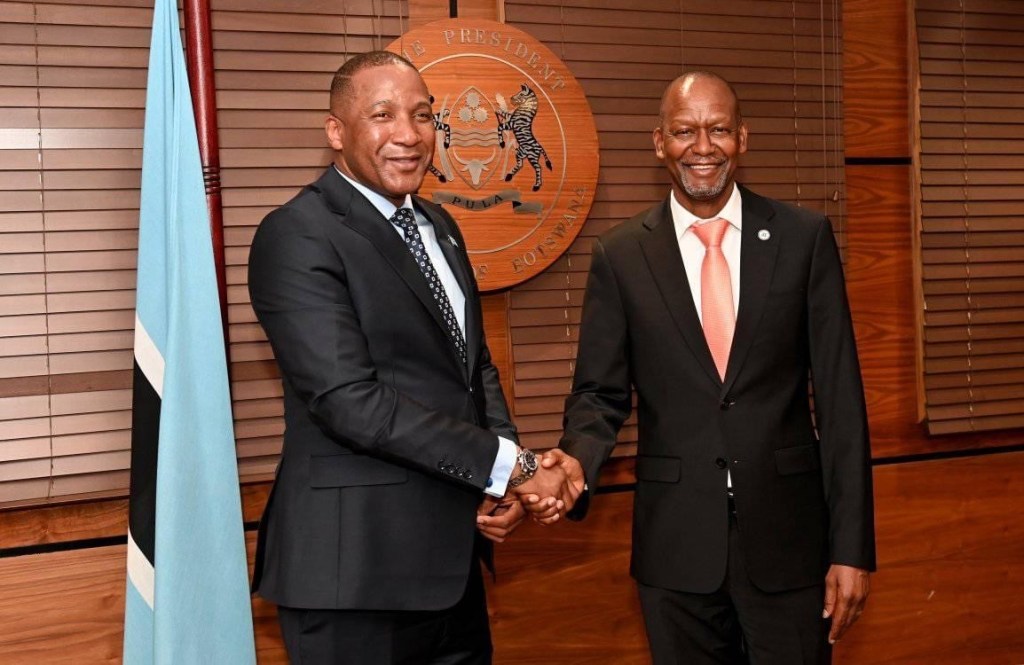
SADC needs to speed up the enhancement of value and regional integration – Magosi
The Executive Secretary of the Southern African Development Community (SADC), Elias Magosi, has highlighted the need for the Southern African region to go beyond exporting raw minerals and focus on increasing value addition in order to drive industrial growth and economic change.
Magosi was addressing the gathering during the formal commencement of the SADC Council of Ministers meeting in Pretoria on Thursday.
He mentioned that the area is abundant in key minerals necessary for the worldwide shift to sustainable energy, yet it still exports the majority of these materials in their unprocessed state.
“In mining, our challenge has always been about adding value, not about scarcity. Although our region is rich in minerals, including those important for the energy transition like cobalt, copper, and manganese, unfortunately, they still exit our borders in their raw state,” Magosi stated.
He pointed out that the area has implemented the SADC Regional Mining Vision to reestablish the mining industry as a driver of industrial growth by enhancing connections between mining and downstream sectors including mineral processing, machinery production, and associated services.
As per Magosi, approximately 20 regional mining initiatives valued at around $2.3 billion have already been recognized as feasible investment opportunities.
“These initiatives concentrate on the production of batteries, extraction of raw materials, and mining machinery, among other areas,” he stated.
Advancements in regional trade and industrial development
Magosi mentioned that the region is experiencing slow progress in trade integration, with internal trade of manufactured products rising from 19% to 22%.
The growth of the SADC Free Trade Area has further enhanced regional market integration after Angola and the Democratic Republic of the Congo joined.
He mentioned that efforts like the implementation of the Electronic Certificate of Origin and the creation of One-Stop Border Posts are contributing to lowering trade obstacles and enhancing efficiency.
“These merchants are more than just a number; they are mothers, fathers, and young business owners whose lives rely on smooth and hassle-free trade. When they thrive, it contributes to our shared success,” Magosi stated.
Access to energy continues to pose a significant challenge.
Although there have been advancements in certain areas, Magosi stated that access to energy continues to be inconsistent throughout the region.
Although nations like Mauritius and Seychelles have almost reached full electricity coverage, much of the region continues to trail behind.
“In numerous areas within our region, power availability is still under 60%, and in certain member countries, it drops below 30%,” he stated.
Magosi stated that enhancing energy infrastructure and increasing cross-border electricity trade via the Southern African Power Pool will be crucial for driving industrial development and economic expansion.
Initiatives like the Malawi–Mozambique and Tanzania–Zambia power linkages are anticipated to enhance regional electrical systems and facilitate electricity exchange between participating countries.
Stronger regional financing
Magosi also called on member nations to quicken the process of signing and approving the SADC Regional Development Fund agreement, which is designed to fund essential regional initiatives.
Nine member states have already signed the agreement, but more approvals are needed before the fund can start functioning.
“The world is changing, and the present geopolitical situation serves as a reminder that we need to be more united and creative. The Regional Development Fund is our means of bringing about change. Without it, we remain stagnant, but with it, we can progress together,” he stated.
Pressures on humanitarian aid and food stability
Magosi stated that Southern Africa still encounters humanitarian issues, such as natural disasters and hunger.
Severe flooding in multiple member countries has impacted over 1.3 million individuals, forced more than 100,000 from their homes, and resulted in over 285 fatalities.
At the same time, it is expected that approximately 58 million individuals across the region will experience severe food insecurity during the 2025/26 period.
He cautioned that animal illnesses like Foot and Mouth Disease also present a significant risk to food security and commerce.
Peace and stability ;
Magosi highlighted that peace and security are still the main focus for regional progress. SADC remains committed to backing diplomatic initiatives aimed at addressing instability in the Democratic Republic of the Congo and political conflicts in Madagascar.– SAnews.gov.za ;
DikelediMThu, 03/12/2026 – 12:12
Provided by SyndiGate Media Inc.Syndigate.info).



 jasdooit
Leave a comment