
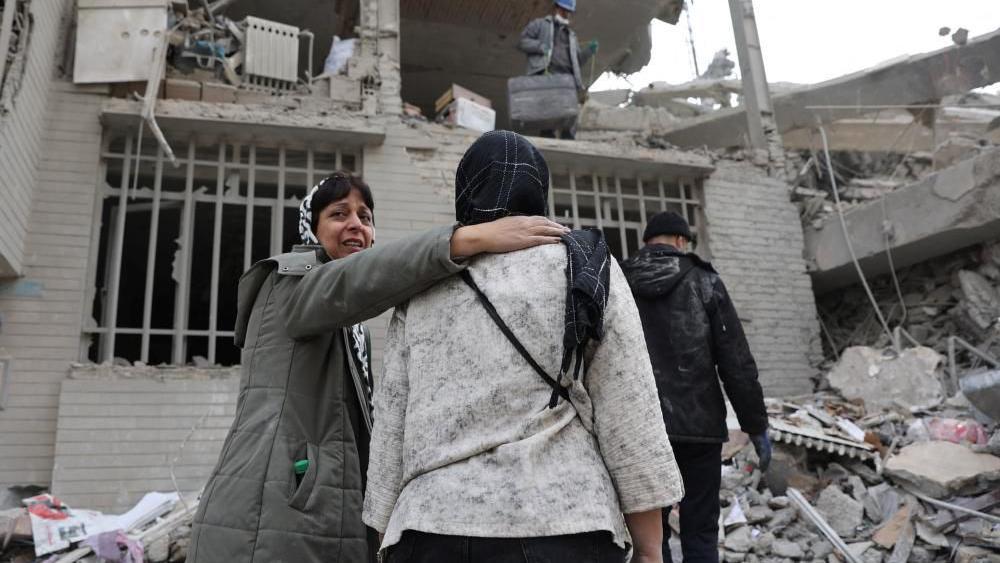
“We expected them to eliminate all the senior leaders and for the regime to fall within days, but we are now in the second week, and every night I am awakened by explosions,” said a Tehran resident to the outlet.
She was initially in favor of the conflict, but her dissatisfaction is increasing.
Some Iranians who are against their nation’s leadership find that the war, which they once believed could speed up political transformation, is now causing a difficult reconsideration, and they are starting to wonder if the price of the conflict might eventually be greater than any political result.
Some, however, continue to claim that external military intervention might be the only practical method to undermine the system.
Numerous Israeli and American officials have characterized the operation primarily as a move to weaken Iran’s nuclear and missile capacities and its perceived dangers.
However, some individuals, including U.S. President Donald Trump, have also suggested that the final goal might involve a change in leadership.
Some critics within Iran’s religious leadership initially felt that this proposal could potentially speed up the transformation through external influence.
However, discussions with certain Iranians within the country indicate that the situation has become much more intricate.
It has grown more challenging for reporters to reach individuals within Iran since the conflict started, with officials implementing another nearly complete internet blackout starting on 28 February.
Although there were communication limitations, it was possible to speak with several Iranians who were against the government and who initially did not object to the concept of military intervention against the Islamic Republic, especially following another attempt at an uprising and widespread protests that were quashed, marking the most lethal suppression of demonstrations in the history of the Islamic Republic.
The names have been altered to protect them, as sharing opposing opinions in Iran may result in detention or jail.
Sama, a 31-year-old engineer based in Tehran, mentioned that when the news about the strikes initially surfaced, she experienced a brief sense of optimism.
For many years, we have spoken out,” she stated. “Each time they try to suppress us, they end our lives.
When the protests began, I believed that this was something the regime would not be able to endure.
Sama mentioned that she joined her family and friends in celebration when news surfaced that Iran’s Supreme Leader, Ayatollah Ali Khamenei, had been killed in attacks by the US and Israel.
“I was shouting with joy when the major news was verified,” she said.
However, two weeks into the conflict, she mentions that the atmosphere surrounding her and many others has shifted.
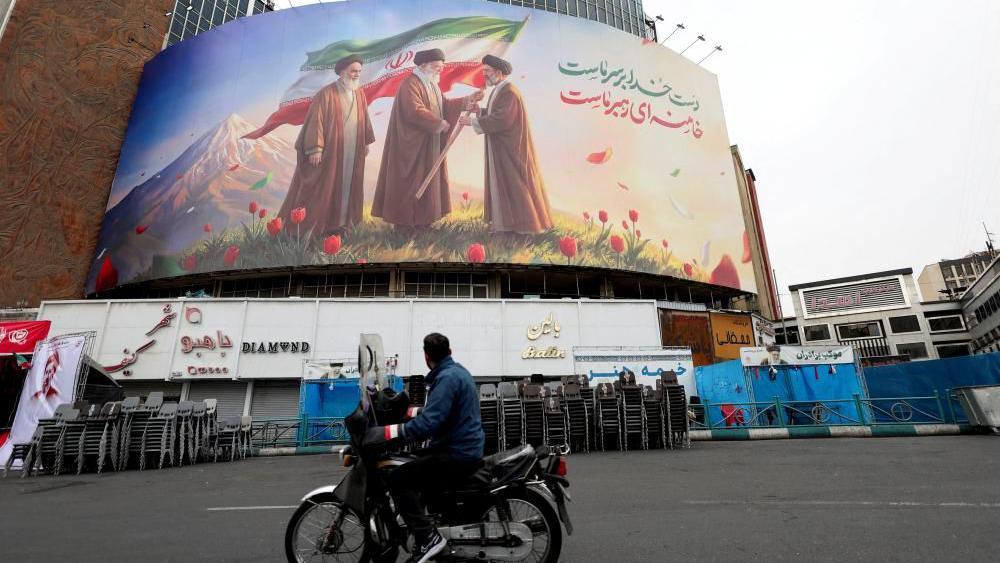
“Now I see that some are frightened, and people I know are questioning whether their neighborhood might be the next target,” she stated.
I am no longer able to sleep. I wake up either to the noise of explosions, or due to dreams about them.
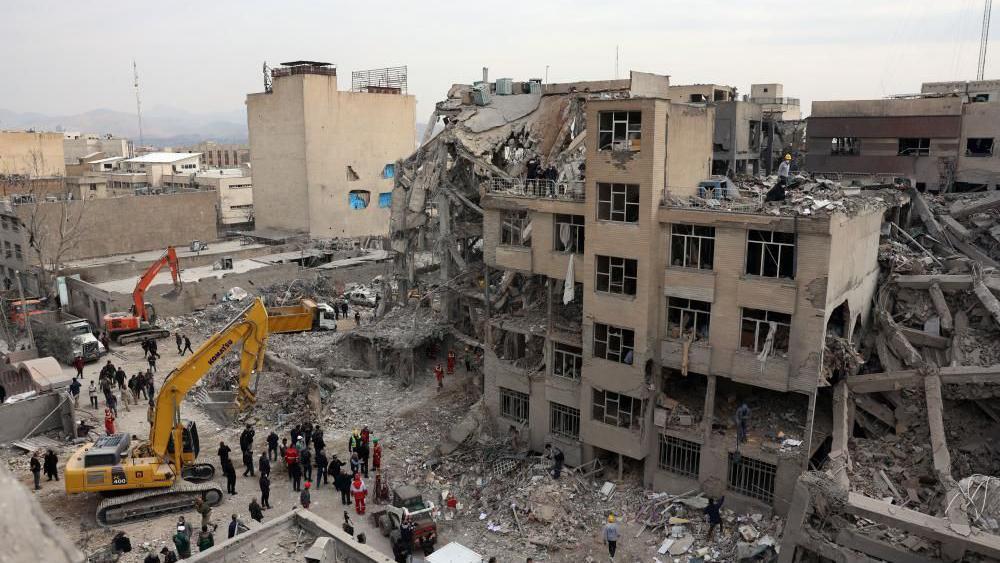
Some believe the extent of possible harm to civilians is increasingly difficult to overlook.
The UN Refugee Agency (UNHCR) reports that between 600,000 and one million Iranian families are currently living temporarily away from their homes within Iran due to the continuing conflict, based on initial evaluations, which could affect as many as 3.2 million individuals.
It mentioned that the number is expected to keep increasing as conflicts continue, indicating a concerning rise in humanitarian requirements.
Mina, a 28-year-old educator based in a northern city, expressed her desire for an end to the current religious leadership but is concerned about the potential long-term effects of conflict.
“This extreme government has led us into this conflict, I am aware,” she stated.
But when you witness the large-scale fires and hear the explosions, and see young children frightened and weeping, you begin to question if this could harm the country you cherish and reside in.
Mina mentioned that some friends, who previously openly talked about the chance of a regime falling, have become more careful as the conflict persists and numerous high-ranking officials are still in their positions.
She stated, “What if we end up with ruins and the same mullahs and the same administration? Just more authoritarian and more resistant?”
For some, the issue is not solely whether the government could collapse, but what could happen afterward, particularly in situations that are unpredictable.
Ali, a 31-year-old merchant who sustained injuries in demonstrations in January, expressed concerns regarding the potential for unrest or civil strife.
“Everyone discusses ‘regime change’ as if it were a straightforward switch,” he said.
But who will assume control? What prevents the nation from descending into disorder, even if they somehow succeed in toppling the regime?
The uncertainty, he said, weighs heavily even on those who strongly oppose the government.
I desire liberty,” he stated. “However, I also wish for a nation that remains intact after this is over.
Some also claimed that conflict has bolstered the government’s power instead of diminishing it, particularly in terms of suppressing demonstrations and opposition.
Fatima, a 27-year-old graphic artist, mentioned that outside attacks frequently support the government’s established view of “the enemy.”
They enjoy this,” she said. “Now they are claiming: ‘Look! We told you it was all the enemy’s strategy.’
Accusations have turned into betrayal, and they are employing it against their own citizens.
She mentioned that the number of paramilitary forces on the streets has significantly risen since the war started.
“Have you witnessed their henchmen on the streets searching for reasons to assault or detain us?” she stated.
It is increasingly difficult for individuals to voice their opinions.
Some people claim that these worries overlook the challenges that internal transformation has consistently presented.
These voices remain in favor of the military operation, claiming that years of oppression have left no other option.
Reza, a 40-year-old engineer based in the central city of Isfahan, stated that he thinks external influence is not just essential but the sole feasible option.
“Individuals claim that change needs to originate from within – as though we haven’t attempted it,” he stated.
For heaven’s sake, have these people lost memory of the mountain of body bags containing slain demonstrators? Wasn’t that only two months back?
Reza thinks that undermining the government’s military and security structures might alter the distribution of power.
“Even if the system doesn’t fall apart tomorrow, diminishing its influence can alter the situation,” he stated.
Some people believe that the expense of keeping the existing system in place will eventually exceed the cost of engaging in conflict.
Milad, a software engineer based in the southern province of Khuzestan, expressed concern that the government’s actions might result in more severe damage if it remains in power.
“Does this group believe that peace, or at least less destruction than currently seen in this conflict, will occur if these extremists remain in control?” he stated.
Observe what they accomplished during ‘peace’ time: no economy, no water supply, no rights for women, no future.
I prefer to perish in these attacks, provided those who committed this against our nation meet their end with me.
However, even among those who still support military action, some cast doubt on Trump’s assurances, who conveyed to Iranians in a message following the start of the conflict: “When we are done, take control of your government. It will belong to you. This might be your only opportunity for many generations.”
Saeed, a young Iranian who participated in violent anti-government demonstrations in January, stated that he is now highly doubtful.
“The only option is conflict with this government,” he stated.
But is this Trump individual truly still seeking regime change? Is he earnest about completing the task?
I’m not sure anymore. He keeps saying different things every day.


 jasdooit
Leave a comment