

The government has started working on an additional budget to address the rise in oil prices caused by the conflict in the Middle East. It is observed that, considering the expectation of a substantial rise in corporate tax income from the semiconductor industry, a supplementary budget ranging from 10 to 20 trillion Korean won might be created without needing to issue new government bonds. Nevertheless, there are considerable worries that the government is rushing to disburse funds without adequate examination.
◇Semiconductor Industry Surge Generates Tax Revenue Reserve
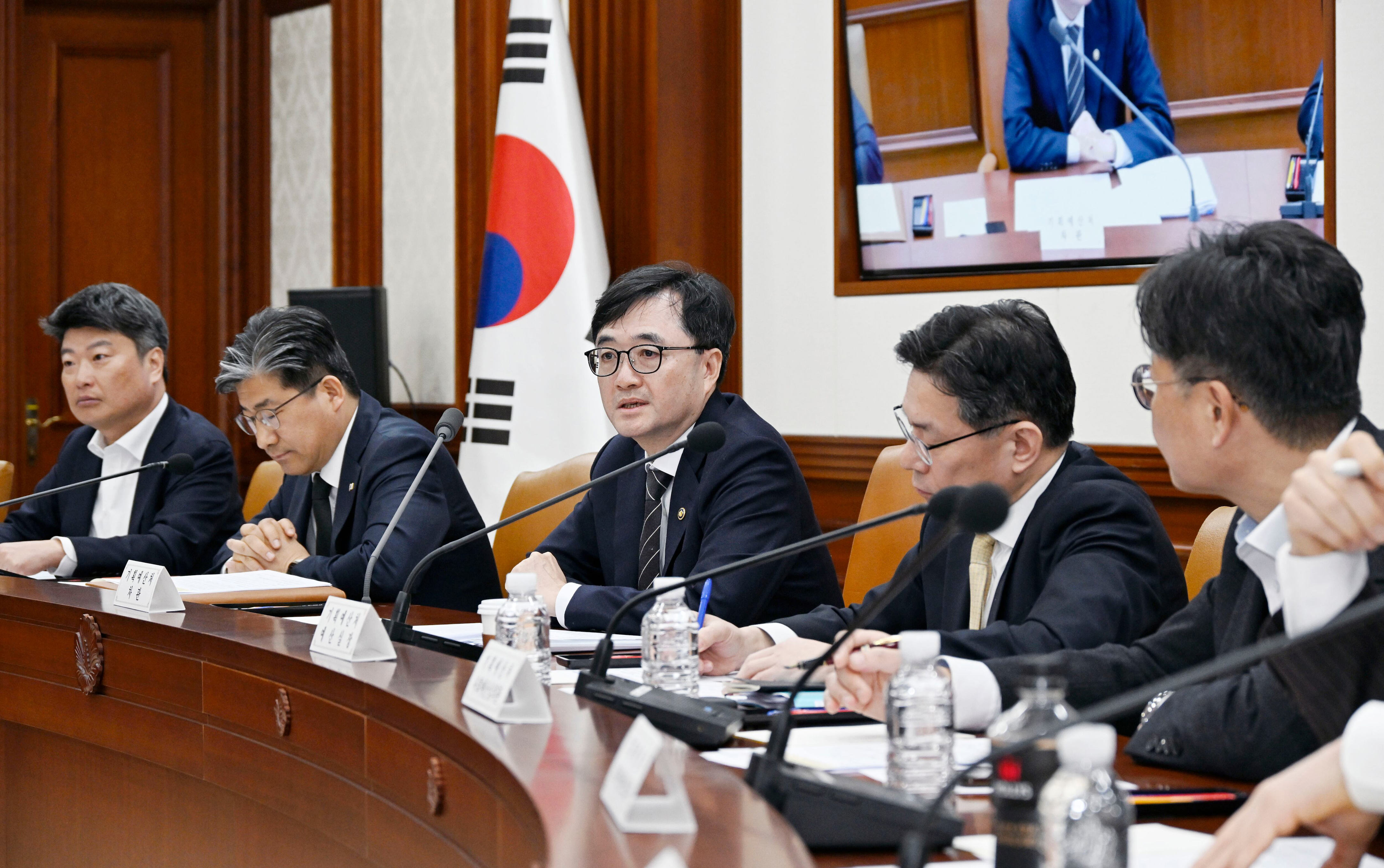
The additional budget has recently seen increased momentum. On the 10th, President Lee Jae Myung highlighted the necessity of an early supplementary budget to assist vulnerable groups impacted by rising oil prices, while Deputy Prime Minister for Economic Affairs Koo Yun-cheol remarked, “We will ensure adequate support for living expenses through all available policy measures, including the supplementary budget.” On the 13th, Lim Ki-keun, the acting minister of the Ministry of Planning and Budget, officially announced the swift preparation of the supplementary budget, stating, “We will sacrifice weekends and holidays to quickly finalize the supplementary budget plan.”
The government’s assurance in creating the additional budget is based on the achievements of semiconductor firms. Samsung Electronics reported an operating profit of 43.6 trillion won last year, far surpassing the government’s August 2024 projection of 28.8 trillion won. SK Hynix also experienced an upward revision in its market forecast, reaching 44.5 trillion won. According to analysis, the outstanding performance of these two companies could lead to an additional 5.3 trillion won in corporate tax income.
Other elements are also responsible for the rise in tax income aside from corporate taxes. Several predictions indicate that the securities transaction tax, influenced by higher tax rates and increased stock trading activity, will generate about 5 trillion won more than expected, reaching 5.4 trillion won. Additionally, some reports suggest that the surplus payments from the Bank of Korea to the government may rise by 1 to 2 trillion won compared to the current estimate of 7.25 trillion won. This is because of substantial foreign exchange trading gains made during the government’s involvement in the foreign exchange market towards the end of last year. Acting Minister Lim remarked, “We plan to use the extra tax revenue to reduce the effect on government bond and foreign exchange markets without issuing further government bonds.”
Previously, the government utilized surplus tax revenue for additional budgets in 2016, amounting to 11 trillion won, 2017, 11.2 trillion won, 2018, 3.9 trillion won, the second supplementary budget in 2020, 7.6 trillion won, and the second supplementary budget in 2021, 33 trillion won.
As reported by the National Assembly and financial experts on the 15th, the size of this additional budget is currently under discussion, with estimates ranging between 10 trillion and 20 trillion won. Ahn Do-geol, a member of the Democratic Party of Korea who previously led the Budget Office and served as second vice minister at the Ministry of Economy and Finance, said, “Approximately 15 trillion to 20 trillion won would be suitable.” KB Securities also estimated the supplementary budget at 10 trillion to 20 trillion won in a recent analysis, highlighting that the surplus tax revenue from corporate and securities transaction taxes alone could reach at least 10 trillion won. Since the implementation of the National Finance Act in 2006, the average net increase in total spending across 18 supplementary budgets has been 13.7 trillion won.
The additional budget is anticipated to be finalized as soon as April or no later than early May.
◇Warning Issued Regarding ‘Targeted Additional Budget’ and Financial Reserves
Professionals recommend that, taking into account internal and external unpredictabilities, a ‘precise additional budget’ targeting only critical sectors is essential instead of recklessly distributing financial resources.
Kang Sung-jin, a professor at Korea University, stated, “It’s not the right moment to move quickly,” and noted, “If oil prices continue to rise, the chance of stagflation—where inflation and economic downturn happen together—can’t be ignored, so the timing for fiscal expansion needs to be carefully considered.” Professor Kang further mentioned, “If an additional budget is truly needed, it would be better to keep it small and focus on crucial areas like assistance for disadvantaged groups.”
Some critics argue that an additional budget should not be approved merely because tax income was higher than anticipated. If considered from a perspective of using extra funds, the budget might be directed towards initiatives that have no connection to the initial goal of tackling the Middle East crisis, possibly leading to a rise in the country’s debt down the line.
Kim Jung-sik, a retired professor from Yonsei University, remarked, “In a period of slow economic growth, it will be challenging for tax income to rise substantially, meaning there will be a point where we have to depend on issuing government bonds to handle increasing financial obligations.” He highlighted, “It is crucial to direct funds towards initiatives that can genuinely boost local demand instead of just handing out money.”



 jasdooit
Leave a comment